



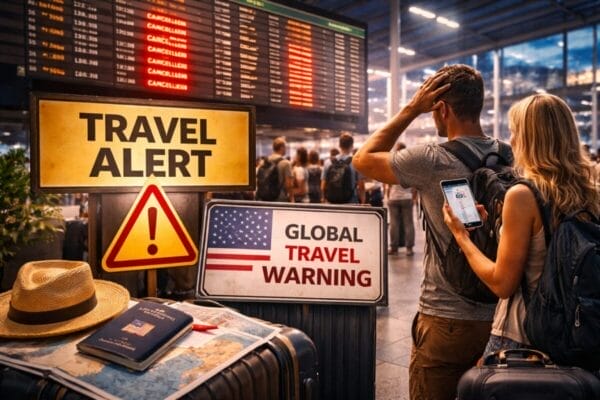
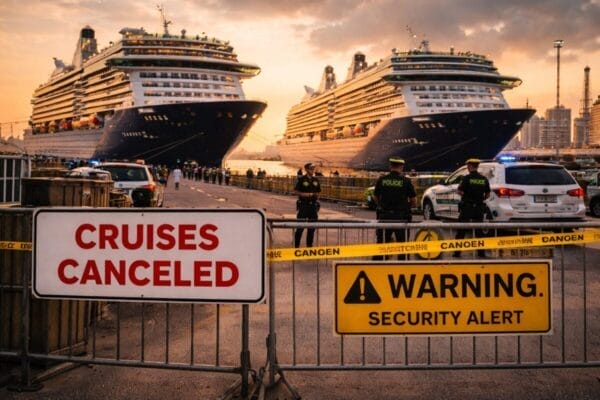


Escalating tensions in the Persian Gulf have disrupted regional travel. Thousands of cruise passengers now remain stranded in Abu Dhabi, Doha, and Dubai.
Military hostilities have intensified between Iran and a US-Israeli coalition. As a result, authorities have restricted key shipping routes. The Strait of Hormuz, a vital maritime corridor, has faced significant limitations.
Cruise itineraries across the Gulf have changed abruptly. Several ships remain docked as operators assess safety conditions. Passengers face uncertainty regarding departures and onward flights.
Abu Dhabi and Doha See Major Cruise Disruptions
Abu Dhabi currently hosts passengers aboard the Mein Schiff 4. The vessel had planned to dock in Dubai before returning to Germany. However, rising security risks forced the ship to remain in port.
Passengers onboard report heightened safety protocols. Crew members have restricted access to open deck areas. Travelers have received instructions to remain inside secure sections of the ship.
Meanwhile, the Mein Schiff 5 remains docked in Doha. Many passengers had already prepared to fly home. Airport authorities halted departures due to airspace closures. As a result, travelers returned to the vessel after extended airport waits.
No injuries have been reported so far. However, uncertainty continues to shape daily operations. Cruise operators monitor official security advisories closely.
Dubai and Regional Airports Face Widespread Closures
Air travel across the Gulf has also suffered major disruptions. Several countries have temporarily closed their airspace to civilian traffic. Authorities cite security concerns linked to potential missile threats.
Dubai International Airport, one of the world’s busiest hubs, has experienced flight suspensions and delays. Doha and Abu Dhabi airports have reported similar disruptions.
Major carriers, including Qatar Airways, Emirates, and Etihad Airways, have canceled or rerouted numerous flights. Travelers have filled airport terminals while awaiting updates.
Tourists attempting to depart the region now face extended delays. Many have sought temporary accommodation in nearby hotels. Travel agencies have worked to rearrange bookings, yet options remain limited.
Other Cruise Ships Remain in Gulf Ports
Several additional cruise vessels have docked in Gulf cities. Ships such as MSC Euribia, Celestyal Discovery, and Celestyal Journey remain in regional ports.
Although these ships have not reported immediate threats, passengers cannot continue their journeys. The lack of outbound flights has left many without return options.
Cruise operators continue to coordinate with local authorities. They aim to ensure passenger safety while awaiting improved travel conditions. However, itinerary adjustments may affect future sailings across the region.
Tourism Hubs Under Pressure
Dubai, Abu Dhabi, and Doha attract millions of international visitors annually. Tourism plays a central role in local economic growth.
Hotels in these cities now host stranded passengers and airline travelers. Hospitality providers have extended stays for affected guests. However, prolonged disruption could strain tourism infrastructure.
Retail, dining, and entertainment sectors may also feel the impact. Visitor spending often supports thousands of regional jobs. Therefore, extended instability could affect broader economic performance.
Travel experts warn that travelers may reconsider short-term visits to the Gulf. Safety perceptions influence booking decisions significantly. Even temporary disruptions can alter global tourism flows.
What Travelers Should Do Now
Travelers in or planning trips to the Gulf should take immediate precautions.
First, maintain constant communication with airlines and cruise lines. Official updates provide the most reliable guidance.
Second, prepare for extended delays. Keep essential medications, identification documents, and personal items accessible.
Third, secure comprehensive travel insurance coverage. Policies that include delay and cancellation protection offer additional security during crises.
Fourth, monitor official government travel advisories. Many countries update safety guidance regularly during regional conflicts.
Finally, avoid non-essential travel to affected areas until stability returns. Flexible travel planning can reduce financial and logistical stress.
Regional Travel Industry Faces Ongoing Challenges
The Persian Gulf serves as a strategic gateway for global aviation and maritime trade. Disruptions in this corridor affect both tourism and commercial shipping.
Airlines have already begun rerouting flights around restricted airspace. Such changes increase operational costs and travel time. Cruise companies may adjust future Gulf itineraries based on evolving conditions.
Tourism authorities across the UAE and Qatar continue to prioritize safety. They coordinate closely with security agencies to protect visitors. However, geopolitical tensions create unpredictable variables.
Uncertain Outlook for Gulf Tourism
The current crisis presents one of the most serious travel disruptions in recent years. Cruise passengers and air travelers alike face ongoing uncertainty.
If tensions persist, tourism flows into the region may decline temporarily. Travelers often seek alternative destinations during geopolitical instability.
Nevertheless, Gulf cities have demonstrated resilience in previous crises. Strong infrastructure and coordinated emergency management systems support recovery efforts.
For now, passengers remain in a holding pattern. Cruise ships stay docked. Airports operate under restrictions.
Travelers must stay informed and patient as authorities work toward stabilization. The coming days will determine how quickly Gulf tourism operations can return to normal.
For more travel news like this, keep reading Global Travel Wire