Modern cruise ships carry millions of passengers each year, and very few ever face an overboard emergency. Such incidents attract headlines because they are rare and dramatic. Cruise ships today feature advanced design, technology, and strict safety training, all of which make falling overboard extremely unlikely. Yet, when it happens, the crew responds within seconds, following a precise plan to maximize survival chances.
In recent years, a few incidents have made global news. One such event happened in 2023 when a passenger went overboard from the Norwegian Jewel during a transatlantic trip. Despite a large-scale search by rescue authorities, the passenger was not recovered. This case was tragic but also exceptional, given that over 32 million travelers cruised that year.
How Often Do Overboard Incidents Happen?
Industry data confirms that falling overboard is rare. Between 2009 and 2019, only 212 cases were reported worldwide. That equals fewer than 20 per year—a minuscule number compared with the millions who cruise safely. By 2023, the total number of recorded cases reached around 417. Statistically, the chance of falling overboard sits at roughly one in 1.4 million.
Cruising remains one of the safest vacation options available. Ships operate under global maritime rules, and safety inspections are constant. The number of incidents has not risen significantly in recent years, proving that stricter design and safety measures continue to work.
Why Do People Fall Overboard?
Almost every overboard case results from unsafe or intentional actions. Investigations show that accidents typically involve risky behavior—such as climbing railings, leaning over balconies, or ignoring safety barriers. Alcohol also plays a major role in many cases.
Cruise lines design their ships to prevent falls. Deck railings reach about 42 inches in height and use reinforced glass panels to make climbing difficult. Balcony railings stand at least one meter high. Each safety feature meets international maritime standards and undergoes inspection before every voyage.
How Crew Members Respond to an Overboard Emergency
When someone falls overboard, speed and coordination matter most. Crews train extensively for such emergencies. The moment a fall is reported or detected, the bridge team initiates a “Code Oscar,” the maritime term for “man overboard.” This alert triggers a chain reaction across the ship.
The ship immediately slows and turns to the person’s last known position. Lookouts scan the sea, while small rescue boats prepare for deployment. At the same time, nearby ships receive alerts, and coastal rescue authorities mobilize. Modern ships use advanced sensors, motion-detection cameras, and thermal imaging to locate anyone in the water. These technologies give rescuers a much higher chance of success, especially at night or in rough seas.
Despite all efforts, the ocean presents immense challenges. Strong currents, cold water, and limited visibility can make recovery difficult. However, trained crews act quickly, and every second counts toward saving a life.
Modern Cruise Design Prioritizes Passenger Safety
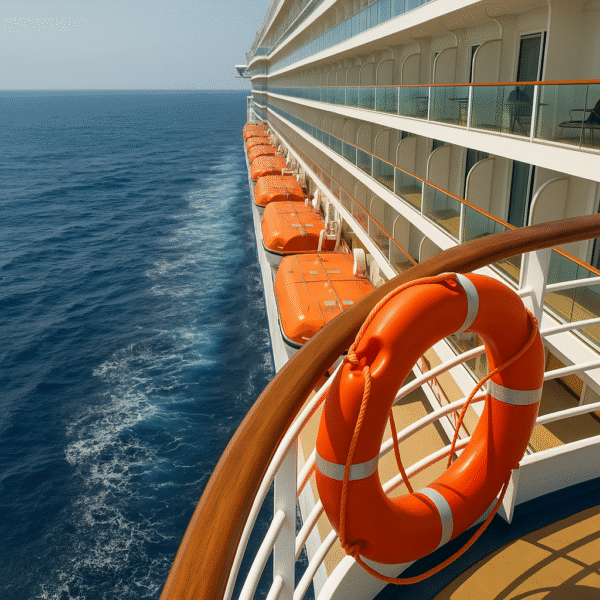
Cruise ship engineering emphasizes prevention above all else. Vessels today meet or exceed standards set by the International Maritime Organization. Each ship includes safety rails, surveillance systems, lifebuoys, and automatic detection technology. Some ships carry infrared sensors that can identify a person falling into the sea even at night.
Routine maintenance and inspections take place under strict schedules. Every cruise line must follow safety drills before departure, and all passengers receive emergency instructions. These systems ensure readiness for every situation, from fire to medical emergencies to an overboard alert.
What Passengers Can Do to Stay Safe
Personal responsibility also matters. Passengers should stay alert and follow safety rules. Avoid standing or sitting on balcony railings, running on wet decks, or leaning too far over barriers. Alcohol can impair judgment, so moderation helps prevent accidents.
If someone sees a person fall into the water, the first step is to shout for help and alert crew members immediately. Crew members train to respond within moments. Throwing nearby floating objects such as life rings or cushions can also help the person stay above water until help arrives.
Cruise lines also recommend that families discuss safety with children before the voyage. Explaining simple rules, like avoiding railings and walking carefully on deck, can prevent accidents.
Are Cruises Safe for Travelers?
Cruising remains one of the safest travel options in the world. The strict regulations that govern maritime operations ensure that every cruise ship meets high safety standards. Global cruise organizations, ship builders, and maritime authorities work together to improve safety technology year after year.
The probability of falling overboard is extremely low. The odds of a successful rescue improve with faster detection systems and better training. Most travelers never face any form of emergency during their voyage. Instead, they enjoy secure, well-managed experiences aboard vessels equipped with some of the most advanced safety tools in transportation.
The Future of Cruise Safety
Cruise companies continue investing in innovation. Smart surveillance systems, motion sensors, and real-time monitoring software are becoming standard. These tools provide earlier detection and faster coordination with coastguards.
Shipbuilders now design new vessels with enhanced deck layouts and safer balcony structures. Crew training also evolves constantly, ensuring rapid, organized action in any emergency. The focus remains on prevention, preparedness, and precision in every response.
A Safe and Enjoyable Way to See the World
While rare incidents capture attention, the reality is clear: cruising remains safe, secure, and enjoyable. Passengers can relax knowing that modern technology, trained crews, and international safety standards protect them at every stage of their journey.
Cruise vacations continue to attract millions each year because they combine comfort, exploration, and security. Understanding the measures in place helps travelers appreciate the precision and care that go into every voyage. For anyone seeking adventure at sea, a cruise offers one of the safest and most unforgettable ways to explore the world.
For more travel news like this, keep reading Global Travel Wire