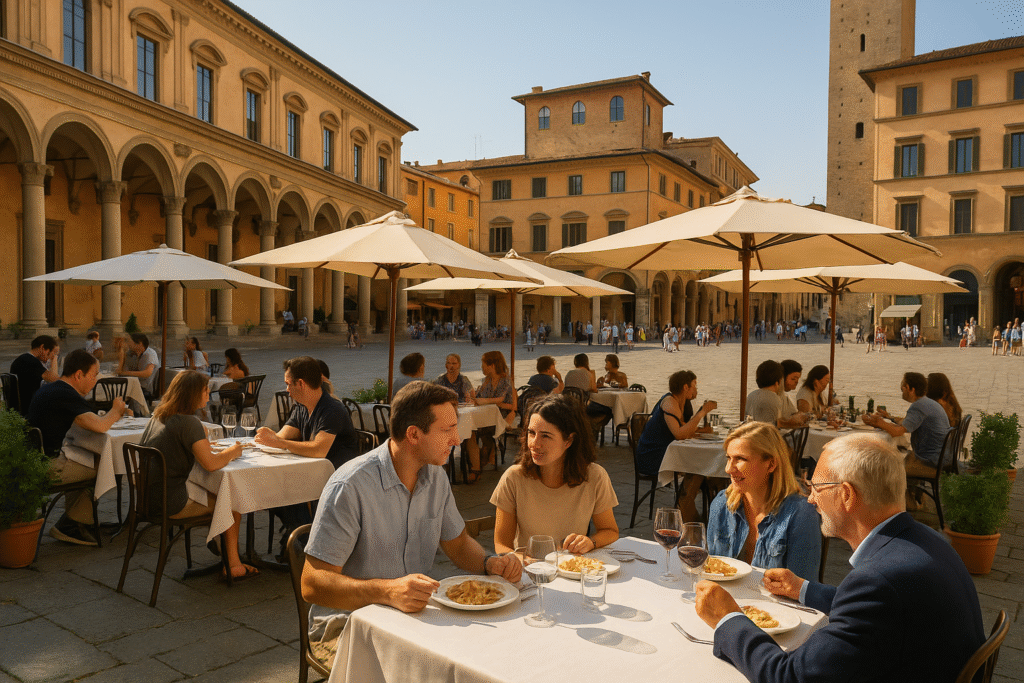
Italy’s world-renowned cuisine is now driving a major surge in tourism, with visitors from Germany, France and the United States leading the charge. This revival is reshaping the travel landscape in Italy and has spurred major airlines and hospitality operators to scale up in response to heightened demand for food-centric travel.
Food-Focused Travel Takes Flight
The Italian government’s statistics show that in 2023 the country welcomed approximately 133.6 million tourist arrivals, with foreign visitors representing just over half. Among these, Germany accounted for around 19.9 percent, the United States for 11.1 percent and France for 8.2 percent of international tourists.
At the same time, the market for culinary-themed travel in Italy is projected to grow rapidly—current estimates value the sector at tens of billions of dollars and forecast double-digit annual growth rates as travellers increasingly seek immersive food, wine and cooking-class experiences.
Airlines Expand Capacity to Meet Demand
With demand for culinary-travel experiences rising, airlines such as Germany’s flag carrier, France’s national airline and a major U.S. carrier have announced expansions in route networks to key Italian destinations. These carriers are adding flights, enhancing in-flight service to reflect Italian food culture and partnering with local culinary brands and tourism operators.
For example, the German airline is increasing the number of direct links from its hubs in Frankfurt and Munich to Rome, Milan and Venice and offering Italian-brand menus on board. The French carrier is boosting flights to Florence, Bologna and Naples from Paris, aligning routes with Italy’s gastronomic destinations. Meanwhile, the U.S. airline has expanded direct connections from New York, Chicago and Los Angeles to Rome and Milan, and developed premium packages that include cooking classes, wine-tour visits and hands-on food-experiences in Tuscany and Emilia-Romagna.
Hospitality Sector Gains from Food-Lover Influx
The ripple effects of this culinary tourism boom are clearly visible across Italy’s hospitality industry. As more visitors arrive with a focus on authentic food and wine experiences, hotels, resorts and tour-operators are adapting their offerings. Large hotel chains are embracing culinary-themes, offering cooking-class packages, wine tastings and farm-to-table dinners guided by local chefs. Boutique properties are leaning into ultra-local cuisine, truffle-hunts, vineyard visits and village-based stays where regional food traditions are strong.
The broader tourism sector in Italy is also thriving—international tourism spending has contributed significantly to the economy, supporting millions of jobs and positioning tourism as a key growth pillar for the country.
Regional Flavours Are Central to the Itinerary
Italy’s appeal lies in its regional diversity. German travellers often target cities such as Bologna, Florence and Milan for their fresh pasta, risotto and fine regional wines. French visitors gravitate toward Tuscany’s vineyards and the rustic cuisine of Emilia-Romagna. Americans increasingly seek out dishes such as Sicilian arancini, Neapolitan pizza and Piedmontese truffles, combining sightseeing with gastronomic exploration.
To get the most out of a culinary trip to Italy, travellers are being advised to plan by region: for example, fish- and seafood-rich fare on the Amalfi Coast and Sicily, saffron-infused risotto in Lombardy, and cooking classes amid the hills of Tuscany. Staying in boutique hotels or agritourism farms enhances the local-flavour experience and allows access to authentic dining experiences off the beaten path. Food markets such as those in Florence, Rome and Palermo also make great stops for sampling local produce, interacting with vendors and immersing in cultural traditions. Street-food options—like pizza al taglio in Rome, panzerotti in Milan and arancini in Sicily—round out the food-tour experience for those wanting quick bites between tours.
Travel Tips for the Culinary Traveller
- Book flights early: With airlines expanding routes in response to demand, securing seats early often means better value.
- Choose the right region: Tailor your itinerary by the type of cuisine you prefer—northern-Italy rice dishes, central-Italy pasta and wine, southern coastal seafood.
- Opt for smaller accommodations: Boutique hotels and agriturismi often offer access to local chefs, guided food tours and immersive experiences.
- Visit food markets and try street food: These are perfect for authentic tastes and engaging with local culture beyond formal dining.
- Include hands-on experiences: Cooking classes, vineyard and olive-grove tours add depth and make the trip more memorable.
Final Thoughts
Italy’s reputation as a culinary travel destination is stronger than ever. With Germany, France and the United States fueling growth, airlines and hospitality providers are responding in kind—opening up new routes and crafting food-focused tourism packages to meet the demand. For travellers who prioritise experiences rooted in food, wine and tradition, Italy remains an unrivalled destination. The result is not just another vacation, but a journey into the heart of Italian culture via its cuisine.
For more travel news like this, keep reading Global Travel Wire