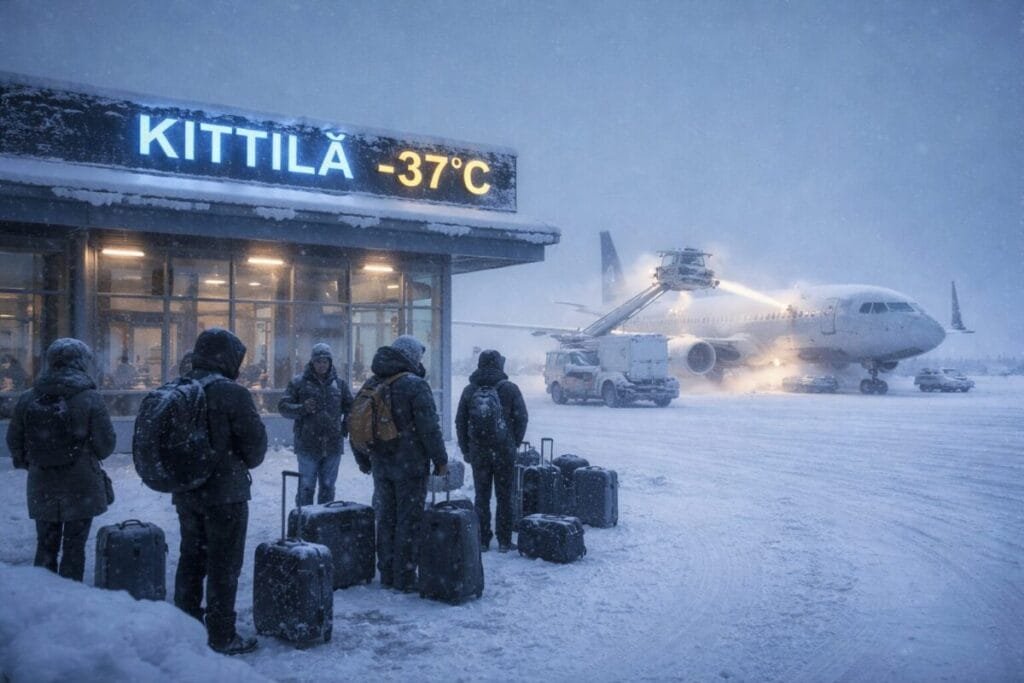
A severe cold wave has swept across northern Finland, stranding thousands of tourists and halting winter holiday travel at one of Lapland’s busiest airports. Temperatures plunged to around minus 37°C at Kittilä airport, freezing aircraft equipment and forcing widespread flight cancellations during one of the peak tourism periods of the season.
The extreme cold snap is forecast to persist, with temperatures edging closer to minus 40°C. Aviation authorities warned that the cold has made de-icing operations nearly impossible, causing cascading delays that left visitors stuck indoors and unable to reach their resorts and tour destinations.
Lapland’s Harsh Winter Hits Peak Season
Lapland attracts hundreds of thousands of visitors each winter, drawn by skiing, aurora viewing, snow safaris, and its famed Santa-themed tourism villages. The region typically embraces winter extremes, but this season’s cold has surpassed normal averages.
Kittilä airport, located in the heart of Lapland’s tourism corridor, reported one of its coldest mornings in years. The Finnish meteorological services highlighted that temperatures were far below typical seasonal lows for early January. Cold conditions forced crew to pause operations several times due to limited ground visibility, frozen components, and unsafe outdoor working conditions.
Local tourism operators have been assisting stranded visitors with emergency lodging and indoor activities. Many winter excursions, such as snowmobile tours and husky safaris, were temporarily paused due to risks related to frostbite and machinery failure.
Travel Disruptions Spread Across Europe
The cold wave affecting Finland forms part of a wider Arctic weather pattern spreading through northern, central, and eastern Europe. Transport sectors across the continent have been hit, causing ripple effects on rail and air networks during a busy winter travel window.
Germany Battles Snowstorms
In Germany, heavy snowfall forced train operators to suspend services in several northern states. Railway infrastructure struggled under layers of compacted ice, while frozen switches caused widespread delays. Authorities moved schools to online learning in the populous North Rhine-Westphalia region to reduce road travel and prevent additional hazards.
Major highways suffered long closures as plows worked continuously to keep emergency corridors open. Drivers were urged to stay home unless travel was essential. Several airports in central Europe also experienced delays as airlines grappled with aircraft de-icing shortages and runway clearing schedules.
Baltic Countries Brace for Intensifying Snow
The Baltic states, including Estonia, Latvia, and Lithuania, issued winter storm advisories and urged residents to limit road use. Icy conditions led to increased traffic accidents and stalled vehicles. Snow alerts remained in place as meteorological forecasts warned of worsening blizzards and freezing winds.
Tourists Face Long Waits and Altered Holiday Plans
For many travelers, the extended wait at Kittilä airport has reshaped winter holiday plans. With flights paused and road travel hindered by deep snow, tourists were forced to stay indoors for safety. Local hotels and resorts coordinated with tour operators to provide meals, indoor entertainment, and updated travel briefings.
Families visiting Lapland for Santa attractions found villages partially closed due to frost risks. Adventure tourism, one of Lapland’s strongest draws, remained on hold in several areas as temperatures dropped below thresholds suitable for prolonged outdoor exposure. Medical services warned that frostbite could occur in minutes and encouraged layered clothing for anyone stepping outside.
Authorities Prioritize Safety and Infrastructure Stability
Government emergency teams in Finland deployed additional resources to maintain road connectivity and support stranded passengers. Airport authorities worked in shifts to restart operations when safe, focusing on aircraft de-icing and runway treatment.
Meteorologists noted that deep freezes of this intensity strain not only tourism but also energy infrastructure. Northern Finland reported increased electricity consumption as households and tourism facilities boosted heating systems. Power supply remained stable, but officials monitored reserves and advised energy conservation.
Outlook: Winter Weather Expected to Continue
Forecast models indicate that the Arctic air mass will linger throughout the week, keeping Finland and neighboring countries in freezing conditions. Travel advisories remain active across much of Europe, encouraging flexible planning and real-time monitoring of weather updates.
For future travelers, Lapland authorities recommend more adaptable travel schedules during peak winter months, as climate patterns have become increasingly unpredictable. However, tourism boards remain optimistic that once operations stabilize, interest in winter attractions will rebound quickly. Lapland has long built its identity around winter magic, and many visitors remain eager to experience its snow landscapes, scenic silence, and aurora nights once conditions improve.
For more travel news like this, keep reading Global Travel Wire