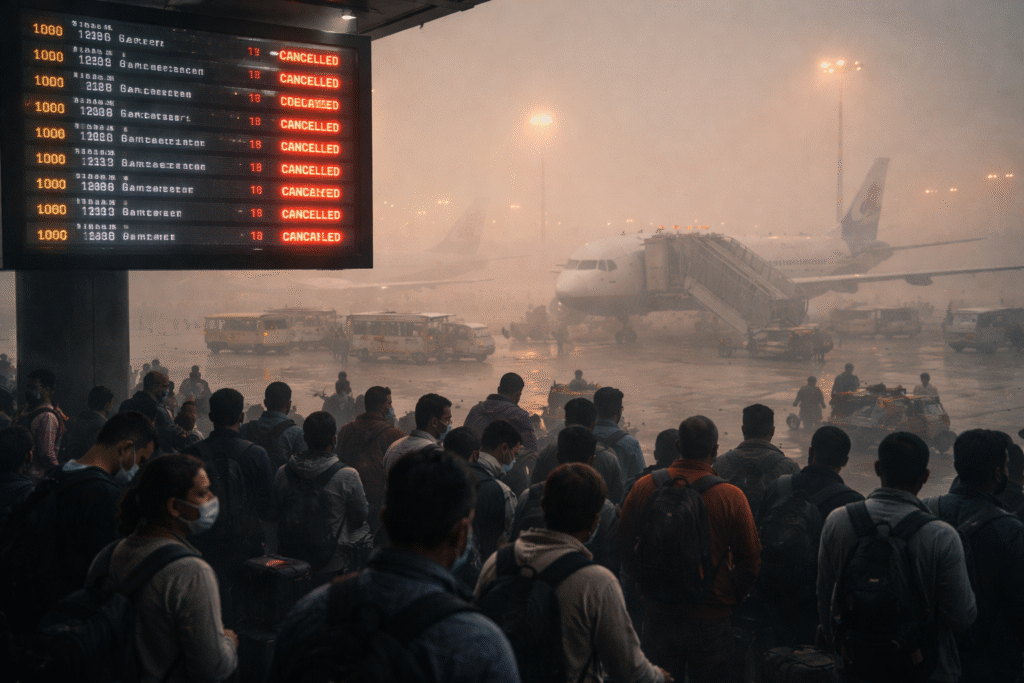
Delhi has plunged into a severe travel crisis as toxic smog and dense fog cripple aviation operations. Over 170 flights have been cancelled and nearly 700 delayed. The choking mix of poor air quality and near-zero visibility has brought normal travel to a standstill. Passengers experienced hours of uncertainty as flight schedules collapsed across terminals.
The crisis follows days of deteriorating air quality and unusually persistent winter fog. The combination has created one of the most challenging travel periods of the season for India’s busiest aviation hub.
Dense Fog Triggers Low Visibility Procedures
Thick fog engulfed Indira Gandhi International Airport from early morning, triggering strict Low Visibility Procedures. These procedures limit take-offs and landings when visibility drops below safe thresholds. As a result, almost all morning and noon operations were delayed or suspended.
Flight data indicated more than 170 cancellations, with both domestic and international carriers affected. Nearly 700 flights were delayed, many by 30–50 minutes, and several airlines were forced to adjust schedules throughout the day.
Airlines flagged potential rolling delays as fog was expected to persist overnight and into the next morning.
Air Quality Plunges Into “Severe” Range
Along with fog, Delhi’s toxic smog intensified travel troubles. The Air Quality Index climbed above 400 in many areas, touching the “severe” category. Localities such as Anand Vihar and Vivek Vihar recorded extremely high particulate matter concentrations.
Calm winds, slow dispersion and winter inversion layers have trapped pollutants close to the surface. This has created a dangerous blanket of smog that limits visibility and poses serious health risks.
Government monitoring agencies warned that the “severe” category may persist for at least two more days due to slow improvement in atmospheric conditions.
Health Concerns Rise as Pollution Worsens
The toxic air has sparked widespread health concerns. Residents reported eye irritation, breathlessness and coughing. Doctors advised people with asthma, heart disease and other chronic conditions to avoid outdoor exposure.
Schools in several zones were asked to limit outdoor activity. Some education authorities encouraged staggered classes or indoor-only schedules. Public health advisories recommended wearing certified masks and reducing prolonged outdoor travel.
The elderly, children and pregnant women were listed as high-risk groups. Citizens were also urged to use air purifiers indoors during peak pollution hours.
Impact on Tourists and Travel Plans
Tourists arriving in or departing from Delhi faced major disruptions. Many found themselves stranded at terminals or forced to reschedule plans. Popular tourist circuits, including routes to Agra, Jaipur and Uttarakhand, witnessed a surge in delays due to road congestion and low visibility.
Travel agencies reported a spike in queries about cancellations, refunds and alternative routes. Some operators shifted travelers to rail services, though those too experienced late departures because of fog-related speed restrictions.
For international visitors, long layovers and missed connections created additional challenges.
Government Measures and Emergency Steps
Authorities activated emergency response measures under the Graded Response Action Plan. These included restrictions on construction activities, enhanced street-watering and tighter checks on industrial emissions. Traffic police increased enforcement of vehicle pollution norms.
Airport authorities deployed additional ground staff and passenger support teams. Announcements were made urging travelers to check flight status before heading to the airport.
Meteorological forecasts indicated persistent cold conditions, dense morning fog and slow improvement in air quality over the next 48–72 hours.
Outlook for the Coming Days
Delhi is expected to experience more foggy mornings this week, with gradual improvement by mid-week as winds strengthen. Air quality is likely to remain in the “very poor” or “severe” range until wind speed increases enough to disperse pollutants.
Travelers have been advised to plan ahead, arrive early for flights, and track airline updates. Tourists are encouraged to keep indoor alternatives in their itinerary, particularly during early morning hours when fog is thickest.
Despite ongoing government measures, experts note that sustainable long-term solutions are essential. These include cleaner fuel adoption, better waste management, improved public transport and stricter industrial compliance.
Conclusion
Delhi’s travel network has been pushed to its limits due to the combined impact of toxic air and dense fog. With hundreds of flights cancelled or delayed, the situation remains challenging for residents and visitors alike. As the capital waits for weather relief, travellers are urged to stay informed and prioritize safety while navigating the disruptions.
For more travel news like this, keep reading Global Travel Wire