



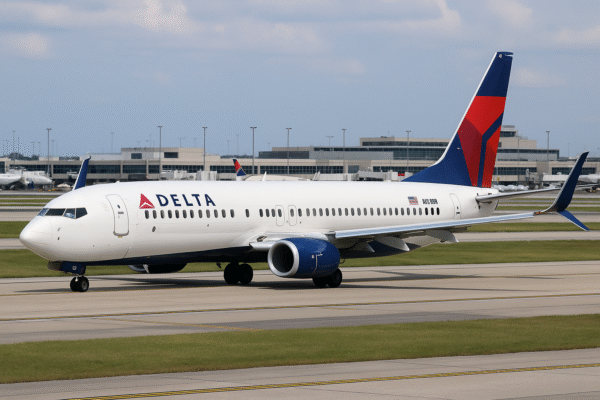
The aviation and tourism industries received a major boost as Delta Air Lines announced a robust financial and operational performance for the September quarter. With rising passenger demand, improved operational efficiency, and a renewed focus on sustainability, the airline’s results reflect not just a rebound, but a long-term upward trajectory for global travel and tourism.
For the September 2025 quarter, Delta’s performance highlighted how closely airline recovery is linked to the broader revival of international and domestic tourism. As leisure travelers return in full force and business travel gains momentum, the global aviation market is showing encouraging signs of stability and expansion.
Financial Highlights of the September Quarter
Delta reported total operating revenue of $16.7 billion, marking a significant year-on-year increase. Operating income stood at $1.7 billion, representing a healthy operating margin of 10.1%, while pre-tax income reached $1.8 billion. Earnings per share were recorded at $2.17, underscoring the airline’s profitability and resilience in a challenging economic environment.
Operational cash flow remained solid at $1.8 billion, giving Delta flexibility to manage its $14.9 billion debt and support future investments. These figures not only illustrate Delta’s strong position but also signal stability within the aviation industry as airlines worldwide adapt to post-pandemic travel patterns.
Rising Passenger Demand Fuels Tourism Growth
Delta’s rebound is being driven by two critical segments: leisure travel and business travel. Leisure tourism remains the backbone of recovery, with travelers prioritizing vacations, family visits, and adventure trips after years of restricted mobility. At the same time, corporate travel—once a lagging segment—has steadily regained momentum as global companies resume in-person meetings and events.
This dual recovery has directly boosted Delta’s revenue per available seat mile (RASM) and yield per passenger mile, two key indicators of airline efficiency and passenger value. Strong booking trends demonstrate how travel demand continues to surpass expectations, particularly across international long-haul routes.
For the tourism sector, Delta’s performance is a signal of broader global revival. A surge in travel translates into more hotel bookings, higher demand for cultural attractions, and increased spending in local economies around the world.
Outlook for December Quarter and Holiday Travel
The December quarter traditionally marks one of the busiest seasons for global tourism, and Delta projects continued growth during this period. With families reuniting for the holidays, travelers heading abroad for winter getaways, and corporate travelers making end-of-year trips, the airline expects both domestic and international routes to operate near capacity.
Higher average fares are anticipated, as travelers book earlier to secure flights during peak demand. Delta has expanded flight capacity to meet this surge, particularly to popular destinations in Europe, Latin America, and Asia-Pacific. However, the airline remains cautious, acknowledging risks such as weather disruptions, labor issues, and geopolitical tensions that could affect schedules.
Projections for Fiscal Year 2025
Looking ahead to the full fiscal year 2025, Delta Air Lines projects strong and sustained growth. The airline forecasts revenue increases across both domestic and international markets, supported by rising passenger traffic, premium cabin demand, and steady cargo operations.
Tourism is set to benefit significantly from these trends. Delta’s expansion into key international hubs will encourage inbound tourism to the United States while facilitating outbound travel for Americans exploring global destinations. These dynamics align with government data forecasting record-breaking international arrivals in the next two years.
Sustainability and Long-Term Strategy
Beyond financial performance, Delta has reinforced its commitment to sustainable aviation. Investments in fuel-efficient aircraft and next-generation technologies are at the core of its long-term strategy. The airline is actively working toward reducing its carbon footprint, supporting industry-wide initiatives for net-zero emissions, and partnering with airports to enhance eco-friendly operations.
For the tourism industry, such initiatives are critical. As global travelers become more eco-conscious, airlines that prioritize sustainability are likely to gain a competitive advantage. Delta’s efforts are expected to resonate strongly with environmentally aware tourists who consider green travel practices when choosing carriers.
CEO’s Statement on Future Growth
Delta’s Chief Executive Officer, Ed Bastian, expressed confidence in the airline’s trajectory. “Our September quarter results reflect not just strong execution but also improving fundamentals in global travel. With the dedication of our team, we are delivering excellence in customer experience and strengthening our leadership in the aviation sector. As we enter the final stretch of our Centennial year, we are positioned to close 2025 with strong performance and build momentum into 2026.”
Tourism Industry Impact
The aviation sector and tourism industry are deeply interconnected, and Delta’s success has far-reaching implications. As air connectivity strengthens, destinations worldwide can anticipate growth in visitor numbers. Hotels, resorts, local businesses, and cultural attractions will benefit from higher tourist spending, fueling economic recovery in many regions.
Delta’s positive results also indicate stability for the global aviation network, giving confidence to travel agencies, tour operators, and hospitality providers. This synergy highlights that the rebound in air travel is not temporary but a foundation for long-term prosperity across the entire tourism ecosystem.
Conclusion
Delta Air Lines’ strong September quarter results mark a turning point for both aviation and tourism. With financial stability, rising passenger demand, and a focus on sustainability, the airline is positioned for robust growth in the December holiday season and throughout fiscal year 2025.
For global tourism, this recovery means more opportunities, stronger connectivity, and renewed traveler confidence. Delta’s journey reflects not only the airline’s resilience but also the enduring spirit of the tourism industry, which continues to thrive as people rediscover the joy of travel.
For more travel news like this, keep reading Global Travel Wire