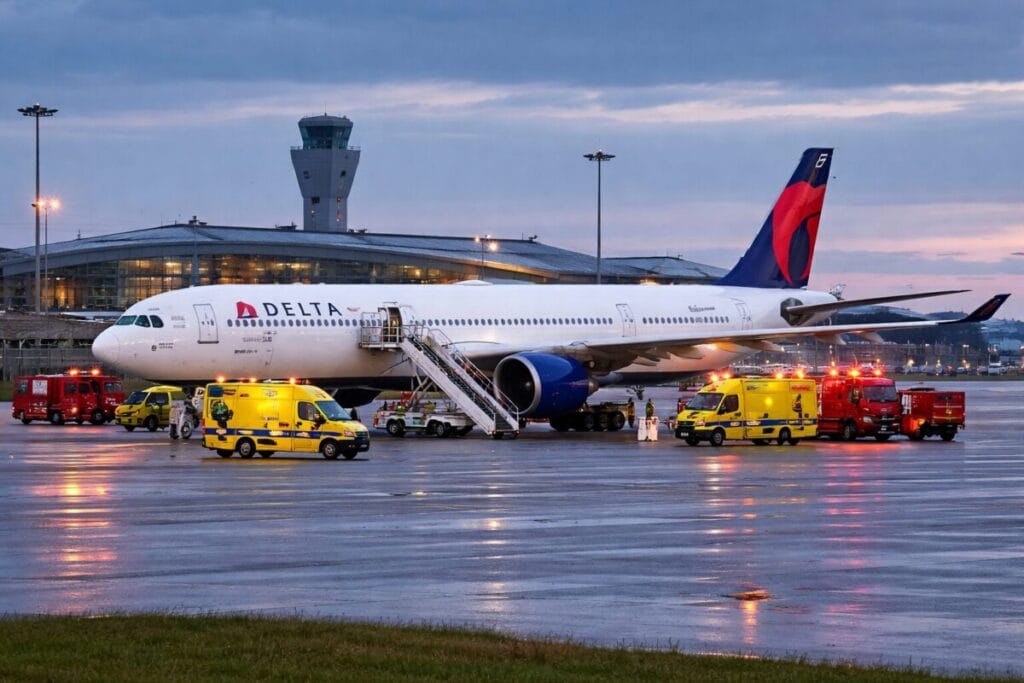
A routine transatlantic journey turned into breaking aviation news when Delta Air Lines flight DL90 made an unexpected emergency landing at Dublin Airport. The Airbus A330-900 departed Orlando International Airport for Amsterdam Schiphol on schedule. However, a medical emergency onboard forced the crew to change course mid-flight.
Passengers expected a smooth overnight journey across the Atlantic. Instead, they experienced an unscheduled stop in Ireland that delayed their arrival and disrupted travel plans.
The incident highlights how airlines manage emergencies during long-haul flights and how passenger safety always remains the top priority.
What Happened During Delta Flight DL90?
Flight DL90 had already spent several hours cruising across the Atlantic when a passenger developed a serious medical issue. Cabin crew quickly assessed the situation and coordinated with the cockpit.
Airlines train crews to respond rapidly to medical incidents. In this case, the captain consulted airline operations teams and evaluated available diversion airports. Dublin Airport emerged as the safest and most practical option due to its location, medical facilities, and operational readiness.
The pilots initiated a diversion while maintaining communication with air traffic control and ground teams.
Why Dublin Airport Was Chosen
Dublin serves as a key diversion airport for transatlantic flights. Its geographic position makes it an ideal emergency stop for aircraft traveling between North America and Europe.
The airport offers advanced medical services, efficient emergency response teams, and strong infrastructure capable of handling wide-body aircraft such as the Airbus A330-900.
Choosing a nearby and well-equipped airport helps minimize risk during emergencies. It allows medical professionals to assist affected passengers quickly while ensuring the rest of the flight continues safely.
Emergency Landing and Ground Response
The aircraft landed safely in Dublin early Saturday morning. Emergency medical personnel waited on standby before the plane touched down. After landing, teams boarded the aircraft and attended to the passenger requiring assistance.
Airport authorities coordinated closely with airline staff and air traffic controllers to manage the situation smoothly. Even during busy operational periods, emergency procedures ensured minimal disruption to other flights.
The rapid response demonstrated how airlines, airports, and medical teams collaborate effectively during unexpected incidents.
Passenger Experience During the Diversion
For travelers onboard, the sudden diversion created uncertainty. Many passengers had connecting flights in Amsterdam or planned arrivals for business or leisure.
Cabin crew provided updates and reassurance throughout the process. Clear communication helped reduce anxiety and allowed passengers to understand why the delay was necessary.
While diversions can cause frustration, most passengers recognized that safety decisions come first. Airlines typically assist with rebooking connections or arranging accommodations when delays impact onward travel.
Preparing the Aircraft to Continue
After medical teams completed their work, ground crews refueled the aircraft and conducted safety checks. These steps ensured the plane remained fully operational before continuing its journey.
The aircraft stayed on the ground for a limited time. Once cleared for departure, the flight resumed its route to Amsterdam Schiphol Airport.
Although passengers faced a delayed arrival, the efficient turnaround allowed the journey to continue without further complications.
Impact on Amsterdam Schiphol Operations
Amsterdam Schiphol operates one of Europe’s busiest international hubs. Any delayed arrival can affect airport scheduling, gate availability, and passenger connections.
Travelers arriving later than expected often encounter longer queues at immigration and may miss onward flights. Airlines and airport teams typically work together to reduce disruption by providing rebooking support and guidance.
In this case, airline staff assisted affected passengers upon arrival to help them continue their journeys.
Medical Emergencies and Airline Safety Protocols
Medical diversions remain uncommon but essential parts of global aviation. Airlines maintain strict procedures for onboard health incidents. Crew members receive training in first aid, communication with medical experts, and emergency coordination.
During long-haul flights, crews evaluate factors such as remaining flight time, passenger condition, and available airports before deciding to divert.
Medical kits, onboard communication systems, and cooperation with ground-based medical advisors help crews make informed decisions quickly.
Lessons for Travelers: Expect the Unexpected
The diversion serves as a reminder that air travel can change unexpectedly. Weather conditions, technical issues, or medical emergencies can alter flight plans at any time.
Travelers can prepare by allowing buffer time for connections and staying informed through airline notifications. Many experienced travelers also consider travel insurance to reduce stress when unexpected delays occur.
Flexibility remains important during international travel, especially on long-haul routes.
Aviation Industry Perspective
Airlines continue to prioritize safety above schedule performance. Diversions may inconvenience passengers temporarily, but they prevent more serious risks.
The successful handling of Delta Flight DL90 shows how aviation systems work together during emergencies. From cockpit decisions to airport coordination, every step follows established safety standards.
Such incidents also demonstrate the importance of global aviation networks. Major airports positioned along transatlantic routes play critical roles in supporting emergency landings.
Conclusion
The emergency landing of Delta Flight DL90 in Dublin highlights both the unpredictability of long-distance travel and the strength of aviation safety protocols. A medical emergency forced a quick decision, but trained crews and coordinated ground teams ensured a safe outcome.
Although passengers faced delays and altered schedules, the swift response protected everyone onboard. The incident serves as a clear example of how airlines prioritize human safety while maintaining efficient operations across international skies.
For more travel news like this, keep reading Global Travel Wire