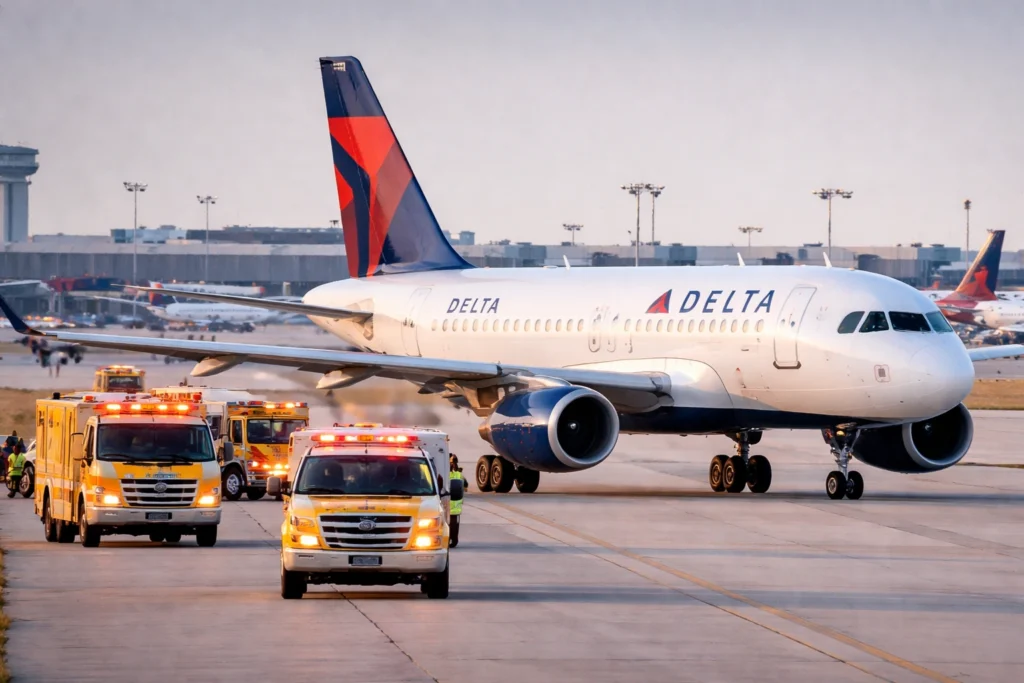
Delta Flight DL2351 made an emergency return to Dallas shortly after departure. The flight was heading to Boston when the crew noticed an irregularity. They immediately chose to turn back and land safely.
The aircraft, an Airbus A319, had just begun its climb. The crew acted quickly to keep the aircraft close to Dallas Fort Worth International Airport. This decision ensured access to full ground support and reduced risk.
Early Turnaround Highlights Quick Crew Response
The flight did not reach cruising altitude before the turnaround. Data shows that the aircraft remained at a low altitude during its return. This pattern suggests the issue emerged very early in the journey.
Pilots followed standard safety procedures and reversed course without delay. Their quick response helped maintain full control of the situation. The aircraft landed safely with no reported injuries.
Passengers likely experienced a calm but unexpected return. Flight crews typically provide clear communication during such events to avoid panic.
Emergency Landing Completed Without Incident
The aircraft landed safely back at Dallas Fort Worth International Airport. Emergency landings often sound alarming, but they are usually precautionary. In this case, the landing appeared controlled and smooth.
Pilots train extensively for such scenarios. They focus on minimizing risk and ensuring passenger safety at all times. The crew followed these principles throughout the incident.
No escalation occurred during the return. Ground teams handled the aircraft upon arrival for inspection and support.
Possible Causes Remain Unconfirmed
Officials have not released the exact cause of the incident. However, aviation experts recognize several common triggers for early returns. These include minor technical alerts or unusual instrument readings.
Other possibilities include communication inconsistencies or procedural warnings. These alerts do not always indicate serious faults. Instead, they signal the need for further inspection on the ground.
Modern aircraft systems prioritize caution. Even minor irregularities can lead to a return decision. This approach ensures that potential risks never escalate.
Aviation Safety Protocols Guide Every Decision
Airlines follow strict safety protocols during every flight. These protocols require immediate action when crews detect unusual conditions. Returning to the departure airport often provides the safest option.
In this case, staying close to Dallas allowed quick access to runways and support teams. It also reduced time spent airborne under uncertain conditions.
These decisions reflect a safety-first mindset. Airlines always prioritize passenger well-being over schedule or convenience.
Impact on Passengers and Flight Operations
The sudden return disrupted travel plans for passengers. The Boston journey stopped immediately, and passengers required rebooking. Airlines usually arrange alternative flights or accommodations in such situations.
Operational impacts also extend beyond one flight. Aircraft inspections can delay future schedules. Crew assignments and connecting flights may also face adjustments.
At a major hub like Dallas Fort Worth, teams manage disruptions efficiently. However, delays can still affect broader airline operations.
Industry Perspective on Emergency Returns
Emergency returns like this one often draw public attention. However, they occur regularly as part of normal aviation operations. These incidents rarely indicate serious danger.
Airlines now use advanced monitoring systems to detect issues early. This technology allows crews to act before problems develop further. As a result, precautionary landings have become more common.
This trend reflects stronger safety standards across the aviation industry. Airlines now take faster and more conservative actions than in the past.
Why Precautionary Landings Matter
Precautionary landings play a crucial role in aviation safety. They allow crews to address concerns before they escalate. This approach reduces risk and protects passengers.
Travelers may face inconvenience due to delays. However, these decisions ensure that safety remains the top priority. Airlines prefer short-term disruption over potential long-term risk.
This incident reinforces the reliability of modern aviation systems. Early detection and quick response prevent serious outcomes.
What Travelers Should Understand
Passengers should view such incidents as part of standard safety practice. Flight crews follow strict guidelines designed to protect everyone onboard.
Returning shortly after takeoff often provides the safest outcome. It allows immediate inspection and resolution of any issue. Travelers can trust that airlines act with caution and responsibility.
This approach reflects the strength of global aviation safety systems. It ensures consistent protection across all flights.
Final Thoughts
Delta Flight DL2351’s return to Dallas highlights how aviation systems work effectively. The crew detected an irregularity and responded without delay. Their actions ensured a safe outcome for all passengers.
The exact cause remains unknown, but the response followed established safety protocols. This incident shows how modern aviation prioritizes prevention over risk.
Ultimately, the safe landing demonstrates the industry’s commitment to safety. Every decision aims to protect passengers and maintain trust in air travel.
For more travel news like this, keep reading Global Travel Wire