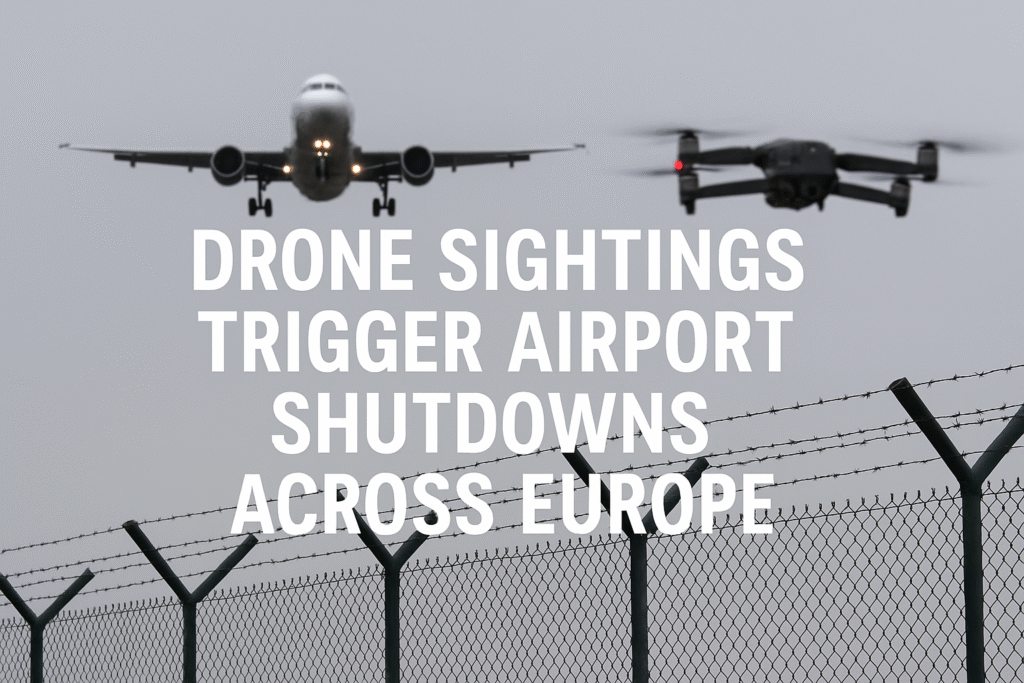
Major airports across Europe have been rocked by a wave of drone sightings near restricted airspace, with the latest incident in Spain joining a growing list of travel-chaos events in Germany, Denmark, Belgium and Norway. The escalation in unmanned aerial vehicle incursions has forced flight suspensions, diverted aircraft and raised urgent questions about air-travel security on the continent.
The Surge in Drone Disruptions Across Europe
In recent weeks, airports and aviation authorities across Europe have reported increasing numbers of drone intrusions into controlled airspace. The incident in Spain on October 27, 2025, saw one of the country’s busiest airports suspend all departures and arrivals for more than two hours after a drone was detected near the runway. This disruption echoed earlier closures at airports in Germany, where one major hub was forced to cancel numerous flights following drone sightings, as well as in Denmark and Norway, where multiple flights were diverted or suspended after unmanned aircraft were spotted. These patterns reflect a broader trend of air-travel vulnerability and infrastructure challenge across international borders.
The German case is emblematic: a major airport in Munich had to halt operations twice in quick succession following multiple drone reports, leaving thousands of passengers stranded and flights cancelled or diverted. Meanwhile in Denmark, police concluded that drone incursions over Copenhagen Airport appeared to be the work of a “capable operator” and labelled the events “the most serious attacks on critical infrastructure” the country has faced. At the same time, Belgium confirmed drones were seen above a military base, illustrating how unmanned aerial activity is now affecting both civil aviation and defence installations.
Spain’s Incident: A Wake-Up Call for Tourism and Aviation
Spain’s entry into the scenario centred on the district of Alicante, where local aviation authorities detected an unauthorised drone near the runway of a major international airport. The immediate closure of the airfield triggered flight diversions, delays and cancellations, as travellers scrambled to re-route or reschedule. Although air services were restored within a few hours, the disruption left a clear mark on holiday-makers, business travellers and the tourism ecosystem.
The timing is pivotal: Spain’s coastal resorts and major tourism nodes depend heavily on steady flight arrivals and dispatches. Every instance of disruption not only inconveniences travellers but also adds cost, erodes confidence and amplifies operational complexity for airlines, ground handlers and hospitality providers. As Spain joins the increasing list of affected countries, tourism-industry observers are watching the ripple effects: guests may reconsider destinations with perceived higher risk of unfolding travel-chaos.
Broader Implications for Travel, Tourism and Security
The frontier between tourism and security is being sharply redrawn. The drone-related disruptions are not simply about flight delays: they speak to the vulnerability of modern aviation infrastructure, the unpredictability of unmanned threats and the need for cross-sector resilience—from airport operations to local tourism economies.
For travellers, the key takeaway is that destination-plans may now need to factor in operational unpredictability. An airport closure can cascade into lost transfers, missed connections, added costs and changes to itineraries. For tourism destinations that rely on steady flows of incoming visitors, such disruptions increase the risks of reputational damage, decreased visit volumes and higher operating overheads.
From a security standpoint, the drone incursions have triggered urgent dialogues among governments, defence agencies and civil-aviation regulators. Hybrid-threat specialists note that the spread of drone disruption across several countries suggests coordination or at least concerted intent—not random hobby-level activity. NATO and other alliances are now pushing deeper drone-defence integration, sensor networks, jamming systems and stricter air-zone monitoring to restore confidence in travel infrastructure.
What Travellers and Industry Stakeholders Should Know
If you’re planning travel to Europe or passing through major continental airports, here are some key points to consider:
- Check your airport and airline updates frequently: drone-related disruptions can happen with little warning and can delay you by hours or cause rerouting.
- Stay flexible in your travel plans: allow extra time for connections, delays and transfer adjustments.
- Understand your rights: in many cases flight cancellations due to security incidents may not automatically trigger full compensations under standard policies—so review your insurance and cancellation terms.
- For destinations: tourism providers should be ready to support redirected or delayed passengers, adjust transfer logistics and communicate proactively about potential disruptions.
- From a wider vantage: airports and tourism destinations need to collaborate on contingency-planning—quick evacuation, guest-communication, alternative transport and mitigation of visitor-experience issues matter now more than ever.
Looking Ahead: Will Europe Adapt?
The current wave of drone-incidents is acting as a stress-test for Europe’s aviation and tourism resilience. Countries affected are accelerating counter-drone programmes, deploying anti-UAV technologies and reworking air-traffic protocols. For tourism-focused economies this means that future travel-safety narratives will increasingly include how well destinations handle technology-triggered disruptions—not just natural disasters or traditional logistic problems.
Although the immediate travel-chaos will ebb, the longer term challenge lies in how rapidly aviation and tourism stakeholders can build robust systems that neutralise emerging threats. Whether it’s smarter airport defences, quicker response networks or better visitor-information flows, the expectation for personalisation, reliability and safety in travel is rising.
Conclusion
Travelling in Europe in 2025 now comes with an extra dimension of caution: unmanned aircraft, security-alerts and airport shutdowns are no longer rarities but growing disruptions. Spain’s joining of the club of countries affected by drone-related airport closures brings the issue closer to many more travellers and tourism markets than ever before. While no incident resulted in major damage or loss of life in this wave, the hit to flight-rather-than-holiday plans is real—and the logic extends beyond simply delays. It reflects a changing travel-security environment where destination appeal, infrastructure reliability and visitor confidence are all interlinked.
If you are planning European holidays, business travel or tourism investment, keeping one eye on logistics and one on security-readiness has become a new norm. The dronemaking disruption may not last forever, but the implications for how Europe markets, manages and experiences travel have just taken on a new urgency.
For more travel news like this, keep reading Global Travel Wire