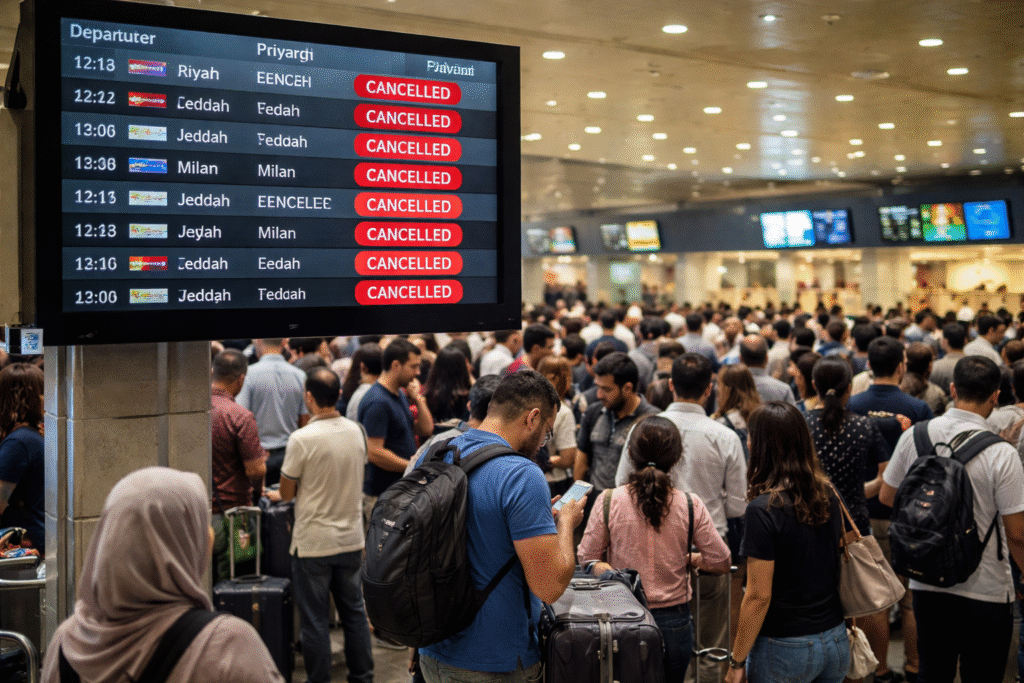
Egypt is facing a new wave of travel disruption as ten international flights were cancelled across Cairo, Sharm El Sheikh and Alexandria airports. The cancellations struck key routes to Saudi Arabia and Italy, affecting thousands of travelers heading to Riyadh, Jeddah and Milan. The situation has created heavy congestion at airport terminals and forced airlines to rebook passengers on limited alternative flights.
Airlines impacted include Saudia, Flynas and Marsa Airlines. Friday’s peak travel period intensified the effect, making it harder for passengers to secure replacement flights or adjust onward connections.
Alexandria Flights Cancelled Late Evening
Alexandria International Airport experienced one major cancellation that affected passengers flying to Saudi Arabia.
The Saudia flight scheduled to depart for King Khalid International in Riyadh was cancelled shortly before departure time. This caused significant inconvenience for travelers who had planned to connect onward from Riyadh.
Airport operations teams provided assistance at counters, but alternative flights remained limited due to a crowded weekend schedule. Passengers are currently encouraged to monitor updates closely, as changes may continue through the evening.
Sharm El Sheikh Hit by Midday Disruption
Sharm El Sheikh, one of Egypt’s busiest tourist hubs, also reported a key cancellation. A Saudia flight heading to Riyadh was removed from the schedule, affecting travelers returning home or connecting through the Saudi capital.
This disruption comes as the airport continues to handle a busy winter tourism season, which typically brings increased traffic from European and Gulf countries. With higher flight density, even a single cancellation can create longer queues at airline service desks and lengthen waiting hours.
Cairo Airport Records the Highest Number of Cancellations
Cairo International Airport, Egypt’s largest aviation hub, recorded the bulk of the cancellations. Multiple flights heading to Riyadh, Jeddah and Milan were called off across the day. The affected airlines ranged from Saudia and Flynas to Egypt’s national carrier, Marsa Airlines.
The cancelled flights included morning, afternoon and late-night departures, adding pressure across all three terminals. Travelers reported longer security lines, limited seating at boarding areas and challenges securing updated itineraries.
The impacted destinations were three major international airports:
- King Khalid International (Riyadh)
- King Abdulaziz International (Jeddah)
- Malpensa International (Milan)
These hubs handle large passenger volumes between Egypt, the Gulf and Europe, making their cancellations particularly disruptive for business travelers, residents and tourists.
Why These Travel Disruptions Matter
The sudden cancellations highlight broader pressures facing regional aviation. Airlines operating between Egypt and the Gulf often run at high capacity, especially during weekends, holiday seasons and religious travel periods. When a flight is cancelled on a high-demand day, rebooking becomes difficult, with many flights already full.
Travelers heading to Italy are also affected, particularly those visiting Milan for business or winter tourism. As a major European gateway, cancellations to Malpensa can interrupt long-haul connections for passengers continuing to other European cities.
Experts note that heavy travel periods, operational restrictions and aircraft rotation challenges can contribute to sudden schedule changes. In such conditions, even a small delay in aircraft availability can cascade across multiple routes.
How Travelers Can Manage the Current Situation
Passengers flying this week are advised to remain alert and plan ahead. Here are key steps to reduce disruption:
1. Check Flight Status Regularly
Airlines often update schedules several times per day. Early confirmation can prevent unnecessary airport trips.
2. Arrive Ahead of Time
Airports are experiencing heavier footfall as travelers adjust their schedules. Extra buffer time reduces stress at security and check-in points.
3. Explore Other Airports
In some cases, flights from Hurghada, Luxor or Borg El Arab may offer alternative options. Egypt’s domestic network remains functional and can help travelers reposition for international flights.
4. Consider Travel Insurance
Insurance can help cover hotel stays, missed connections or rebooking fees during large-scale cancellations.
5. Stay in Touch with Airlines
Most carriers offer SMS alerts and app notifications with real-time updates.
Travel Outlook for the Coming Days
While airlines have not released detailed explanations for the cancellations, industry observers note that Fridays often bring the highest outbound traffic from Egypt. High demand combined with operational limits makes the network more vulnerable to disruption.
Airports and airlines are attempting to stabilize schedules, but travelers should expect continued congestion as rebooking takes place. Additionally, airlines may adjust flight timings over the weekend to recover from Friday’s cancellations.
Tourism officials advise passengers to plan travel with flexibility and remain updated through verified airline channels.
Conclusion
Egypt’s major airports are currently facing one of the most significant travel disruptions in recent weeks. With ten international flights cancelled across Cairo, Sharm El Sheikh and Alexandria, travelers to Saudi Arabia and Italy are dealing with delays, missed connections and reduced flight availability.
The situation underscores the challenges of managing high-volume routes during peak travel days. By staying informed, planning ahead and maintaining flexible travel arrangements, passengers can navigate the current disruptions with greater ease.
For more travel news like this, keep reading Global Travel Wire