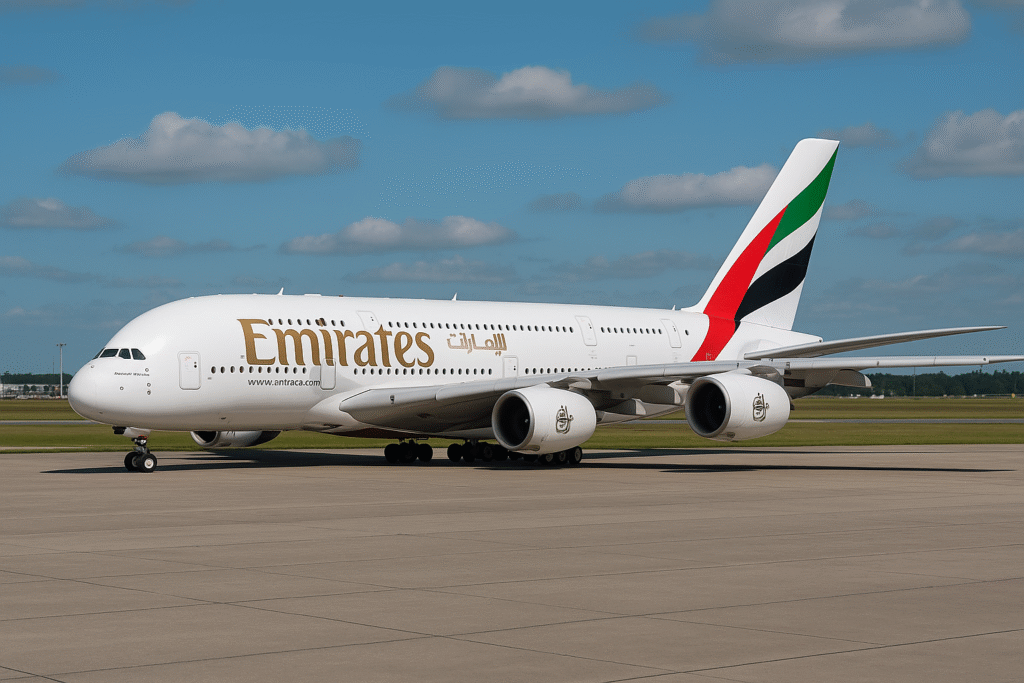
Emirates Airlines has set an ambitious target to expand its Airbus A380 fleet to 110 aircraft by 2026, reinforcing its leadership in long-haul premium travel. This move forms part of a comprehensive $6 billion fleet modernization program designed to elevate passenger experience, extend aircraft life, and support sustainable growth in international aviation.
Strong Demand Drives A380 Revival
The A380 remains central to Emirates’ identity. The jet’s spacious design and high-yield premium cabins continue to attract strong global demand. Emirates currently operates 94 A380s and plans to return more aircraft to service after major upgrades. The airline expects premium seats to remain in high demand, especially during peak seasons, and the A380’s size allows Emirates to serve busy international hubs with fewer flights while offering more comfort.
$6 Billion Retrofit to Standardize and Enhance Cabins
A key element of Emirates’ strategy is its large-scale retrofit program, which aims to refresh cabins across the entire A380 fleet. The project includes:
- Upgraded seating across all classes
- Modernized cabin décor and lighting
- Improved entertainment systems
- Consistent onboard experience across all retrofitted aircraft
The retrofit is planned for completion within 18 months once all aircraft enter the program. This ensures passengers enjoy a uniform, high-quality product regardless of route or aircraft age.
In-House Manufacturing Boosts Consistency
To meet its expansion goals, Emirates is increasing its production capabilities. The airline is now manufacturing many cabin components internally. By doing this, Emirates can:
- Tighten quality control
- Speed up retrofit schedules
- Reduce dependency on external suppliers
- Maintain cabin reliability over longer service periods
The airline is also expanding its in-house engine overhaul capabilities to help maintain the A380 fleet through 2041.
Preparing for Long-Term A380 Operations
Despite global industry shifts away from large four-engine jets, Emirates remains committed to the A380. The airline sees the aircraft as the best solution for serving high-demand international routes from Dubai. Its ability to offer more seats per flight makes it ideal for congested or slot-restricted airports.
Emirates plans to operate the A380 for at least another 15 years. The airline believes this aircraft type will continue delivering strong results due to its premium cabin layout and popularity among leisure and business travelers.
New-Generation Aircraft Join the Fleet
While the A380 remains a flagship, Emirates is also diversifying with more fuel-efficient, next-generation aircraft:
Airbus A350-900
Emirates has started receiving its order of 65 A350-900 aircraft. These jets:
- Offer improved fuel efficiency
- Support long-range routes
- Reduce carbon emissions
- Complement the wide-body network
The A350 will help Emirates expand into new markets where demand does not yet support larger aircraft.
Boeing 777X
The Boeing 777X is expected to become another core aircraft for Emirates once certified. Although deliveries have been delayed until around 2027, Emirates remains optimistic about the aircraft’s efficiency and capacity. The 777X is expected to replace older 777 models and support future long-haul growth.
Meeting Rising Global Travel Demand
Air travel has rebounded strongly worldwide, and Dubai has re-emerged as one of the busiest international travel hubs. Emirates is expanding its fleet to match this demand. The increase in aircraft numbers will help the airline add frequencies, open new routes, and strengthen connections across Europe, Asia, the Americas, and Africa.
Travelers are seeking more comfort and premium cabin options, and Emirates is well-positioned to meet this trend. The airline reports consistently strong performance in Business and First Class, especially during major holiday and tourism seasons.
Commitment to Sustainability
Emirates continues investing in sustainability as part of its long-term fleet strategy. Newer aircraft such as the A350 and future 777X models consume significantly less fuel and produce lower emissions. The airline is also enhancing fuel-efficiency practices across operations and investing in modern technologies that reduce environmental impact.
While the A380 is larger, Emirates maximizes its efficiency by deploying it on high-traffic routes where it replaces multiple smaller aircraft.
Strengthening Dubai’s Position as a Global Hub
Emirates’ fleet expansion also supports Dubai’s broader economic and tourism growth plans. The city continues to attract millions of visitors yearly, supported by major events, world-class attractions, and a strong hospitality sector. With more A380s and new aircraft joining the fleet, Emirates will play a central role in boosting travel accessibility and maintaining Dubai’s status as a global aviation powerhouse.
A Future Built on Quality and Growth
As Emirates moves toward 2026, its strategy is clear: offer a superior travel experience, increase capacity, and invest in new technologies that secure long-term competitiveness. The expansion of the A380 fleet, coupled with the arrival of next-generation aircraft, positions the airline for continued success.
With its focus on innovation, premium service, and sustainability, Emirates is set to remain one of the world’s most influential and admired airlines.
For more travel news like this, keep reading Global Travel Wire