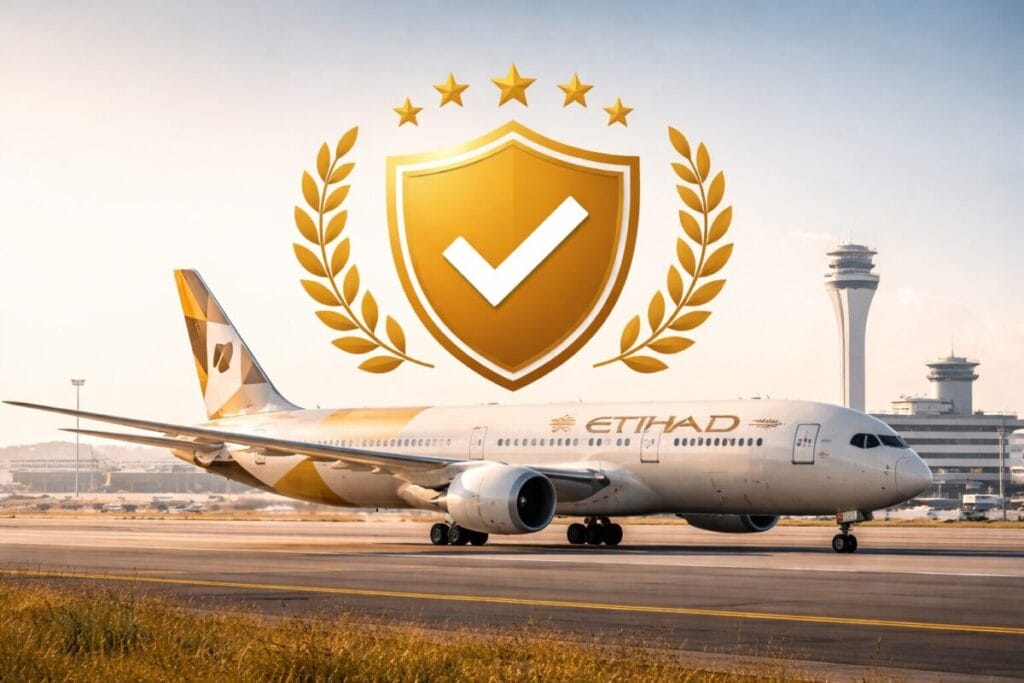
Etihad Airways has taken the number one spot as the world’s safest airline for 2026. This honor comes from AirlineRatings.com, a respected aviation safety and product evaluation platform. The title marks a historic milestone for the Gulf region. For the first time, a Gulf carrier has led the global aviation safety rankings.
The recognition boosts the UAE’s aviation profile. It also adds a new chapter to the country’s record of high safety standards in air transport.
Gulf Airlines Rise in Global Rankings
Etihad’s top ranking also reflects the growing influence of Gulf carriers. Qatar Airways secured fourth place and Emirates earned fifth, placing three Gulf airlines within the top five worldwide. This performance highlights the competitive growth of aviation hubs in Abu Dhabi, Doha, and Dubai.
The same ranking saw Cathay Pacific come in second and Qantas take the third spot, showing strong competition among established aviation leaders.
Why Etihad Took the Top Spot
Etihad earned the top ranking due to several key strengths. The airline operates one of the youngest large fleets in the world. Young aircraft tend to perform better due to updated technology, enhanced structures, and improved fuel efficiency. Modern jets also have advanced turbulence monitoring systems to reduce inflight discomfort and risk.
Etihad also excels in safety culture. The airline maintains strict operational oversight, conducts frequent pilot training cycles, and follows international safety audit programs. It also maintains a crash-free operational record and shows one of the lowest incident rates per million flights.
Safety boards monitor factors such as:
- Crew training
- Turbulence prevention systems
- Fleet age and maintenance records
- Safety management systems
- Regulatory compliance
Across these categories, Etihad achieved top-tier performance.
Commitment to Technological Innovation
Modern aviation safety increasingly depends on data and predictive technology. Etihad has invested in digital aircraft health monitoring, real-time weather analysis, and predictive maintenance. These tools improve decision-making for pilots and engineers.
The airline also participates in international safety partnerships. These collaborations allow carriers to share research on turbulence, crew fatigue, and route efficiency. The result is a broader safety ecosystem across the aviation sector.
UAE’s Regulatory Framework Supports Growth
The UAE’s aviation authority has built one of the strongest regulatory systems in the world. National regulations align with international standards and, in several areas, exceed them. This regulatory climate pushes local airlines to prioritize safety and quality.
The authority also conducts frequent oversight inspections and certification renewals. This ensures airlines keep pace with emerging safety norms. The UAE’s investment in aviation infrastructure, including Abu Dhabi and Dubai airports, further supports operational safety and passenger handling efficiency.
Recognition Extends to Low-Cost Sector
While Etihad earned the highest safety ranking among full-service carriers, FlyDubai also entered the global top tier for low-cost airlines. FlyDubai placed within the top five worldwide. This success reinforces the UAE’s status as a well-regulated aviation hub across multiple market segments.
The strong showing among budget airlines matters to travelers seeking lower fares without sacrificing safety.
Safety Matters to Tourism and Travelers
Airline safety rankings influence tourism and business travel decisions. Many travelers now prioritize safety performance as much as comfort and pricing. For destinations like the UAE, this recognition boosts confidence among international visitors.
Airline safety also impacts tourism partnerships, corporate travel planning, and long-haul connectivity. Gulf carriers play a major role in linking Asia, Europe, and Africa, with the UAE positioned as a central transit hub.
Aviation Sector Maintains High Global Standards
Industry analysts note that safety performance among the top 25 airlines remains very close. Airlines worldwide have invested heavily in:
- Pilot training
- Fleet modernization
- Data-driven operations
- Passenger safety protocols
The competition for top ranking reflects the maturity of global aviation standards. Even airlines outside the top five still maintain safety levels far above international requirements.
Etihad’s Achievement Sets a New Standard
Etihad’s recognition marks a defining moment for its brand and the region. The title strengthens Abu Dhabi’s position in global aviation and supports the UAE’s long-term tourism strategy. It also encourages other Gulf carriers to pursue similar excellence as the aviation market continues to expand.
With growing passenger numbers and expanding fleets, safety continues to define the competitive edge in global aviation. Etihad’s milestone underscores the region’s ambition to lead in both innovation and safety.
For more travel news like this, keep reading Global Travel Wire