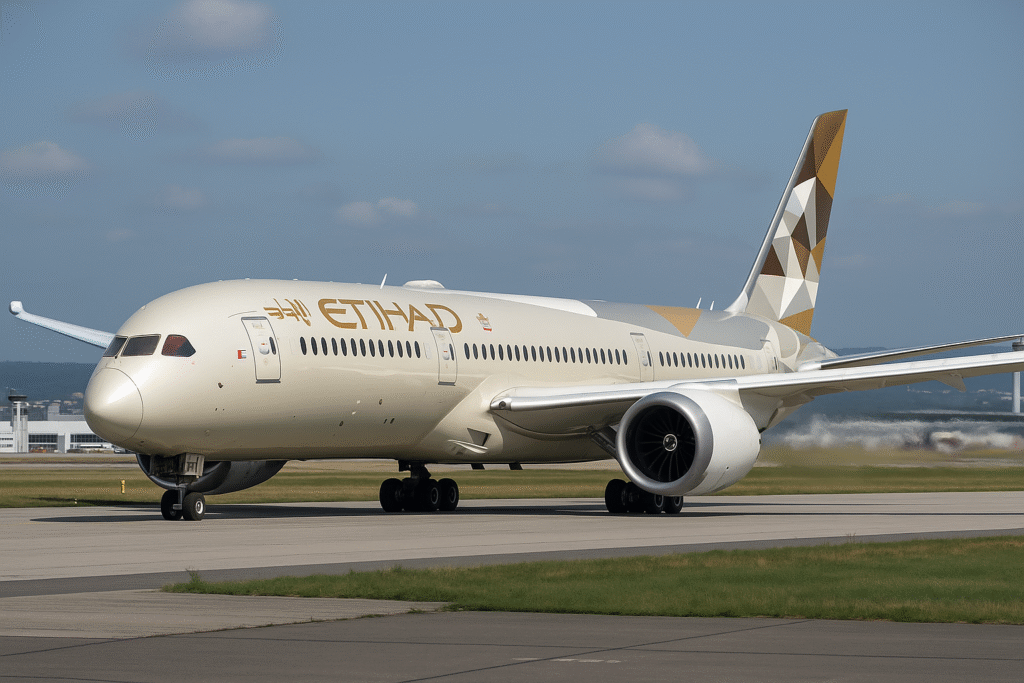
The national carrier of the United Arab Emirates, Etihad Airways, has officially launched five new international routes in November, dramatically extending its reach from its Abu Dhabi hub. This ambitious expansion underlines the airline’s commitment to global connectivity and positions Abu Dhabi as an increasingly influential gateway for both business and leisure travellers across Africa and Asia.
A Strategic Network Expansion
The new services — linking Abu Dhabi to Tunis (Tunisia), Hanoi (Vietnam), Chiang Mai (Thailand), Hong Kong (China) and Medina (Saudi Arabia) — are not only geographic enhancements but also strategic moves to tap into emerging market demand. Each route complements the carrier’s broader goal of increasing seat capacity, strengthening regional trade links and offering travellers new access points to exotic destinations.
- Tunis (North Africa): Launching with three weekly flights at the start of November, the Tunis route reflects growing bilateral interest between the UAE and North Africa. It opens new doorways for cultural tourism, business travel and interchange between the Middle East and the Maghreb region.
- Hanoi (Southeast Asia): Starting early in November with six flights per week, the Abu Dhabi–Hanoi connection marks the carrier’s first direct link to Vietnam’s capital. This route underscores the significance of the Vietnamese market and its appeal to both leisure travellers and corporate segments.
- Chiang Mai (Thailand’s Northern Frontier): With four weekly services beginning shortly after Hanoi, this new link caters to travellers seeking alternative Thai destinations beyond Bangkok — including nature, heritage and wellness-oriented tourism.
- Hong Kong (East Asia): The five-weekly flights to Hong Kong reintegrate Etihad into one of Asia’s major economic and cultural hubs. It also revives codeshare alignments that enhance onward connections to Japan and other Asian destinations, thereby boosting onward journey possibilities for passengers.
- Medina (Saudi Arabia): The route to the holy city of Medina, commencing mid-November with five weekly flights (planned to increase to six), serves both the religious pilgrimage market and Saudi-Arabia-linked business travellers. It reflects the growing importance of the Gulf corridor for spiritual and professional journeys.
What This Means for Abu Dhabi and the Region
By adding several thousand new seats and opening these global connections, Etihad is reinforcing Abu Dhabi’s role as more than just a transit point — it’s becoming a destination hub in its own right. The strategy aligns closely with national goals for tourism growth, diversification away from oil-based economy models and enhancement of hospitality ecosystems.
These routes also create enhanced travel flows between Africa, Asia and the Middle East. For example, African travellers can now reach Southeast Asian or Gulf destinations with fewer transfers, while leisure travellers from Europe or the Gulf have new gateway options via Abu Dhabi. For Etihad, network expansion supports higher aircraft utilisation, more efficient fleet deployment and stronger yield potential across under-served corridors.
Impacts on Travelers and Tourism
For travellers, the network expansion offers fresh opportunities: first-time direct flights, increased scheduling options, new route pairings and better connectivity. Tourism-board stakeholders in Abu Dhabi and the UAE will likely promote stopover packages, regional circuits and multi-destination itineraries that leverage the new links.
From the perspective of tourism in Abu Dhabi, this means more inbound visitors from North Africa, Southeast Asia and East Asia — markets that have been growing steadily in importance. New passengers may extend their stay in the UAE to visit cultural landmarks, luxury resorts, desert experiences or family-friendly leisure attractions.
Operational Considerations and Fleet Strategy
Etihad’s launch of five new routes in a single month represents a significant operational milestone. To support this growth, the airline is optimising its fleet, slot allocations at Abu Dhabi’s airport, ground handling coordination and marketing efforts. Each new route has been selected for commercial viability, demand potential and strategic fit — not merely network breadth.
Route frequency decisions reflect a cautious yet ambitious approach: for example, three weekly flights to Tunis, four weekly to Chiang Mai and five to Hong Kong. This mix allows Etihad to scale capacity in line with early demand, while also offering flexibility for onward growth as markets mature.
Challenges and Opportunities
While the expansion is promising, it also brings certain challenges. Competitive dynamics in aviation remain intense, with many carriers fighting for the same traffic flows. Managing operational complexity — from staff, aircraft, maintenance, slots and marketing — requires robust planning. Additionally, traveller awareness and conversion (getting new flyers to try the route) is key to achieving sustainable load factors.
On the opportunity side, Etihad can leverage its premium service positioning, Abu Dhabi’s growing tourism infrastructure, and partnerships (codeshare and alliances) to differentiate these new routes. Travellers may find value in combining experiences: city-stay in Abu Dhabi plus onward exploration of Tunisia’s Mediterranean coast, Vietnam’s cultural heritage, Northern Thailand’s nature offerings or Saudi Arabia’s spiritual tourism.
Looking Ahead
As these five routes embark on service, the broader future is equally exciting. Etihad has already signalled more network updates further out, reflecting its ambition to carry more than 21 million passengers this year and to continue building its destination map. For the UAE, each new connection supports national strategies around tourism, foreign investment, business events and cultural positioning.
For airlines and travel-industry stakeholders, this is a strong indicator of how major carriers are thinking beyond major high-volume markets and instead focusing on diversified, globally-spread networks. Abu Dhabi’s enhanced connectivity will also support multi-destination packages — for example combining Middle East, Africa and Asia experiences in one trip, with Etihad as the spine of the journey.
Conclusion
Etihad Airways’ launch of new services to Tunis, Hanoi, Chiang Mai, Hong Kong and Medina is more than an expansion of its route map. It’s a strategic leap in global connectivity that touches tourism, business travel, cultural linkage and aviation economics. For travellers, it opens up fresh possibilities; for Abu Dhabi, it strengthens its international hub credentials; for the region, it underlines the continuing evolution of the Middle East as a global travel and mobility centre. As these routes mature, the benefits will ripple across airlines, destinations and travellers alike — marking a milestone in the future of global aviation and tourism.
For more travel news like this, keep reading Global Travel Wire