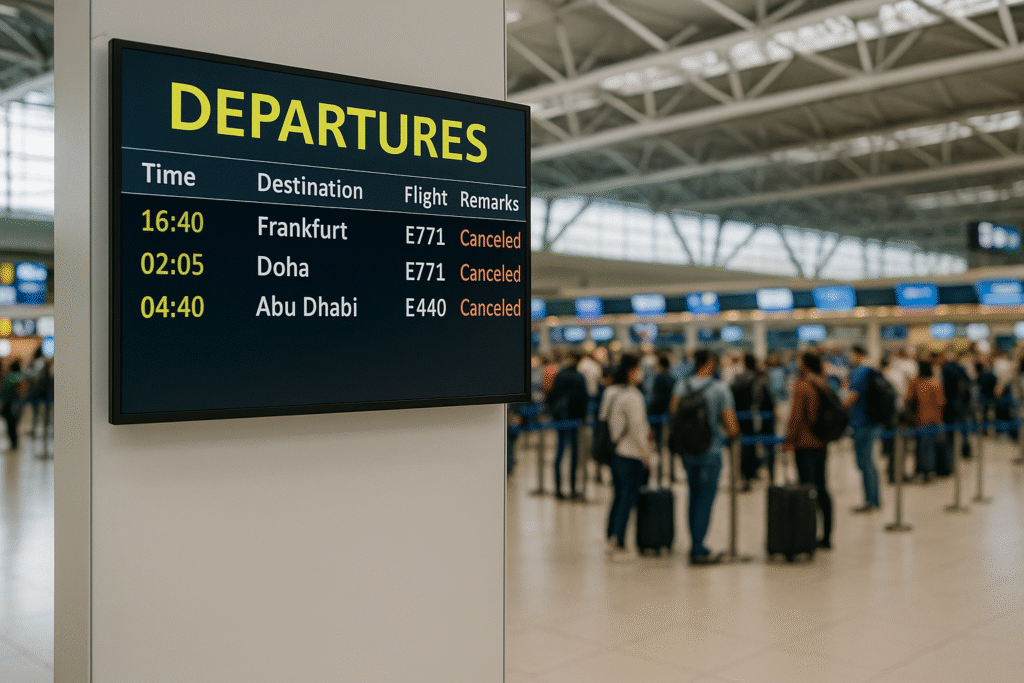
Etihad Airways, the national airline of the United Arab Emirates, has announced the cancellation of three key flights, causing significant travel disruptions at Abu Dhabi International Airport, Hamad International Airport in Doha, and Frankfurt International Airport in Germany. The cancellations have left thousands of passengers stranded or forced to make last-minute changes, sparking frustration across the UAE–Qatar–Europe travel corridor.
These disruptions, caused by operational challenges, underscore the pressure international carriers continue to face as demand for air travel grows. Etihad Airways, which operates as a major connector between the Middle East and Europe, is now grappling with both flight cancellations and a series of delays, heightening the strain on its global network.
Canceled Flights and Their Impact
The canceled flights included:
- ETD916 – Frankfurt to Abu Dhabi (Boeing 777-200), scheduled for Friday evening.
- ETD663 – Abu Dhabi to Doha (Airbus A320), scheduled for early Saturday morning.
- ETD664 – Doha to Abu Dhabi (Airbus A320), scheduled for later on Saturday.
These routes are considered vital for both business and leisure travel. Frankfurt serves as one of Europe’s busiest hubs, linking passengers to destinations across the continent, while Doha is a strategic Gulf hub with high demand for regional travel. The disruption of these connections has a ripple effect, impacting not only direct passengers but also those relying on onward connections to other parts of Europe, Asia, and the Middle East.
Abu Dhabi Airport at the Center of the Storm
Abu Dhabi International Airport, Etihad’s home base, has been the most affected by the cancellations. With thousands of passengers relying on the airport for connections, the disruptions created long queues at customer service counters and extended waiting times for rebooking. Many travelers were left searching for alternative options on other carriers, while some were forced to delay their travel altogether.
The situation also had a knock-on effect on nearby Gulf hubs. Passengers looking to reroute through Doha or Dubai faced additional challenges as competing airlines filled quickly, further limiting available seats.
Growing Pressure at Hamad International Airport
In Qatar, Hamad International Airport experienced its share of disruptions, particularly with the cancellation of the Abu Dhabi–Doha routes. Given the strong passenger flow between the two Gulf capitals, this created additional pressure on Qatar Airways, which already dominates travel in the region. The overlap in flight routes between Gulf carriers meant rebooking opportunities were slim, forcing many passengers to either reschedule or cancel their plans.
Frankfurt Disruptions Affecting Europe–Middle East Travel
At Frankfurt International Airport, Europe’s third-busiest hub, the cancellation of the Abu Dhabi-bound flight caused widespread inconvenience. Passengers connecting to the Middle East and Asia through Abu Dhabi had to make hasty adjustments, often at significant cost. Business travelers were particularly impacted, as the Frankfurt–Abu Dhabi route is a critical corridor for corporate travel and trade.
The disruption also left several tourists stranded, highlighting how flight cancellations at a single hub can cause ripple effects across global aviation networks.
Reasons Behind the Operational Challenges
Etihad Airways cited “operational reasons” for the cancellations but did not disclose further details. Industry analysts suggest possible factors include staffing shortages, aircraft availability, or technical issues. Globally, airlines continue to struggle with workforce challenges, maintenance backlogs, and fluctuating demand following the COVID-19 pandemic.
While Etihad Airways is not alone in facing these hurdles, the cancellations have amplified passenger concerns about the reliability of schedules, particularly on heavily traveled international routes. Other global airlines have also reported similar issues, often caused by a shortage of trained staff, supply chain delays in aircraft maintenance, or unexpected weather disruptions.
Passenger Experiences and Response from Etihad Airways
Passengers reported long delays at rebooking desks and limited availability of alternative flights. While Etihad Airways is offering rebooking on the next available services, many travelers complained of extended waiting times and difficulties securing timely connections.
The airline has assured customers that it is working to minimize the impact, with support teams deployed at all three affected airports. Hotel accommodation and meal vouchers have been offered to some stranded passengers, though frustration remains high among those with urgent travel commitments.
Advice for Affected Travelers
Travel experts recommend passengers check their flight status frequently through official airport announcements and Etihad’s customer service channels. For those impacted by the cancellations, immediate rebooking is crucial, as limited seats on alternative routes are filling rapidly.
Passengers traveling between Abu Dhabi, Doha, and Europe are encouraged to keep flexible travel plans and allow additional buffer time for potential disruptions. Travel insurance that covers cancellations and delays is also advised for frequent flyers navigating these busy international hubs.
Industry-Wide Challenges
The challenges faced by Etihad Airways reflect a broader trend in the aviation industry. With global travel demand rebounding faster than expected, airlines worldwide are under pressure to expand operations while balancing resource limitations. Airports in the Middle East and Europe, serving as critical transit hubs, are especially vulnerable to disruptions.
This situation highlights the importance of long-term investment in operational resilience, from staffing to fleet management, to ensure reliable services for international travelers.
Conclusion
Etihad Airways’ cancellation of three key flights has caused widespread disruption at Abu Dhabi, Hamad, and Frankfurt airports, affecting passengers traveling between the UAE, Qatar, and Europe. With delays, rebookings, and limited alternatives, the disruptions have created significant challenges for both leisure and business travelers.
As the airline works to resolve its operational issues, passengers are advised to stay updated and explore flexible travel options. Despite the frustration, Etihad Airways has pledged continued support to minimize the impact, but the incident underscores the ongoing fragility of international air travel in a post-pandemic world.
For more travel news like this, keep reading Global Travel Wire