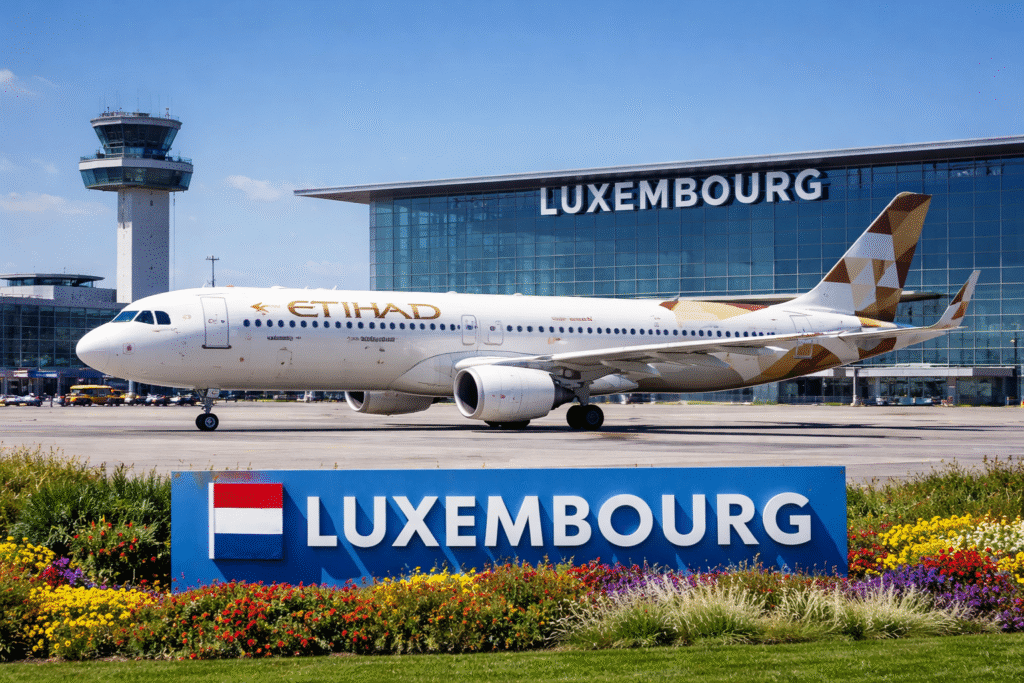
Etihad Airways has announced the launch of nonstop flights between Abu Dhabi and Luxembourg, marking a significant expansion in travel connectivity between the Middle East and Western Europe. The new service introduces a direct air bridge that enhances corporate travel, tourism, and wider mobility across both regions. It also strengthens the UAE’s aviation presence in Europe as part of the country’s broader tourism and economic diversification strategy.
A Strategic Link Between Two High-Value Markets
Luxembourg has long been recognized as one of Europe’s most prosperous and influential small states. It hosts major European institutions, multinational financial firms, and international organizations. Abu Dhabi, meanwhile, has developed into a fast-growing hub for business, culture, and leisure. The direct route aligns both capitals more closely, supporting travel demand from government, diplomatic, financial, and premium leisure sectors.
Etihad has positioned the route as a strategic addition to its European network rather than a traditional leisure route. It taps into high-value markets with consistent year-round traffic, which reflects the airline’s new focus on sustainability, efficiency, and premium service models.
Modern Aircraft and Upgraded Onboard Experience
The flights will operate three times per week using the Airbus A321LR, part of Etihad’s next-generation narrowbody fleet. The aircraft features a three-class configuration with First Suites, Business Class, and Economy cabins. Passengers benefit from lie-flat seats in Business, upgraded entertainment screens, Bluetooth pairing, and high-speed Wi-Fi throughout the cabin.
The introduction of long-range narrowbody aircraft allows airlines to open thinner routes that lack demand for larger widebody aircraft. This creates new opportunities for niche European destinations that maintain robust commercial ties but limited direct leisure traffic.
Convenient Schedules and Global Connections
Flight timings have been arranged to support both business and leisure travel. Early morning departures from Abu Dhabi enable midday arrivals in Luxembourg, while return flights allow smooth onward connections through Zayed International Airport. From there, travelers gain access to a wide range of destinations across Asia and the Indian Subcontinent, including Japan, Thailand, India, Malaysia, Singapore, South Korea, and Sri Lanka.
This connectivity strengthens Abu Dhabi’s role as a major global transit hub, reducing travel times for passengers from Luxembourg and neighboring regions who previously relied on multi-stop itineraries.
Benefits for Tourism and Business Travel
The new connection is expected to benefit corporate travel due to Luxembourg’s position as a financial powerhouse and host of European Union institutions. Direct links reduce journey times for executives, investors, and diplomatic personnel, while also supporting growing UAE–EU cooperation across trade, logistics, and innovation.
Tourism demand is also expected to grow in both directions. Luxembourg travelers gain direct entry into Abu Dhabi’s expanding leisure sector, including world-class museums, theme parks, outdoor adventures, and luxury resorts. At the same time, visitors from the Gulf will find easier access to Luxembourg’s cultural towns, scenic landscapes, and multilingual hospitality.
Luxembourg’s Tourism Appeal
Luxembourg offers a blend of historic charm and modern living. Its Old Town, perched on fortified cliffs, is a UNESCO World Heritage Site known for dramatic views, stone bridges, and historic casemates. The country also offers:
- The Moselle Wine Region, known for white wines and countryside vineyards
- Mullerthal, often called “Little Switzerland,” ideal for hiking and nature tourism
- Southern industrial parks, which preserve the country’s steel-making heritage
Despite its high GDP, daily travel costs remain comparable to neighboring Belgium, France, and Germany. A standout feature for visitors is Luxembourg’s nationwide free public transport system, covering buses, trams, and trains. This policy reduces travel expenses and supports sustainable tourism.
Optimal Travel Seasons and Suggested Itineraries
Summer from June to August attracts visitors with longer daylight hours and mild temperatures. Autumn is favored for scenic foliage, cooler weather, and lower tourist traffic. A two-to-three-day stay provides enough time to explore Luxembourg City, while longer trips of four to seven days allow visits to wine valleys, national parks, castles, and rural towns.
UAE Tourism Gains from Expanded Air Access
The UAE continues to diversify visitor markets as part of its long-term tourism strategy. Direct connectivity from smaller European states encourages cultural exchange and higher spending from tourists who typically travel for leisure, business, and family reasons. Abu Dhabi’s museums, Formula 1 events, desert adventures, theme parks, and emerging cultural districts support year-round visitor interest.
Aviation’s Role in Strengthening Global Tourism
International aviation plays a crucial role in global tourism growth. Direct routes reduce friction for travelers, encourage weekend trips, and make new destinations appealing to both tourists and businesses. Etihad’s Luxembourg service demonstrates how airlines increasingly target selective “secondary” European cities with rich economic profiles and strong outbound travel demand.
A Forward-Looking Tourism Expansion
Etihad’s new Abu Dhabi–Luxembourg flights reinforce the growing importance of air connectivity between the UAE and Europe. With modern aircraft, convenient scheduling, and strong underlying demand, the route is expected to support trade, mobility, and tourism for years to come. It also reflects wider trends in travel where efficiency, sustainability, and passenger experience guide airline network decisions.
For more travel news like this, keep reading Global Travel Wire