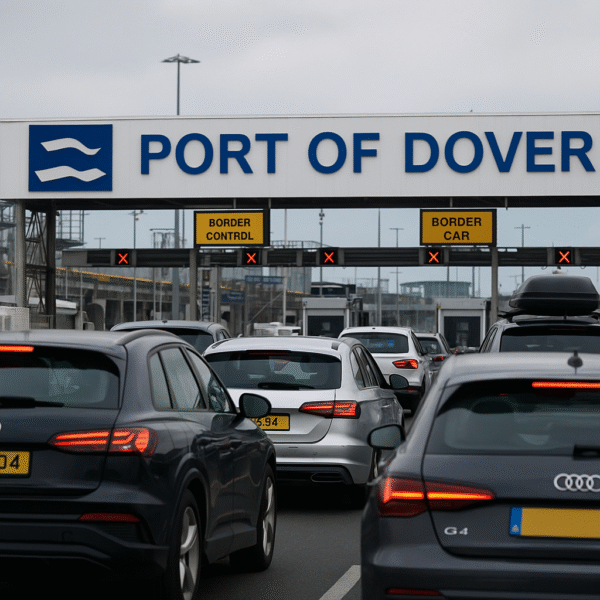
The mooted launch of the Entry/Exit System (EES) for car passengers at the Port of Dover has been postponed amid technical and logistical issues. While the system already applies to freight and coaches, the car-traveller segment will not go live as planned on 1 November. Tourists driving into Europe via Dover now face more uncertainty than expected.
What the EES Means for Travellers
EES is the European Union’s new digital border control framework for non-EU nationals making short stays. Under the scheme, travellers’ personal and biometric data — including fingerprints and facial images — are collected when they cross external borders. The EU’s aim is to replace the traditional passport-stamp system by 10 April 2026. With EES, authorities intend to better detect visa over-stayers, identity fraud and undocumented entries.
What’s Happening at Dover
At the moment, car travellers through Dover are still processed under the old system. Officials say they need extra time to integrate kiosks and signage, coordinate with French border authorities and inform drivers of the new steps. Once EES for cars goes ahead, travellers likely must exit their vehicle and register at a kiosk — a step that could multiply processing time several-fold compared to current rapid checks.
Likely Delays for Tourists by Car
Currently, car border checks at Dover can take about a minute. With EES, estimates suggest this could become six times that figure. That means holiday-makers driving through could face multiple minutes of extra waiting, especially during busy periods. Travel-industry voices warn that queues may stretch when the system covers cars, and they urge visitors to allocate more time.
Why the Pause?
The phased rollout of EES began in mid-October, focusing first on airports, freight traffic and coach passengers. The EU’s strategy aims to give states and operators time to adapt and avoid major disruption. At Dover, the delay reflects concerns about readiness of kiosks, signage, staffing and data-flows. By stepping back, the port hopes to ensure a smoother introduction when cars are included.
Impacts on Holiday Plans
For tourists planning to drive into Europe via Dover, this delay brings mixed news. On one hand, the familiar border process remains for now. On the other hand, no firm date for the EES launch means uncertainty remains. Some travellers may change plans or consider alternative routes. Practical advice: allow extra buffer time, avoid tight connections and stay alert to updates.
Looking Ahead to Full Implementation
EES will gradually roll out across 29 European countries over six months. Once fully active, passport stamps will be phased out in favour of digital registration and biometric verification. Travellers may find that subsequent entries only require a passport-scan or facial recognition rather than full biometric collection, provided they have previously registered.
Key Travel Tips for Visitors
- Arrive at the border early — at least 30-60 minutes ahead of your planned crossing time.
- Stay updated on announcements from the port and ferry or tunnel operator.
- Pack your travel document and any vehicle-related papers ready for inspection.
- Be aware that the registration process may involve leaving your car to use a kiosk.
- Consider alternative cross-Channel routes or timing your trip outside peak hours to avoid bottlenecks.
Conclusion
The decision to delay EES implementation for car traffic at the Port of Dover underscores how complex digital border modernisation can be. For now, travellers by car avoid the new biometric registration process — but that window may not last long. As full rollout proceeds, delays could creep into the system. Tourist drivers should stay informed and plan for extra time in their journey.
For more travel news like this, keep reading Global Travel Wire