







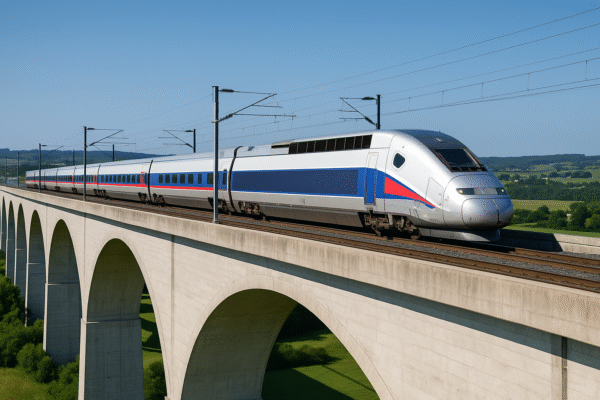
Europe is on the brink of a transportation revolution that promises to reshape how millions of tourists explore the continent. With rapid moves toward expanding high-speed rail and integrating national rail systems, a new era of seamless, greener, and faster travel is taking shape. This transformative shift aims to create easier access between regions, reduce environmental impact, and give travelers unprecedented opportunities to discover Europe’s diverse landscapes and cultures.
As the world increasingly turns toward sustainable mobility, Europe’s ambitious rail strategy stands poised to redefine tourism—and potentially become the backbone of future travel across the continent.
A New Successor to EU-Rail: The Push for Integrated, Cross-Border Rail Networks
European rail associations are pressing for a successor to the EU-Rail initiative, launched in 2021 under Horizon Europe. The program has already helped modernize infrastructure and improve interoperability across national systems. But as demand for efficient rail travel continues to surge, industry leaders argue that a stronger, more coordinated effort is needed.
The envisioned next-generation EU rail program aims to:
- Expand high-speed rail corridors
- Modernize cross-border infrastructure
- Improve train technology and digital signaling
- Harmonize standards between countries
For travelers, this means the ability to glide between cities without long wait times, route bottlenecks, or cross-border complications that currently hinder services.
Imagine boarding a train in Paris and reaching Barcelona, Vienna, or Berlin with fewer transfers, faster speeds, and the convenience of a single ticketing system. The goal is to eliminate the disjointed nature of Europe’s diverse rail networks and deliver a unified experience comparable to the ease of air travel—yet more sustainable and scenic.
Tourism Growth Fueled by Better Connectivity
The expansion of high-speed rail holds tremendous potential for Europe’s tourism industry. Faster trains and streamlined networks open the door to multi-city itineraries, weekend getaways, and cultural exploration that feels effortless.
Instead of choosing one major city for a short holiday, travelers could easily visit two or three destinations in the same weekend. A traveler in Paris might spend a morning in Brussels, enjoy dinner in Amsterdam, and head to Berlin the following day—all made possible by shorter travel times and increased train frequency.
Additionally, improved rail access will help unlock Europe’s lesser-known destinations. Towns, villages, and regional areas—including those connected via the Trans-European Transport Network (TEN-T)—could experience a surge in tourism as improved links draw visitors beyond Europe’s main capitals.
This balanced distribution of tourism can reduce overcrowding in hotspots like Venice, Barcelona, and Prague, while boosting economies in rural and emerging destinations.
High-Speed Rail: A Greener Future for European Tourism
Europe’s shift toward high-speed rail isn’t only about convenience—it’s also a central part of the continent’s sustainability vision. Rail travel remains one of the most energy-efficient transportation modes, producing significantly fewer carbon emissions than air travel.
Expanding rail networks aligns with Europe’s broader environmental commitments, including the European Green Deal, which aims to drastically cut emissions across transportation sectors.
Benefits of high-speed rail for sustainable tourism include:
- Lower carbon footprint per passenger
- Reduced reliance on short-haul flights, which are major pollution contributors
- Cleaner energy use as countries transition to renewable power
- Less congestion in airports and city centers
As more travelers seek environmentally conscious options, Europe’s greener, faster rail system positions itself as the ideal choice for responsible tourism.
Part of a Larger Mobility Strategy for Europe
Europe’s high-speed rail push is one piece of a broader strategy to create a seamless, sustainable mobility ecosystem. Alongside rail expansion, the continent is advancing cycling infrastructure, modernizing urban transit, and integrating multiple transport modes into cohesive systems.
Such integration benefits tourism in several ways:
- Easy transfers between trains, buses, and city transport
- Smart mobility hubs linking regions efficiently
- Improved last-mile connectivity for reaching attractions and remote areas
- Enhanced accessibility for travelers with diverse needs
By creating a future where transportation options flow smoothly from one to another, Europe hopes to offer travelers stress-free journeys from arrival to return.
A New Era for Rail Tourism: What Travelers Can Expect
Europe’s rail transformation is poised to change not just how people travel but how they experience the continent itself. High-speed trains are expected to become more than a mode of transport—they will be part of the adventure.
Travelers will enjoy:
- Panoramic views of mountains, coastlines, vineyards, and countryside
- Comfortable, modern interiors designed for long-distance comfort
- Efficient schedules enabling multi-country trips
- Access to remote cultural sites and heritage destinations
Major hubs such as Paris, Rome, Berlin, Madrid, and Vienna will anchor this network, while regions like the Balkans, the Baltics, and Eastern Europe gain improved visibility.
From the snow-capped Alps to the historic towns of Central Europe and the rolling fields of Tuscany, high-speed rail will make it easier than ever to explore Europe in depth.
A Bright Future for European Tourism Powered by Rails
Europe’s bold high-speed rail ambitions represent a defining moment for the future of tourism. By connecting major cities, enhancing regional access, and prioritizing sustainability, the continent is building a travel system that is faster, greener, and more enriching.
For travelers, this means greater freedom, more choices, fewer environmental compromises, and the possibility of discovering Europe as a beautifully interconnected whole.
For more travel news like this, keep reading Global Travel Wire