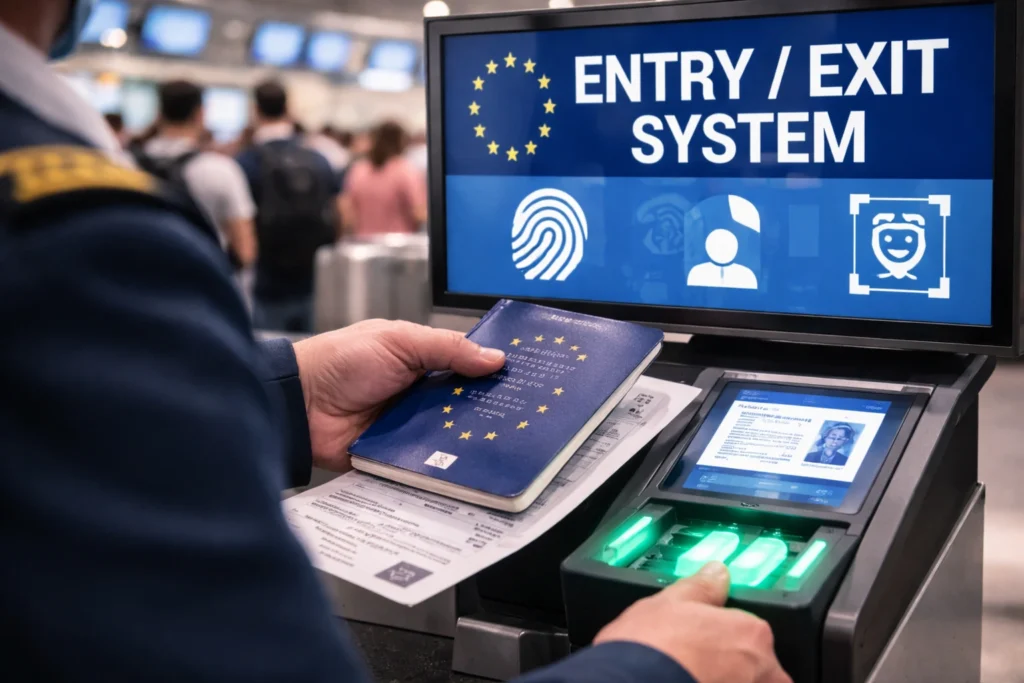
Europe has entered a new phase in travel management with the launch of the Entry Exit System. Authorities will fully activate this system from April 10, 2026.
This system replaces passport stamps with digital records. It tracks travelers entering and leaving twenty nine European countries.
Officials aim to modernize border security while improving travel efficiency. However, travelers should prepare for initial disruptions during early implementation.
Digital Transformation Replaces Traditional Stamps
The Entry Exit System introduces a fully digital process at borders. Travelers will no longer receive physical passport stamps.
Instead, the system will create a digital file for each visitor. This file stores personal data, travel details, and biometric information.
Authorities will capture facial images and fingerprints during entry. This information helps track movements and improve border monitoring.
The system also records denied entries. This helps officials identify potential risks quickly and accurately.
Phased Rollout Leads To Full Implementation
European authorities introduced the system through a phased rollout. They started testing operations in October last year.
This gradual approach allowed officials to refine technology and procedures. It also helped identify technical challenges early.
From April 10, the system will become fully operational. All participating countries will follow the same digital process.
Travelers should expect stricter and more consistent border checks across the region.
Who Must Use The EES System
The system applies to non EU and non Schengen travelers. Anyone visiting for short stays must complete registration.
This includes travelers staying up to ninety days within a one hundred eighty day period.
Citizens from visa exempt countries must also follow these rules. Property owners without residence permits must register as well.
Travelers from the United Kingdom now fall under this category. They must complete the new process when entering Europe.
Countries Participating In The New System
Most European Union and Schengen countries will use the system. These nations will apply the same digital border controls.
However, Ireland and Cyprus will not adopt the system. They will continue using manual passport checks.
Certain microstates also remain exempt from the process. These include Andorra, Monaco, San Marino, and Vatican City.
Travelers should confirm destination rules before planning trips.
Initial Delays Expected At Borders
Authorities expect delays during the early months of implementation. The biometric registration process takes longer than traditional checks.
Travelers may face waiting times of up to two hours at busy airports. Peak travel seasons could increase delays further.
Previously, officials could suspend certain checks during heavy traffic. However, full implementation removes this flexibility.
Travelers must plan extra time when arriving at airports or border points.
Smart Planning Can Reduce Travel Stress
Travelers should arrive earlier than usual for international departures. Experts recommend reaching airports at least two hours early.
This allows enough time for biometric registration and verification.
Checking travel requirements before departure can also prevent issues. Preparation will help reduce delays and confusion.
Biometric Passports Improve Processing Speed
Travelers with biometric passports will experience faster processing. They can use automated kiosks for registration.
These kiosks reduce waiting time and improve efficiency at border control points.
However, travelers with standard passports must use manual counters. Officials will collect biometric data during the process.
This step may take longer, especially during peak hours.
Pre Registration App Speeds Up Entry
European authorities have introduced a mobile app for pre registration. Travelers can upload passport details and biometric data in advance.
This process can begin seventy two hours before arrival.
Pre registration helps reduce time spent at border checkpoints. However, travelers must still complete identity checks in person.
Currently, the app operates in select countries. Authorities plan to expand availability across Europe soon.
Stronger Security Measures Protect Borders
The Entry Exit System strengthens European border security. Authorities can detect fraud and suspicious activity more effectively.
The system has already identified several security risks during its testing phase. It has also blocked thousands of fraudulent entries.
Digital tracking reduces opportunities for misuse of travel documents. It ensures accurate monitoring of visitor movements.
Long Term Benefits For Travelers
Although early delays may frustrate travelers, the system offers long term advantages. Once registered, future entries will become faster and smoother.
Biometric data remains stored for up to three years. This reduces repeated registration for frequent travelers.
As systems improve, waiting times should decrease significantly.
Europe Moves Toward Smarter Travel Systems
The Entry Exit System represents a major shift in global travel standards. Europe now joins other regions using advanced border technology.
Authorities aim to balance security with convenience. This approach supports both tourism growth and safety.
Travelers who understand the system can enjoy smoother journeys. Preparation remains the key to a stress free experience.
A New Travel Experience Begins
Europe has transformed how travelers enter and exit its borders. The move toward digital systems marks a new chapter in international travel.
Although the transition may take time, the long term impact remains positive.
Travelers who adapt quickly will benefit the most from this change.
For more travel news like this, keep reading Global Travel Wire