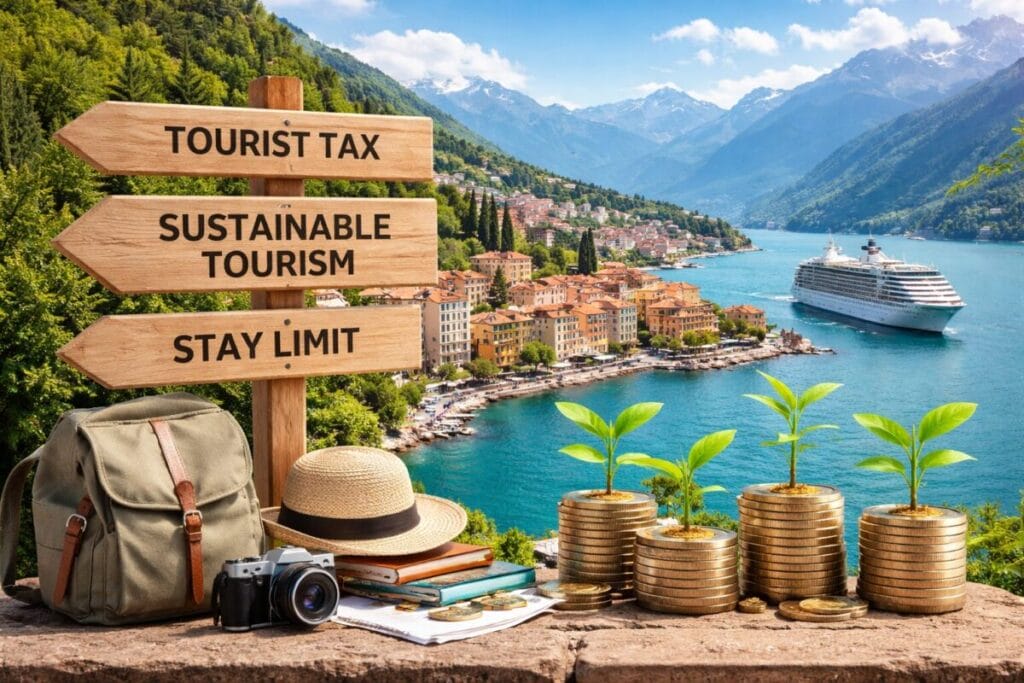
European destinations are reshaping tourism policies to address overtourism and environmental pressure. The United Kingdom, Norway, Italy, Iceland, Switzerland, France, and several others are introducing new visitor levies, cruise fees, and stay limits beginning in 2026.
Tourism demand across Europe has surged in recent years. While this growth supports local economies, it also creates pressure on housing, public infrastructure, cultural sites, and fragile ecosystems. Governments now aim to balance tourism growth with sustainability goals.
Authorities want travelers to contribute directly to preserving the destinations they visit. These measures focus on environmental protection, infrastructure upgrades, and improved quality of life for residents.
Scotland Introduces Edinburgh Visitor Levy
Scotland has taken a major step within the United Kingdom by approving a new visitor levy in Edinburgh. Starting in July 2026, overnight visitors will pay a 5% tax on accommodation bookings. The charge will apply to hotels, hostels, guesthouses, and short-term rentals.
Officials expect the policy to generate significant annual revenue. Funds will support local infrastructure, public services, and community projects. The levy also includes a cap that limits charges to a maximum number of nights, helping reduce excessive costs for longer stays.
A portion of the income will address housing challenges caused by rising tourism demand. Local authorities plan to invest in affordable housing for residents and workers in the hospitality sector. Investments will also enhance cultural venues, waterfront areas, and public spaces to maintain Edinburgh’s global appeal.
This initiative reflects a broader strategy in the UK to ensure tourism growth aligns with sustainability goals.
Norway Allows Municipal Tourist Taxes
Norway has introduced a national framework allowing local municipalities to impose tourist taxes. Beginning in summer 2026, popular destinations can apply fees of up to a small percentage on accommodation stays and cruise visits.
Regions experiencing high visitor numbers, including scenic fjord areas and Arctic destinations, face growing environmental pressure. Waste management, infrastructure maintenance, and seasonal crowding have become major concerns.
Local governments will use the collected revenue to Countries experiencing rapid tourism growth, such as coastal towns and northern regions, expect the new policy to help protect natural landscapes while improving visitor experiences.
Norway’s approach allows flexibility. Municipalities can decide whether to apply the tax depending on local conditions.
Italy Expands Regional Fees and Cruise Regulations
Italy continues to refine its tourism strategy through regional visitor taxes and cruise management policies. Highly visited cities like Venice, Rome, and Florence face ongoing challenges linked to overcrowding and infrastructure strain.
Venice has already introduced a day visitor entry fee for tourists who do not stay overnight. This measure aims to reduce congestion while encouraging longer, more sustainable stays.
Regional authorities across Italy plan to increase tourism-related fees in 2026. Revenue will fund heritage conservation, environmental protection, and local community initiatives. Officials are also reviewing cruise ship routes to reduce environmental impact in sensitive areas.
Italy’s focus remains on protecting historic sites and improving long-term sustainability without discouraging tourism entirely.
Iceland Introduces Visitor and Cruise Levies
Iceland’s popularity has grown rapidly due to its dramatic landscapes and unique natural attractions. However, increased visitor numbers have raised concerns about ecosystem preservation.
Beginning in 2026, Iceland will introduce new visitor levies targeting both overnight guests and cruise passengers. Authorities aim to direct funds toward environmental protection, infrastructure upgrades, and sustainable tourism programs.
Projects supported by the levy include trail maintenance, wildlife conservation, and climate-focused initiatives. Officials believe that responsible tourism policies will help preserve glaciers, geothermal sites, and other natural attractions.
The country seeks to maintain tourism growth while minimizing environmental damage.
Switzerland Strengthens Local Tourist Levies
Switzerland has long applied local tourism taxes, but several high-demand destinations will expand or adjust these levies from 2026 onward.
Alpine resorts and popular mountain towns face rising visitor numbers year-round. Authorities plan to use tourism revenue to maintain transportation networks, ski infrastructure, and environmental protection programs.
Local governments aim to ensure that tourism supports long-term sustainability while preserving Switzerland’s iconic landscapes. Improved waste management systems and sustainable mobility projects form part of the strategy.
France Increases Municipal Tourism Taxes
France remains one of the world’s most visited countries. Major cities and coastal regions attract millions of visitors annually, increasing pressure on local resources.
Municipal tourist taxes already exist, but authorities plan increases in key destinations such as Paris, Nice, and Marseille. The additional funds will support cultural preservation, heritage restoration, and eco-friendly tourism initiatives.
French policymakers emphasize responsible tourism practices, including greener transport options and sustainable hospitality standards.
A Growing European Trend Toward Responsible Travel
The introduction of tourism levies across multiple European nations signals a broader shift toward sustainable travel management. Governments increasingly view visitor contributions as essential to maintaining infrastructure and protecting cultural and natural assets.
Travelers should expect new fees, booking conditions, and regulations when visiting Europe in the coming years. These changes aim to ensure that tourism remains beneficial for local communities while preserving destinations for future generations.
Sustainable tourism policies do not seek to limit travel entirely. Instead, they encourage balanced growth and responsible visitor behavior. As Europe adapts to evolving tourism challenges, these measures may set a global example for managing overtourism effectively.
For more travel news like this, keep reading Global Travel Wire