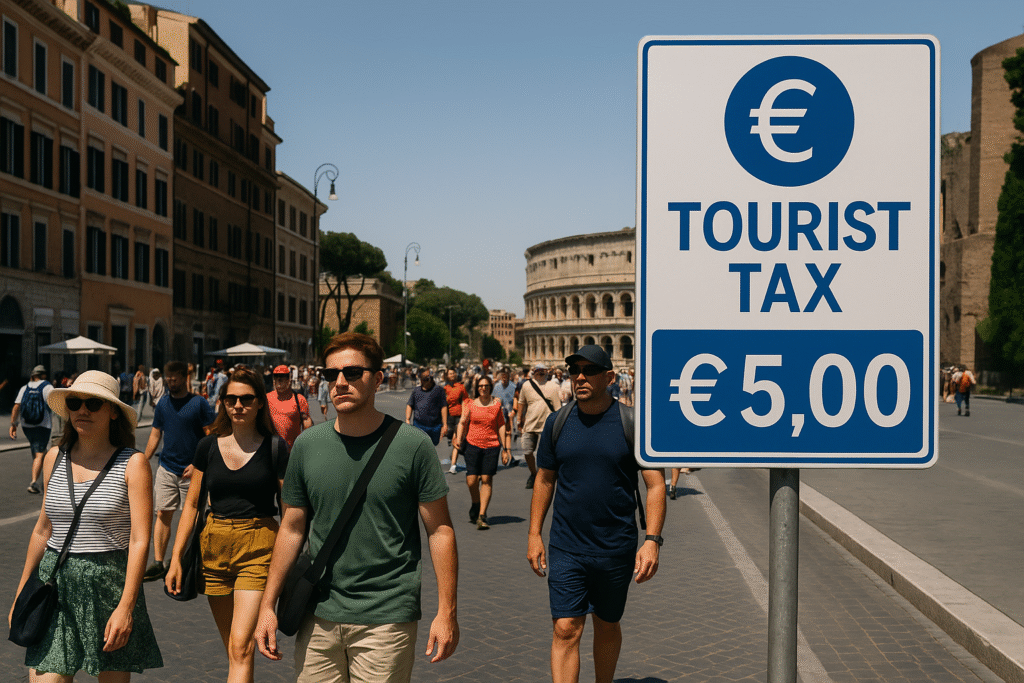
Europe’s leading tourist nations are ramping up visitor taxes in 2025 to tackle overtourism and preserve heritage. France has joined Italy, the Netherlands, Greece and Spain in this move. The goal: make tourism more sustainable and fair for both visitors and residents.
Why the Change Matters
Rising visitor numbers are overwhelming services, infrastructure and local communities. Landmarks, transport systems and natural environments face mounting pressure. By increasing levies, destinations ensure tourists contribute directly to the places they enjoy. These taxes help fund maintenance, improve transport and manage crowds.
This shift reflects a changing mindset: tourism is not just growth, it must be managed responsibly.
Italy’s Comprehensive Multi-City Model
Italy has been at the forefront. Cities such as Rome and Venice lead the way with night-stay taxes and daytime access fees. For example, Venice now charges a fee for day-visitors on busy days, and overnight stays face per-person per-night payments that vary by season and lodging type. The aim is to control visitor flow and generate revenue for preservation and crowd control measures.
This model of variable pricing depending on time and place helps manage peak demand and protects fragile urban systems.
France Strengthens its Taxe de Séjour
France’s long-standing “taxe de séjour” (tourist occupancy tax) is now more robust. The charge applies per person per night and depends on accommodation class — from budget to luxury. For travellers staying in premium hotels, the fees are higher. Even short-term rentals and unclassified properties are included. Funds collected support local infrastructure, services and cultural preservation across urban and rural regions.
These contributions allow France to keep its iconic destinations in top condition while distributing load and funding more evenly.
Netherlands: Balancing Residents and Visitors
In the Netherlands, particularly in Amsterdam, visitor levies have reached some of the highest levels in Europe. Tourists now pay a share of their accommodation cost plus potential day-visitor surcharges. The revenues go toward public transport, heritage site upkeep and maintaining livable neighbourhoods for residents. The strategy is to keep the economic benefits of tourism while mitigating wear-and-tear and local disruption.
Spain’s Island Destinations Promote Eco-Investment
Spain’s popular Balearic Islands are also using tourism levies to fund sustainable tourism projects. Higher-end accommodations face higher fees, especially in peak seasons. Collected funds go toward waste management, water conservation, public transit and other systems that ease the load of millions of visitors each year. The message to tourists: enjoy the beaches and nightlife, but also share in the cost of protecting them.
Greece Introduces “Resilience” Levies
Greece has introduced a so-called “resilience tax” tied to the impacts of climate change and tourism on islands. Accommodation taxes vary by hotel class and season. Cruise-ship visitors to hotspots like Santorini and Mykonos now face added levies too. The funds support climate adaptation, disaster preparedness and heritage conservation on island landscapes that are particularly fragile and heavily visited.
Greece’s move highlights how tourism policy can link to broader environmental and social goals beyond simple occupancy counts.
Shared Responsibility for Tourists and Destinations
While tax levels differ by country and city, the underlying principle is the same: visitors need to contribute to the places they enjoy. These levies are modest relative to overall travel budgets, but their collective impact can be significant. The transparency about how the funds are used is crucial to maintain goodwill among travellers.
For residents, the measures offer hope that neighbourhoods won’t be overrun and public services won’t crumble. For tourists, the contributions help sustain the quality of experience and preserve destinations for future generations.
What Travellers Should Know
If you’re planning a trip to Europe, incorporate these fees into your travel budget. Many taxes are charged per person, per night and may vary by season or accommodation class. Some levies may be included in the booking price; others will be collected at check-in or check-out. Being informed helps avoid surprises and shows you’re a responsible traveller. Booking early can also help — some cities charge higher rates for last-minute visits or day-trips without overnight stays.
The Shift Toward Sustainable Tourism
This move by France, Italy, the Netherlands, Greece and Spain signals a broader shift: from unlimited tourism growth toward measured, sustainable tourism. The message is clear: cherished destinations are not inexhaustible, and everyone has a role in protecting them. These levies are one tool in a larger toolkit that includes visitor limits, booking controls and off-peak promotions.
The long-term payoff is preserving Europe’s cultural heritage, natural landscapes and quality of life for residents — ensuring that travellers continue to enjoy these places without compromising them.
Europe’s tourism story in 2025 is no longer only about numbers and revenue. It’s about balance, resilience and respect. By implementing visitor levies and tying them to real outcomes, destinations are investing in their futures — and inviting travellers to be a part of that investment.
For more travel news like this, keep reading Global Travel Wire