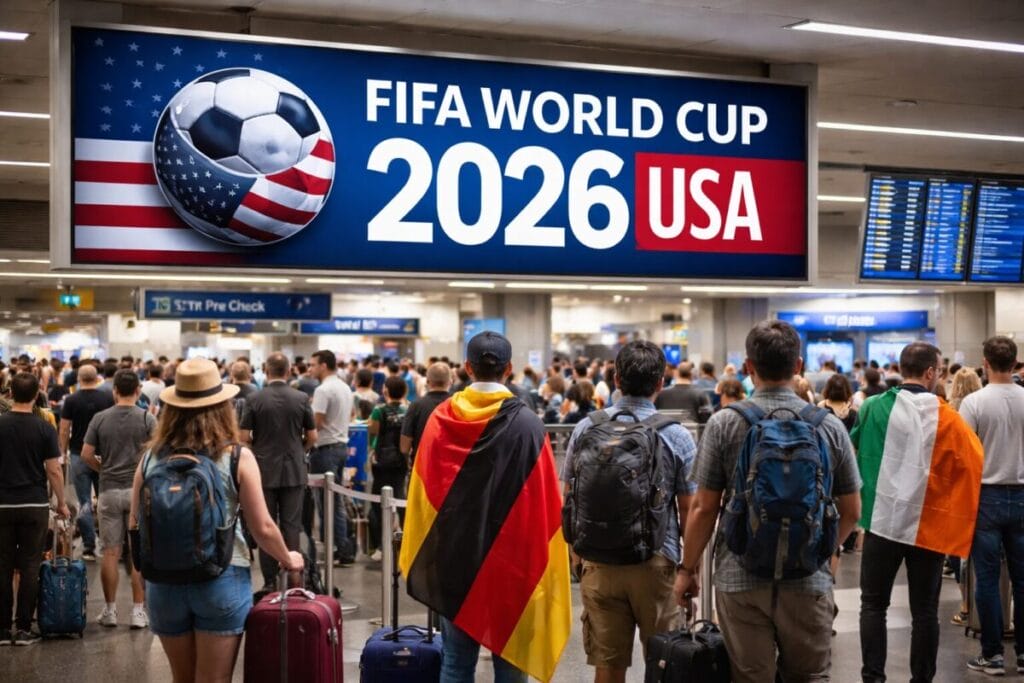
France, Germany, Ireland, the United Kingdom, and several European countries have updated travel advisories for citizens planning visits to the United States before the FIFA World Cup 2026. The tournament will take place across the United States, Canada, and Mexico. Authorities expect millions of international visitors to travel across North America during the event.
European governments are not discouraging travel outright. However, they urge travelers to prepare for crowded airports, stricter security procedures, longer waiting times, and rising costs. These advisories reflect concerns about logistics, political tensions, and infrastructure pressure during a mega sporting event.
The updates are already influencing travel behavior. Many tourists are reviewing plans or adjusting their travel schedules to avoid peak tournament periods.
Mega Event Creates Unique Travel Challenges
The 2026 FIFA World Cup will be the largest in history. Forty-eight teams will compete across multiple cities. Host destinations include major US hubs known for high international arrivals.
Large crowds bring significant economic benefits. Yet they also create logistical challenges. Airports may face congestion. Border checkpoints could experience longer processing times. Public transportation and accommodation networks will operate at near maximum capacity.
Authorities anticipate heavier security screenings to ensure safety during matches and fan gatherings. Travelers may need additional preparation time before departure and during entry procedures.
European Advisories Reflect Rising Traveler Awareness
France Emphasizes Preparedness
French authorities advise travelers to remain alert in crowded locations and confirm travel documents well in advance. Officials highlight potential delays and security checks. This guidance encourages travelers to plan carefully rather than rely on spontaneous travel decisions.
French tourists may adjust travel dates or choose less crowded destinations within North America.
Germany Highlights Crowd Safety and Logistics
Germany’s advisory stresses awareness in busy public areas and major host cities. Officials encourage travelers to monitor local updates and allow extra time for transportation. German travelers often prefer efficient travel experiences, so concerns about long waits may influence booking decisions.
Ireland Calls for Vigilance
Irish guidance focuses on preparation and compliance with local regulations. Travelers are advised to stay informed and expect higher demand across airports and tourist zones. Some Irish visitors may delay trips or combine World Cup travel with visits to Canada or Mexico.
United Kingdom Warns of Entry Delays
The UK advisory highlights possible congestion at US entry points. Travelers are encouraged to arrive early and prepare for extensive checks. British tourists represent a major share of US inbound travel. Even minor shifts in demand could affect tourism revenue.
Impact on Flight Demand and Airfare Prices
Airlines already anticipate a surge in bookings during the tournament. High demand typically leads to higher ticket prices. European advisories add another factor by influencing traveler psychology.
Some visitors plan to travel earlier in 2025 or after the tournament to avoid peak pricing. Others consider alternative routes or multi-destination itineraries.
Air carriers may increase capacity on key routes. However, limited airport slots and operational constraints could still push prices upward. Travelers who delay bookings may face fewer affordable options.
Accommodation Costs Expected to Rise
Hotels and short-term rentals in host cities will likely see record demand. Major destinations such as Los Angeles, New York, and Miami already rank among the most visited cities globally. During the World Cup, accommodation prices could climb significantly.
Budget travelers may reconsider trips if costs become too high. Luxury travel segments could benefit from increased demand among high-spending visitors. Tourism businesses must balance pricing strategies to maintain accessibility while managing demand.
Security and Infrastructure Pressures
Large international events require expanded security operations. Authorities plan to increase screening measures at airports, stadiums, and public spaces. These measures aim to ensure safety but may slow travel processes.
Transportation networks will also face heavy pressure. Delays may occur on highways, rail systems, and domestic flights between host cities. Travelers who plan ahead and build flexible itineraries may avoid stress.
Changing Global Tourism Patterns
European travel advisories are influencing global tourism flows. Some travelers may choose Canada or Mexico as alternative bases while attending matches. Others may combine sports travel with regional tourism experiences to maximize value.
Tour operators already report shifts in booking patterns. Early planners seek guaranteed reservations and flexible policies. Meanwhile, last-minute travelers may struggle to secure affordable options.
The advisories also encourage travelers to stay informed about visa rules and entry requirements. Governments often adjust procedures to manage high visitor volumes during major events.
Opportunities and Challenges for US Tourism
The World Cup offers enormous economic potential. Increased arrivals can boost airlines, hotels, restaurants, and local attractions. However, the industry must manage expectations carefully.
Clear communication about safety, infrastructure readiness, and travel procedures will play a crucial role. Tourism boards may focus on promoting lesser-known destinations to spread visitor demand beyond major cities.
Flexible pricing strategies and improved visitor services could help maintain strong inbound tourism despite advisory warnings.
Outlook for FIFA World Cup 2026 Travelers
The FIFA World Cup 2026 remains one of the most anticipated global events. Travel advisories from European countries highlight practical concerns rather than discouragement. Many travelers will still attend matches and explore North America.
However, the combination of security measures, rising costs, and logistical complexity is reshaping travel planning. Visitors are booking earlier, researching more carefully, and prioritizing flexibility.
For the tourism industry, adaptability will be key. Businesses that respond to changing traveler expectations may benefit from sustained demand long after the tournament ends.
For more travel news like this, keep reading Global Travel Wire