alternatives. Recent government reports and environmental assessments highlight the growing role of trains in reducing emissions while improving travel experiences across the continent.
Rail travel now attracts both eco-conscious tourists and regional planners who aim to promote responsible tourism. With climate targets guiding transportation policies, European governments continue investing heavily in rail infrastructure to encourage travelers to choose trains over cars and flights.
Rail Travel Emerges as a Core Strategy for Sustainable Mobility
European policymakers increasingly view rail as a central solution to rising transport emissions. According to environmental agencies, road vehicles still generate the majority of transport-related pollution. Therefore, shifting passengers toward rail plays a significant role in reducing environmental impact.
Trains produce far lower emissions per passenger compared with airplanes or private vehicles. Electrified rail systems further reduce carbon output because they often rely on renewable energy sources. This efficiency makes rail travel one of the most environmentally friendly ways to explore Europe.
Many travelers now calculate carbon footprints when planning trips. Consequently, rail journeys have gained popularity among tourists who want to reduce environmental impact without sacrificing comfort.
High-Speed Rail Expands Access to Major Cities and Hidden Destinations
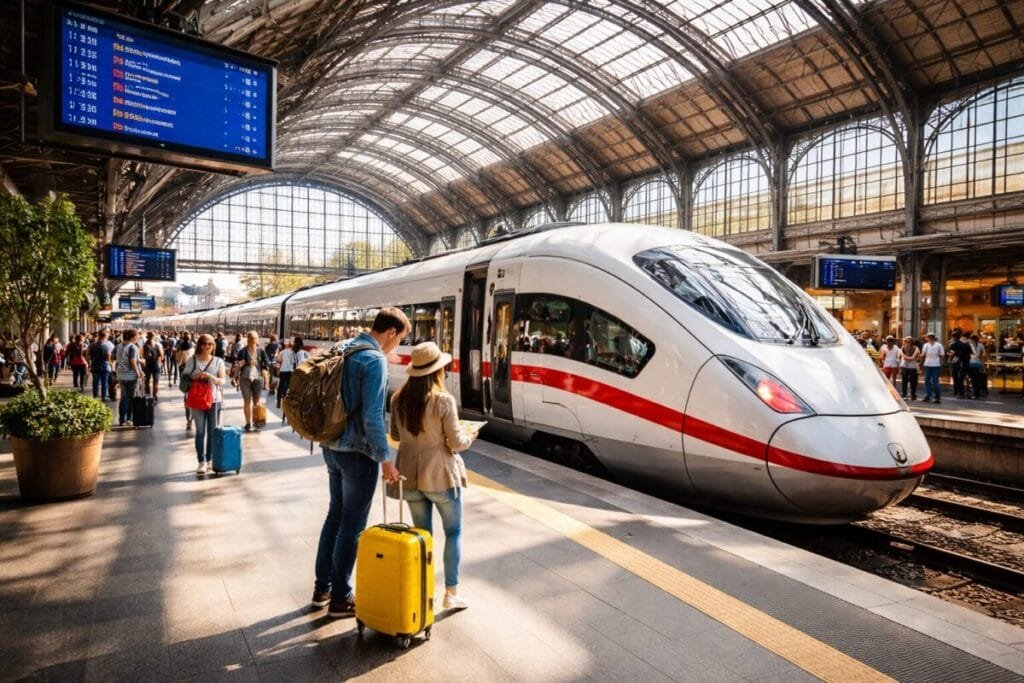
High-speed rail lines have transformed travel between European cities. Routes connecting capitals and regional hubs allow tourists to travel quickly without relying on short-haul flights. Journeys between destinations such as Paris, Barcelona, London, or Edinburgh now offer competitive travel times with lower emissions.
Beyond major routes, rail networks also connect rural areas and smaller cities. These connections encourage travelers to explore lesser-known regions that previously received limited tourism traffic. As a result, regional economies benefit from increased visitor spending and cultural exchange.
Tourism authorities support rail expansion because it distributes visitor flows more evenly. Instead of concentrating tourism in overcrowded hotspots, trains help redirect travelers toward emerging destinations.
Rail Tourism Supports Local Economies and Cultural Exchange
Rail travel creates opportunities for deeper cultural experiences. Travelers often enjoy scenic journeys that showcase landscapes, historic towns, and local traditions along the way. This slower, immersive travel style aligns with broader trends favoring meaningful experiences over rushed itineraries.
Small towns with reliable rail access have reported growing visitor numbers. Local businesses, including restaurants, accommodations, and cultural attractions, benefit from increased tourism demand. Governments recognize that rail connectivity helps preserve heritage sites by supporting sustainable economic development.
Cross-border rail routes also strengthen cultural ties between European nations. Travelers can easily move between countries, encouraging multi-destination trips that boost tourism collaboration across the region.
Policy Support and Investment Drive Rail Expansion
European institutions have prioritized rail development within broader climate strategies. Funding programs aim to modernize infrastructure, improve electrification, and increase network capacity. These initiatives align with long-term goals to achieve climate neutrality by mid-century.
Governments continue introducing policies that encourage rail usage. Some countries promote integrated ticketing systems, while others invest in night trains and cross-border high-speed routes. These improvements make rail travel more convenient and accessible.
Enhanced digital booking platforms also simplify trip planning. Travelers can compare routes, schedules, and pricing across multiple countries, reducing barriers that once discouraged rail use.
Environmental Benefits Strengthen Rail’s Appeal
Environmental advantages remain one of the strongest drivers behind rail tourism growth. Train travel consumes less energy per passenger and reduces congestion on roads and at airports. These benefits help cities manage overtourism while lowering pollution levels.
Rail infrastructure also supports sustainable urban planning. Stations often connect directly to public transit networks, allowing travelers to continue journeys without relying on cars. This integration enhances mobility while reducing environmental impact.
Tourism experts believe these advantages will continue attracting environmentally conscious travelers. As awareness of climate issues grows, many tourists prioritize destinations that offer low-carbon transport options.
Challenges Still Affect Cross-Border Rail Travel
Despite progress, several challenges remain within the European rail sector. Fragmented systems across different countries sometimes create scheduling issues or inconsistent ticketing processes. Travelers may face complications when booking cross-border journeys involving multiple operators.
Infrastructure differences and regulatory frameworks also slow integration. However, policymakers continue working toward standardization and improved coordination between national rail networks.
Investment in modern signaling systems and unified ticket platforms aims to address these challenges. As improvements progress, travelers can expect smoother international rail experiences.
The Future of Sustainable Tourism in Europe
Europe’s rail network will likely play an even greater role in shaping sustainable tourism over the coming decades. Climate policies encourage a shift away from carbon-intensive transport options, and rail offers a practical alternative for medium-distance travel.
Tourism strategies increasingly promote train travel as part of broader sustainability campaigns. Scenic rail routes, night trains, and cross-border high-speed connections will continue attracting travelers seeking eco-friendly adventures.
For visitors, rail travel offers more than environmental benefits. Comfortable seating, scenic views, and city-center arrivals create a stress-free travel experience. These advantages help explain why rail continues gaining popularity among both leisure and business travelers.
As Europe strengthens its commitment to sustainable transport, rail travel stands at the center of a greener tourism future. The ongoing expansion of rail networks promises cleaner journeys, stronger regional economies, and a more connected continent ready to welcome the next generation of travelers.
For more travel news like this, keep reading Global Travel Wire