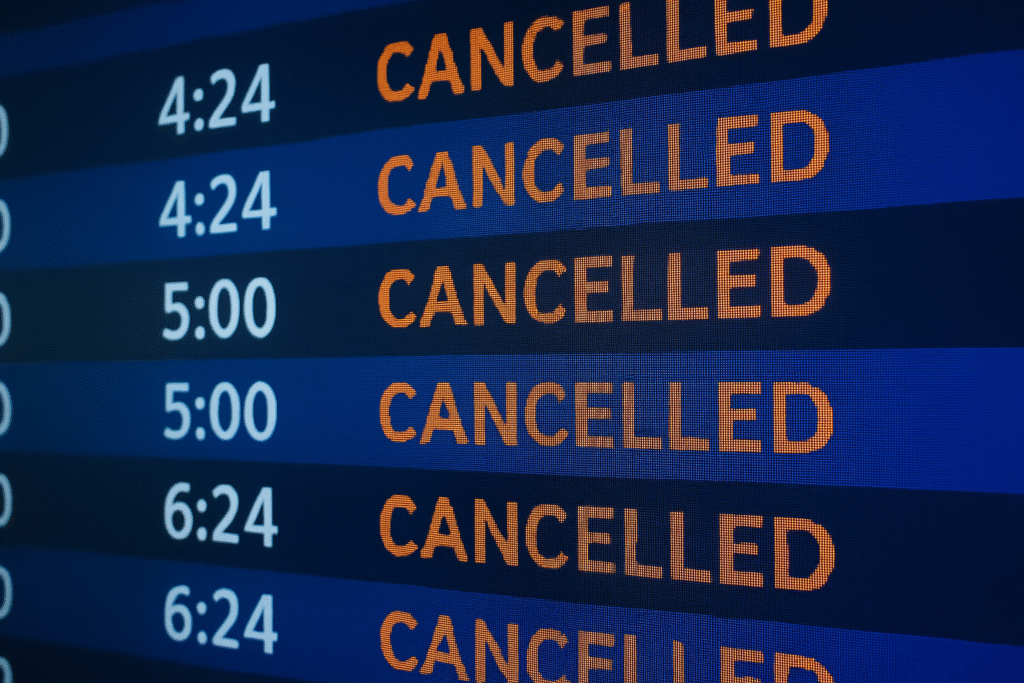
The Federal Aviation Administration (FAA) has ordered large-scale flight reductions at 40 major U.S. airports, disrupting travel nationwide just as the busy holiday season begins. This decision, aimed at addressing staffing shortages and ensuring safety, is now causing widespread travel delays and cancellations across the country. The ripple effects are spreading internationally, affecting global flight connections and leaving both domestic and international passengers facing uncertainty.
This unprecedented move marks one of the most sweeping FAA directives in recent years, hitting airlines, airports, and travellers alike at a time when the aviation sector is already strained by high passenger volumes and limited resources.
Travel Disruptions Spread Coast to Coast
From New York and Chicago to Los Angeles and Seattle, the impact of the FAA’s cuts is being felt everywhere. Travellers are reporting longer wait times, rebooked flights, and missed connections. Many airports are struggling to accommodate displaced passengers, creating crowding at terminals and customer service counters.
The timing could not be worse. The winter travel rush is approaching, and airlines are facing pressure to adjust schedules while avoiding further cancellations. Many passengers who had planned long-awaited trips for the holiday season now find themselves facing unpredictable delays or rerouted itineraries.
How the FAA’s Decision Reshapes U.S. Air Travel
The FAA’s order primarily targets domestic operations, but the effects reach much further. America’s airspace operates like an interconnected web, where each route depends on others for smooth functioning. Reducing flight frequency at key airports disrupts the entire network, affecting everything from baggage handling to connecting flights.
Short-haul routes are being prioritized, while low-demand and overlapping services are being consolidated or cut. The agency’s focus is to maintain safety and efficiency amid ongoing shortages of qualified air-traffic controllers. However, this approach has led to flight reshuffling that impacts nearly every airline.
Airlines are now required to submit updated flight schedules a week in advance for FAA review, delaying rebooking processes and complicating travel planning. This extra step, while aimed at maintaining order, has left passengers facing greater uncertainty about their itineraries.
Airlines Struggle to Adjust
Major carriers like Delta Air Lines, American Airlines, and United Airlines have already revised their schedules through late November, reducing frequencies on several routes. Regional carriers are facing even deeper cuts, with some forced to suspend services entirely from smaller airports.
Airlines are consolidating flights with low passenger counts and prioritizing essential routes. However, these changes come with logistical challenges—crew scheduling, aircraft rotation, and gate availability are all affected. Many airports have extended working hours for ground staff to manage the surge of stranded passengers.
Despite the challenges, most carriers are assuring travellers that they are doing everything possible to minimize delays. Flexible rebooking policies and additional customer support have been rolled out to ease passenger frustration.
International Travelers Feel the Ripple Effects
Although the FAA’s order targets U.S. domestic operations, international travel is being disrupted too. The slowdown in domestic flight activity affects aircraft positioning, connections, and crew rotations, creating global ripple effects.
Passengers traveling from Europe, the Middle East, and Asia into U.S. hubs such as New York, Atlanta, and Dallas are experiencing delays and missed domestic connections. Travel experts advise international visitors to build longer layovers or consider overnight stays before connecting to domestic destinations.
The U.S. remains a critical hub for global air traffic, and disruptions at this scale reverberate across continents. Even flights to Canada, Mexico, and the Caribbean are experiencing knock-on delays.
The Root Cause: Air-Traffic Controller Shortages
The FAA’s decision stems from a persistent staffing shortage among air-traffic controllers. Years of underfunding, retirements, and hiring freezes have left key control towers operating below safe levels. Controllers are working extended hours under immense pressure, leading to safety concerns across the aviation sector.
The agency determined that reducing the number of flights was necessary to maintain safe operating conditions. Experts note that while the decision is disruptive, it may prevent greater risks. Recruiting and training new controllers takes time—up to two years in many cases—so the recovery process will be gradual.
Industry analysts expect the situation to stabilize by early 2026, once new personnel complete certification and enter the workforce.
Travel Advice for Passengers
Despite the ongoing disruptions, the U.S. air travel system remains operational. Airlines continue to run most scheduled flights, though at reduced frequencies. Passengers are advised to take several precautions to minimize inconvenience:
- Check flight status regularly. Monitor airline websites or apps for real-time updates.
- Arrive early. Expect longer lines at check-in and security.
- Book flexible tickets. Opt for fares that allow easy rebooking or cancellations.
- Purchase travel insurance. Choose plans that cover delays, missed connections, and overnight stays.
- Plan connections wisely. Allow extra time or consider an overnight layover for international connections.
Flexibility and patience will be key for travelers during this period of turbulence.
Economic and Industry Impact
The FAA’s flight reductions are already affecting airlines, airports, and tourism operators. With fewer flights, airport revenues may dip, and tourism-dependent regions could experience lower visitor numbers. Smaller cities that rely on regional carriers are particularly vulnerable to temporary isolation or reduced accessibility.
The airline industry, already managing rising fuel costs and labor shortages, now faces another operational hurdle. However, aviation analysts note that maintaining safety remains the FAA’s top priority, even if it means short-term financial pain.
The Path Forward
While the disruptions are frustrating, the FAA’s decision highlights the urgent need for long-term reform in U.S. airspace management. Investment in staffing, technology, and modernization will be critical to prevent future crises.
For now, the focus remains on stability and safety. Travelers must adapt to the new normal of longer waits and fewer flights, while airlines and regulators work to rebuild a stronger, more efficient system.
As America’s aviation industry adjusts to these sweeping changes, one message is clear: flexibility, preparation, and patience are essential for navigating the skies in the months ahead.
For more travel news like this, keep reading Global Travel Wire