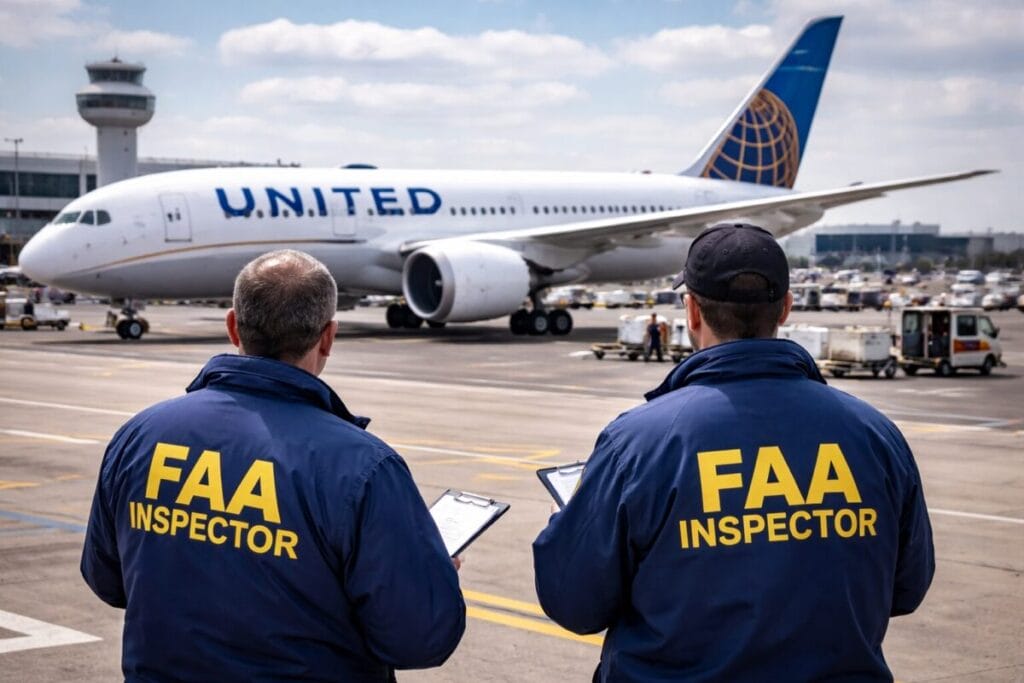
The United States aviation sector faces renewed attention after a federal audit highlighted staffing shortages affecting the Federal Aviation Administration’s oversight of United Airlines. The review found that limited workforce capacity and high turnover have strained inspection teams responsible for monitoring maintenance operations.
United Airlines operates one of the largest fleets in North America, with major hubs in Houston, San Francisco, Los Angeles, and Washington, D.C. The airline runs extensive domestic and international routes, making regulatory supervision complex and resource-intensive.
As travel demand continues to grow, effective oversight becomes critical to maintain passenger confidence. The audit suggests that current staffing levels struggle to keep pace with expanding operational demands.
Workforce Gaps Affect Inspection Consistency
The federal review examined oversight practices over a period extending from mid-2024 to late-2025. It found that inspection offices responsible for monitoring United Airlines experienced significant staffing challenges.
Experienced inspectors left positions faster than agencies could replace them. This trend created gaps in expertise and reduced continuity within oversight teams. New inspectors often lacked airline-specific knowledge, which slowed processes and increased workload pressure.
Fewer staff members meant fewer on-site inspections. This shift raised concerns about whether maintenance activities received the same level of scrutiny as in previous years. Industry experts note that aviation safety relies heavily on consistent monitoring and strong institutional knowledge.
Rise of Virtual Inspections Sparks Debate
Another major issue involved increased reliance on virtual inspections. Staffing shortages and budget limitations led inspectors to conduct more remote reviews instead of in-person evaluations.
Virtual oversight can help manage workloads and reduce travel costs. However, technical aviation assessments often require physical examination. Inspectors need to observe equipment conditions directly and evaluate maintenance practices on-site.
Remote reviews may overlook subtle technical details. This limitation could increase risks when inspectors assess safety-critical components. Aviation professionals argue that virtual inspections work best as supplementary tools rather than replacements for physical oversight.
The audit highlighted that regulatory policies recommend postponing inspections when in-person checks cannot occur. Despite this guidance, some reviews continued remotely, raising questions about consistency.
Loss of Institutional Knowledge Raises Concerns
High turnover created another challenge: loss of institutional knowledge. Veteran inspectors carry valuable experience and familiarity with airline procedures. Their departure left gaps that newer staff struggled to fill.
Without continuity, oversight teams may take longer to identify patterns or recurring maintenance issues. Understanding complex fleet systems requires time, training, and practical exposure.
Experts emphasize that aviation safety depends not only on regulations but also on experienced personnel who can interpret technical data effectively. Workforce planning therefore becomes essential for maintaining high safety standards.
Key Recommendations for Improvement
The review proposed several steps to strengthen oversight. These included improving workforce planning models and conducting surveys to evaluate workload pressures within inspection teams.
Enhanced training programs formed another key recommendation. Inspectors must understand airline safety data systems to identify potential risks early. Advanced training could help teams analyze complex maintenance information more efficiently.
The report also suggested aligning staffing levels with growing industry demands. As airlines expand fleets and routes, regulatory agencies need sufficient resources to keep pace.
In response, aviation authorities acknowledged the challenges and agreed to implement many of the suggested improvements. Plans include expanding hiring efforts and providing inspectors with better resources for in-person evaluations.
Maintenance Incidents Add to Safety Discussions
Recent incidents involving United Airlines aircraft intensified scrutiny surrounding maintenance oversight. While all flights landed safely and no injuries occurred, the frequency of events raised public concern.
One incident involved a runway excursion during landing at a major Texas hub. Another event saw an aircraft lose a tire shortly after takeoff, forcing a precautionary diversion. A later flight returned to its departure airport after experiencing engine issues during takeoff.
Each situation was handled according to safety procedures. Still, recurring incidents prompted questions about maintenance practices and regulatory supervision. Industry observers stress that aviation safety depends on identifying potential risks before they escalate into serious emergencies.
Growing Aviation Demand Increases Regulatory Pressure
Global air travel continues to rebound strongly, increasing pressure on airlines and regulators alike. Major carriers expand routes to meet rising passenger demand, while fleets grow more technologically advanced.
This expansion requires robust oversight systems. Regulators must balance efficiency with strict safety standards. Staffing shortages risk creating gaps that could undermine confidence in aviation systems.
For travelers, safety remains the top priority. Transparent communication between airlines and regulatory bodies plays a vital role in maintaining trust.
Collaboration Seen as Key to Future Safety
United Airlines has expressed willingness to work closely with aviation authorities to address concerns. Cooperation between carriers and regulators often leads to improved safety outcomes.
Industry analysts note that modern aviation depends on shared responsibility. Airlines must maintain strong internal safety systems, while regulators provide independent monitoring and enforcement.
Investing in workforce development and training may help agencies rebuild capacity. Stronger oversight frameworks could ensure inspections remain thorough despite increasing operational complexity.
What This Means for Travelers
For passengers, the audit does not indicate immediate danger. Commercial aviation remains one of the safest modes of transport worldwide. However, the findings highlight areas where improvements could strengthen oversight.
Travelers may see increased inspections and stricter monitoring in the future. These measures aim to reinforce safety standards as airlines continue expanding operations.
The Road Ahead for Aviation Oversight
The aviation industry stands at a turning point. Rising travel demand, evolving aircraft technology, and workforce challenges require adaptive strategies.
Addressing staffing shortages will likely become a priority for regulators. Effective workforce planning, stronger training programs, and renewed focus on on-site inspections could help restore confidence in oversight systems.
As agencies implement reforms, collaboration between regulators and airlines will remain essential. Strengthened oversight will not only protect passengers but also support sustainable growth across the global aviation sector.
For more travel news like this, keep reading Global Travel Wire