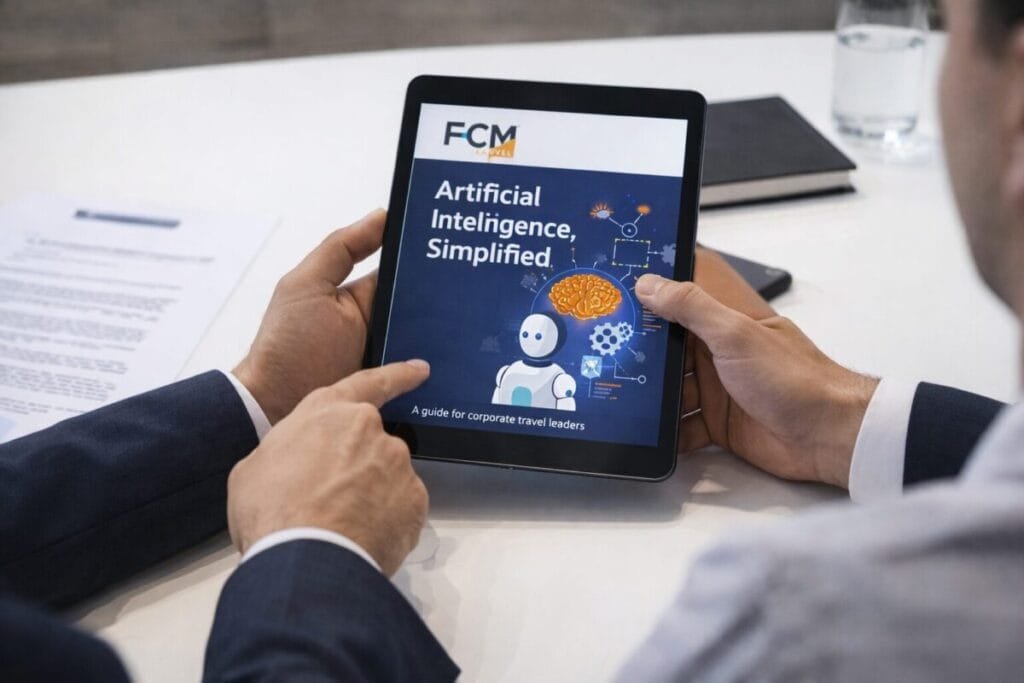
FCM Travel has unveiled a new guide designed to help corporate travel leaders harness artificial intelligence with clarity and structure. The publication, titled Artificial Intelligence, Simplified, positions AI as a practical tool rather than a passing trend.
Corporate travel managers face rising pressure to modernise programmes while balancing compliance, cost control, and traveller satisfaction. Rapid advances in AI technologies create both opportunity and complexity. FCM Travel aims to help organisations move from experimentation toward structured deployment.
The guide draws on insights from senior innovation leaders within the company. It outlines AI principles, industry use cases, and implementation frameworks tailored specifically to business travel.
Turning AI Theory into Operational Execution
Many travel leaders discuss AI in abstract terms. However, FCM Travel focuses on direct application within daily operations. The guide explains how AI can streamline booking workflows, improve reporting accuracy, and strengthen duty of care processes.
Rather than promoting isolated tools, the resource emphasises integration. AI systems must connect with booking platforms, expense tools, and supplier networks. This integrated approach ensures measurable results instead of fragmented experimentation.
Corporate travel environments demand precision. Travel programmes involve layered approvals, supplier contracts, and regulatory obligations. AI must support these complexities while maintaining transparency and accountability.
Key Areas Where AI Reshapes Business Travel
The guide identifies several domains where AI already influences corporate travel. These include booking automation, content aggregation, and policy management.
AI-driven automation can reduce manual booking errors and speed up itinerary changes. Intelligent systems can also consolidate content from multiple suppliers into unified interfaces. This capability improves comparison accuracy and increases compliance with negotiated rates.
Data visibility also improves through AI-powered analytics. Travel managers can identify spending patterns, policy leakage, and supplier performance trends more quickly. Enhanced reporting supports stronger procurement decisions and better contract negotiations.
A Step-by-Step Roadmap for AI Adoption
Central to the guide is a structured roadmap for implementation. FCM Travel encourages organisations to start with defined business objectives rather than broad digital ambitions.
Leaders should first identify the specific problem AI aims to solve. Clear success metrics must follow. These metrics may include cost savings, improved traveller satisfaction, or faster disruption response times.
The guide also highlights the importance of governance. Internal teams must possess the technical skills and oversight capability to manage AI deployment. Without clear ownership, initiatives risk drifting without measurable outcomes.
Incremental testing remains a core principle. Pilot programmes allow companies to validate results before expanding adoption. This approach reduces risk and ensures continuous learning.
Build or Buy: Strategic Technology Decisions
One significant section of the guide examines procurement strategy. Travel management companies must decide whether to adopt third-party AI tools or develop proprietary platforms.
FCM Travel chose to invest in in-house development. This strategy provides greater control over architecture, data governance, and user experience. While resource-intensive, proprietary solutions allow deeper integration with internal systems.
The company’s virtual assistant platform reflects this philosophy. Designed to deliver booking support and real-time assistance, the system integrates with broader travel workflows. FCM Travel views this model as a long-term investment in innovation rather than a short-term solution.
Strengthening Duty of Care Through AI
Duty of care remains central to corporate travel management. Organisations must protect employees during domestic and international trips. AI enhances this responsibility through predictive analytics and real-time alerts.
Intelligent systems can analyse itineraries against emerging geopolitical or weather risks. Automated notifications allow travellers and managers to respond quickly. In high-risk situations, AI can suggest rebooking options and alternative routes.
Predictive modelling also identifies travel patterns that increase exposure. Travel managers can adjust policies and guidance proactively. This shift from reactive to preventive management strengthens corporate resilience.
Data as the Foundation of Smarter Travel Programmes
Business travel generates large volumes of data. Bookings, cancellations, and supplier metrics create complex information streams. However, fragmented systems often limit visibility.
AI can unify these data sources into coherent dashboards. Travel managers gain clearer insights into programme performance and compliance. Procurement teams can negotiate more effectively using detailed trend analysis.
FCM Travel emphasises that AI maturity depends on ecosystem integration. Technology must connect data, service, and content layers seamlessly. Standalone tools rarely deliver sustainable impact.
Measuring Success Through Defined Outcomes
The guide repeatedly stresses measurable impact. AI initiatives must align with strategic goals. Without defined benchmarks, organisations risk investing in innovation without returns.
FCM Travel recommends evaluating digital infrastructure readiness before adoption. Leaders should assess data quality, security frameworks, and contractual flexibility. These foundational elements determine whether AI deployment will succeed.
Companies that conduct readiness assessments early can avoid costly missteps. Clear performance indicators allow leadership teams to monitor return on investment and adjust strategies accordingly.
The Evolving Role of Travel Management Companies
The corporate travel landscape continues to evolve. Travel management companies increasingly act as technology partners rather than simple booking intermediaries. AI adoption accelerates this transformation.
Consultants now rely on data-driven insights to anticipate traveller needs and manage disruptions. Intelligent automation supports human expertise rather than replacing it. This hybrid model strengthens service quality and operational efficiency.
FCM Travel positions its AI guide as part of this broader industry shift. By providing structured guidance, the company aims to help clients navigate complexity with confidence.
Navigating the Future of Corporate Travel
Artificial Intelligence, Simplified reflects a growing recognition that AI is no longer optional. As digital transformation accelerates, travel leaders must modernise responsibly.
The guide frames AI adoption as a disciplined progression. Stakeholder alignment, incremental testing, and measurable evaluation remain central principles.
Corporate travel involves multiple suppliers, regulatory frameworks, and dynamic pricing models. AI offers structured intelligence that reduces friction and improves decision-making.
Through this initiative, FCM Travel seeks to empower organisations with practical tools and strategic clarity. In an industry defined by constant change, intelligent technology may become the decisive advantage for building resilient and efficient travel programmes.
For more travel news like this, keep reading Global Travel Wire