
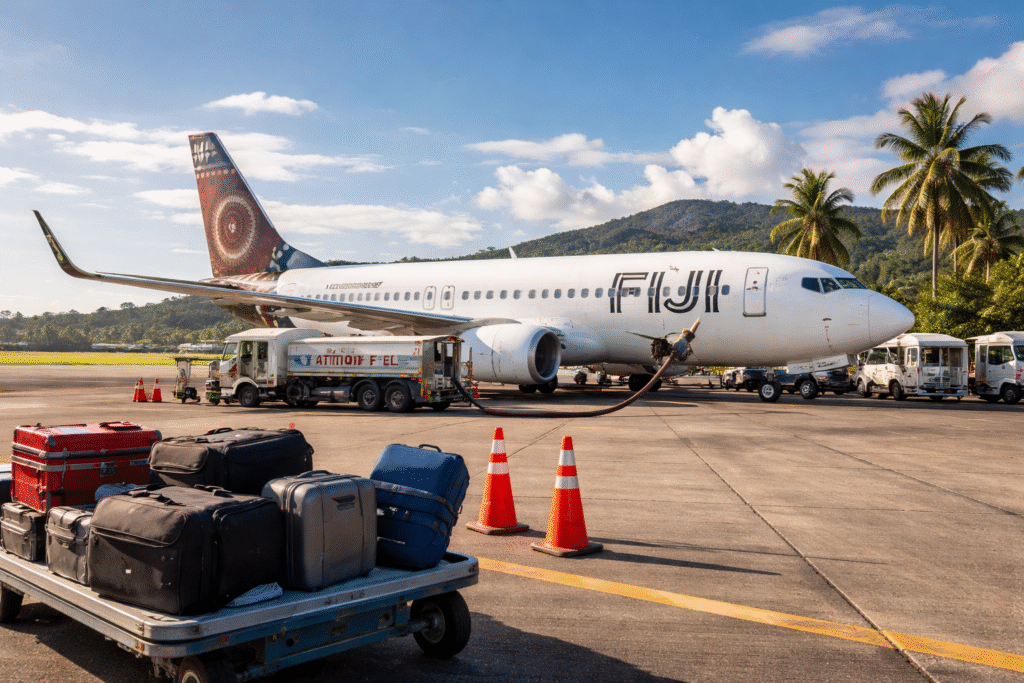
Fiji Airways has issued a fresh travel advisory for passengers flying on two key Pacific island routes. The airline has warned of possible disruptions on services to Funafuti and Nadi–Vava’u due to temporary fuel shortages at destination airports. While flights will continue to operate, capacity limits may affect passengers and baggage.
The alert highlights the operational challenges airlines face when serving remote island destinations. Fuel supply constraints have forced Fiji Airways to adjust flight planning and aircraft loading procedures over the coming weeks.
Funafuti Flights Face Capacity Limits Until Mid-January
Flights operating between Fiji and Funafuti will remain under restrictions until January 15, 2026. Due to limited fuel availability at Funafuti Airport, aircraft must carry additional contingency fuel from Fiji before departure.
This extra fuel adds significant weight to the aircraft. As a result, flights cannot operate at normal passenger or cargo capacity. To maintain safe weight and balance limits, Fiji Airways may need to offload passengers, checked baggage, or freight on certain services.
The airline has confirmed that these measures are precautionary and necessary to ensure flight safety while fuel supplies remain constrained at the destination.
Nadi–Vava’u Route Also Affected by Fuel Scarcity
Similar conditions apply to flights operating on the Nadi–Vava’u route. Fuel shortages at Vava’u are expected to continue until January 9, 2026. During this period, aircraft will also carry additional fuel from Fiji, leading to weight restrictions.
Passengers traveling on this route may experience reduced seating availability and delayed baggage delivery. Fiji Airways has emphasized that these disruptions are temporary and tied directly to local fuel supply limitations rather than fleet or crew issues.
What Passengers Should Expect Before Traveling
Fiji Airways has advised travelers to prepare for possible offloads on affected flights. Both passengers and checked luggage may be impacted when weight limits are reached.
If offloading occurs, affected passengers will be rebooked on the next available flight, subject to seat availability. Checked baggage may also arrive on a later service.
To reduce inconvenience, the airline strongly recommends carrying essential items in hand luggage. This includes medications, travel documents, valuables, and overnight necessities. Carry-on baggage must still comply with standard size and weight regulations.
Passengers are also encouraged to arrive at the airport early and remain flexible with travel plans during this period.
Airline Response and Operational Adjustments
Fiji Airways has stated that the fuel shortage is short-term and already being addressed through coordination with local authorities and fuel suppliers. The airline expects normal fuel availability to resume by mid-January for Funafuti and earlier in January for Vava’u.
In the meantime, the airline is managing operations carefully to minimize delays and cancellations. Flight schedules remain active, and customer service teams are supporting affected travelers with rebooking and assistance where required.
The airline has reiterated its commitment to maintaining safety standards while continuing to serve vital regional routes that support tourism and local economies.
Broader Impact on Pacific Island Tourism
These temporary disruptions come at a time when tourism demand across the Pacific is steadily increasing. Island destinations such as Tuvalu and Tonga rely heavily on air connectivity for visitors, supplies, and essential services.
Fuel supply challenges highlight the logistical complexities of operating flights to remote islands. Limited storage capacity, shipping delays, and weather conditions can all affect fuel availability, especially during peak travel seasons.
Despite these hurdles, airlines like Fiji Airways play a critical role in sustaining tourism growth and regional mobility across the Pacific.
Looking Ahead: Strengthening Fuel Planning and Connectivity
The current situation may encourage broader improvements in fuel planning and aviation infrastructure across the region. Airlines and governments are increasingly exploring long-term solutions to strengthen fuel supply chains at remote airports.
Future strategies may include better fuel storage facilities, diversified supply routes, and closer coordination between airlines, airport operators, and national authorities. These steps can help reduce operational risks and improve service reliability.
There is also growing interest in sustainable aviation fuel and efficiency measures that can support both operational resilience and environmental goals in island aviation.
Managing Short-Term Challenges for Long-Term Growth
While fuel shortages have created short-term challenges on the Funafuti and Nadi–Vava’u routes, the situation remains temporary and manageable. Fiji Airways continues to operate flights while prioritizing safety and passenger support.
As tourism across the Pacific continues to recover and expand, lessons from these disruptions may help shape more resilient regional aviation systems. Improved fuel management, stronger partnerships, and forward-looking planning will be key to meeting future travel demand.
For now, travelers are advised to stay informed, pack smart, and allow extra flexibility when flying on affected routes. Fiji Airways remains focused on restoring full operations as soon as fuel supplies stabilize, supporting both travelers and the wider Pacific tourism industry.
For more travel news like this, keep reading Global Travel Wire