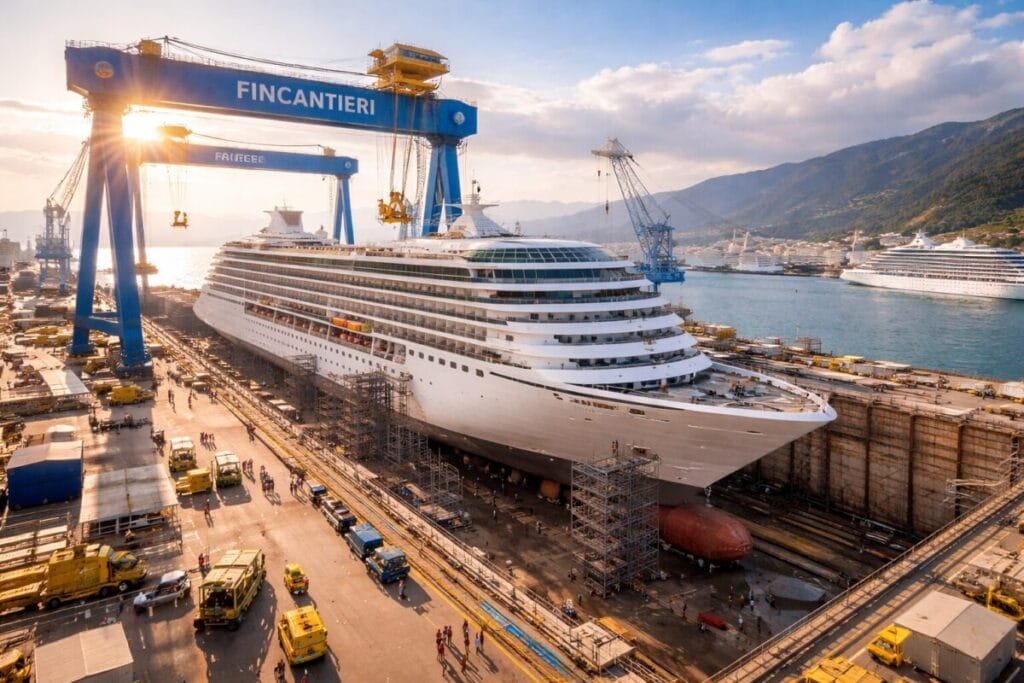
Fincantieri prepares for a landmark year as several major cruise upgrade projects line up for 2026. The Italian shipbuilder will handle a high volume of drydock assignments focused on energy efficiency, comfort improvements, and regulatory compliance. Cruise lines continue to modernize their fleets as global sustainability goals grow tighter and passenger expectations continue to rise.
Drydock Programs Reflect Industry Shifts
The 2026 drydock calendar includes a mix of class renewals, technical overhauls, and hotel modernization projects. Fincantieri’s network of shipyards will welcome both mid-sized and large vessels throughout the year, each requiring specialized engineering solutions. Cruise operators seek upgrades that improve vessel economics while enhancing the onboard experience for guests.
One major trend centers on bundled project planning. Cruise companies now prefer to complete regulatory, mechanical, and aesthetic work during one drydock period. This strategy reduces downtime and improves operational efficiency. It also allows operators to introduce new technologies that support sustainability goals without delaying schedules.
Energy Efficiency Leads 2026 Objectives
Reducing energy consumption remains the top priority for many cruise lines. Fincantieri expects a large share of its 2026 projects to focus on HVAC systems, refrigeration plants, lighting upgrades, and power distribution improvements. These upgrades target both carbon reduction and fuel savings. Cruise operators benefit from lower energy consumption while meeting environmental expectations from regulators, travelers, and port authorities.
Interest in energy efficiency also stems from new emission rules. Regions including the European Union and several U.S. coastal states continue to introduce climate-driven maritime regulations. Cruise companies must anticipate compliance rather than react once mandates arrive. The upgrades scheduled in 2026 align with long-term sustainability strategies and future-proofing efforts across global fleets.
Technology Supports The Energy Transition
Many cruise brands continue to explore future fuels, but uncertainty remains about timing and infrastructure. With net-zero frameworks delayed and alternative fuel ecosystems still developing, cruise companies hesitate to commit to conversions that lock vessels into one technology path. Fincantieri understands that challenge and has tailored its drydock offerings to meet present needs without closing future doors.
Energy transition tools include shore power integration, advanced hull coatings, air lubrication systems, and performance management software. Shore power systems allow cruise ships to plug into port electricity grids and reduce emissions while docked. Hull coatings reduce drag and improve speed at lower fuel burn rates. Air lubrication systems create a thin layer of bubbles along the hull to cut friction and energy use. Performance software monitors fuel, navigation, and mechanical loads in real time to optimize efficiency.
These technologies deliver measurable environmental gains today and preserve flexibility for fuel shifts tomorrow.
Interior Modernization Enhances Guest Experience
Sustainability dominates the technical agenda, but passenger comfort drives hotel refits. Cruise passengers expect modern interiors, digital conveniences, and boutique-style design. Fincantieri works closely with cruise lines to redesign staterooms, lounges, dining areas, and entertainment spaces. These upgrades support brand identity and help vessels stay competitive in the global tourism market.
Digital improvements continue to surge as cruise ships integrate smart cabin controls, faster connectivity, and guest experience platforms. Back-of-house systems also expand, including predictive maintenance tools, energy management dashboards, and integrated service workflows. These upgrades improve operational reliability while reducing waste and resource consumption.
Compliance And Regulatory Preparation
The maritime sector continues to evolve under new environmental frameworks set by the International Maritime Organization and regional port authorities. Fincantieri supports cruise operators by conducting assessments that analyze future compliance scenarios. Engineering teams guide clients through complex regulatory pathways related to emissions, fuel systems, and waste management.
This advisory role gains importance as governments introduce policies tied to decarbonization and circular economy goals. Cruise operators cannot afford uncertainty in long-term planning, especially as vessels remain active for decades. Fincantieri provides clarity through engineering roadmaps that link short-term upgrades with long-term transition milestones.
Sustainability Strengthens Cruise Tourism
Sustainability initiatives influence the tourism sector as travelers grow more conscious of environmental impacts. Cruise lines now market energy efficiency and reduced emissions as part of their brand value. Regions that depend on cruise tourism also benefit as cleaner vessels support better air quality and reduced port congestion. Alaska, Norway, and Mediterranean destinations continue to encourage cleaner maritime operations while maintaining tourism revenue.
Fincantieri plays a key role in that evolution by providing shipyards with advanced retrofitting capabilities. These services help cruise operators deliver more responsible tourism without compromising comfort or itinerary diversity.
Looking Ahead To A Greener Cruise Fleet
The 2026 drydock schedule signals a broader industry shift toward sustainable fleet modernization. The work completed next year will influence cruise operations for decades as vessels receive both immediate upgrades and capabilities that support future transitions. Fincantieri positions itself as a leader in this movement through engineering expertise, strategic planning, and flexible technological solutions.
As tourism demand continues to grow, cruise lines must balance comfort, efficiency, and environmental stewardship. Fincantieri enables that balance and shapes the path toward a greener and more competitive global cruise industry.
For more travel news like this, keep reading Global Travel Wire