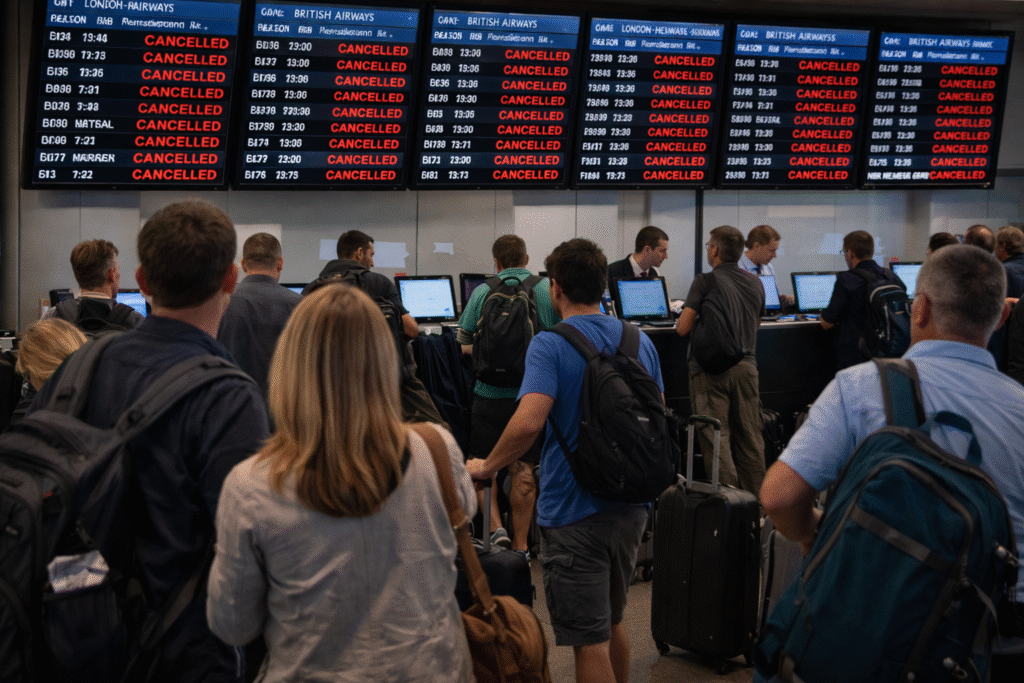
Global travel faced fresh disruption after 48 flight cancellations affected major airports across the United States, Russia, and Germany. British Airways, Pegasus Airlines, and German Airways grounded services across key international and regional routes. Thousands of travelers faced delays, missed connections, and sudden itinerary changes. The cancellations impacted business travel, tourism flows, and airline operations across multiple continents.
Major Airports Face Widespread Disruptions
Several high-traffic airports experienced operational strain during the disruption period. George Bush Intercontinental Airport in Houston saw long-haul cancellations affecting transatlantic travel. Vnukovo International Airport in Moscow experienced disruptions on routes linking Russia and Turkey. Stuttgart Airport in Germany also faced repeated cancellations affecting European connectivity. Additional disruption spread to London, Amsterdam, Istanbul, and other major hubs.
British Airways Cancels Key Transatlantic and European Routes
British Airways accounted for a significant share of the cancellations. The airline grounded long-haul services between Houston and London, disrupting transatlantic passengers. Multiple short-haul routes between London Heathrow and Amsterdam also failed to operate. Services linking London and Athens also faced cancellation.
Operational challenges drove these decisions. Crew availability issues and aircraft scheduling adjustments reduced capacity across the network. Business travelers missed meetings and conferences due to limited rebooking options. Leisure travelers faced hotel changes and lost reservations. Popular European destinations experienced reduced visitor inflow during the disruption window.
Impact on Tourism in Major European Cities
The British Airways cancellations affected tourism demand in London, Amsterdam, and Athens. These cities rely heavily on short-haul and long-haul air connectivity. Museums, cultural venues, and hospitality providers experienced lower footfall. Tour operators reported last-minute cancellations from international guests. The disruption highlighted the fragile balance between airline operations and urban tourism economies.
Pegasus Airlines Grounds Flights Across Turkey and Russia
Pegasus Airlines faced a challenging operational period. The airline canceled several flights linking Istanbul with Russia, Iran, and European destinations. Services between Moscow and Istanbul Sabiha Gokcen stopped abruptly. Domestic Turkish routes also experienced cancellations, affecting regional connectivity.
Weather disruptions and aircraft maintenance issues drove many of these decisions. Winter conditions affected flight safety and ground handling operations. Staffing shortages added further strain. Passengers remained stranded at Istanbul and Moscow airports while seeking alternatives. Tourism traffic into Turkey faced immediate decline, especially among short-stay visitors.
Tourism Impact Across Turkey and Regional Markets
Turkey relies heavily on steady international arrivals throughout the year. Istanbul serves as a major gateway for leisure and business travel. The Pegasus cancellations reduced inbound traffic during a key travel period. Hotels, restaurants, and tour operators felt the impact quickly. Russian travelers, a major tourism segment, faced difficulty reaching Turkish destinations.
German Airways Cancels Regional European Connections
German Airways also grounded numerous flights across its European network. Services between Stuttgart and Amsterdam stopped operations. Flights linking Amsterdam with Nuremberg, Düsseldorf, Hamburg, Frankfurt, and Krakow also faced cancellation. These routes support both business and leisure travel across Central Europe.
Staffing shortages and aircraft maintenance schedules contributed to the disruption. Limited spare aircraft reduced recovery options. Many passengers struggled to secure same-day rebookings. Business travelers missed time-sensitive commitments. Tourists lost valuable travel days and accommodation bookings.
European Business Travel Faces Setbacks
The German Airways cancellations disrupted key business corridors. Frankfurt, Düsseldorf, and Amsterdam serve as vital commercial hubs. Missed flights delayed corporate travel and trade-related meetings. Conference attendance suffered as travelers arrived late or canceled plans. The disruption exposed the importance of regional aviation reliability for European commerce.
Passenger Experience and Rebooking Challenges
Affected passengers reported long wait times at airport service desks. Call centers faced heavy demand during peak hours. Alternative flights filled quickly, leaving limited options. Some travelers accepted overnight delays or rerouted journeys. Others postponed trips entirely.
Airlines offered rebooking and refund options, but availability remained constrained. Travelers with flexible schedules adapted more easily. Passengers with fixed commitments faced higher costs and inconvenience. Families and elderly travelers experienced added stress during prolonged delays.
Wider Impact on Global Tourism Flows
The cancellations created ripple effects across international tourism networks. Reduced seat availability limited inbound travel to affected cities. Hotels experienced sudden cancellations and no-shows. Ground transportation providers saw lower demand. Travel insurance claims increased during the disruption period.
Tourism boards monitored the situation closely. Short-term visitor numbers declined in affected markets. Recovery depends on airline schedule stabilization and passenger confidence. The episode underscored aviation’s critical role in sustaining global tourism.
Airlines Work to Restore Normal Operations
All three airlines initiated recovery measures following the disruption. Crew scheduling adjustments aimed to stabilize future operations. Maintenance teams prioritized aircraft readiness. Airlines increased communication through digital channels. Airports coordinated closely with carriers to manage passenger flow.
Advice for Travelers Facing Disruptions
Travelers should monitor flight status closely before departure. Flexible tickets provide better protection during disruptions. Early arrival at airports helps manage unexpected changes. Travel insurance remains essential for international journeys. Passengers should retain receipts for potential reimbursement claims.
Final Takeaway for Global Travelers
The cancellation of 48 flights by British Airways, Pegasus Airlines, and German Airways disrupted travel across the USA, Russia, and Germany. Major airports experienced operational strain and tourism losses. Passengers faced inconvenience and uncertainty. The event highlights the need for flexibility and preparedness in modern travel. As airlines restore schedules, travelers should remain alert and adaptable in an evolving aviation landscape.
For more travel news like this, keep reading Global Travel Wire