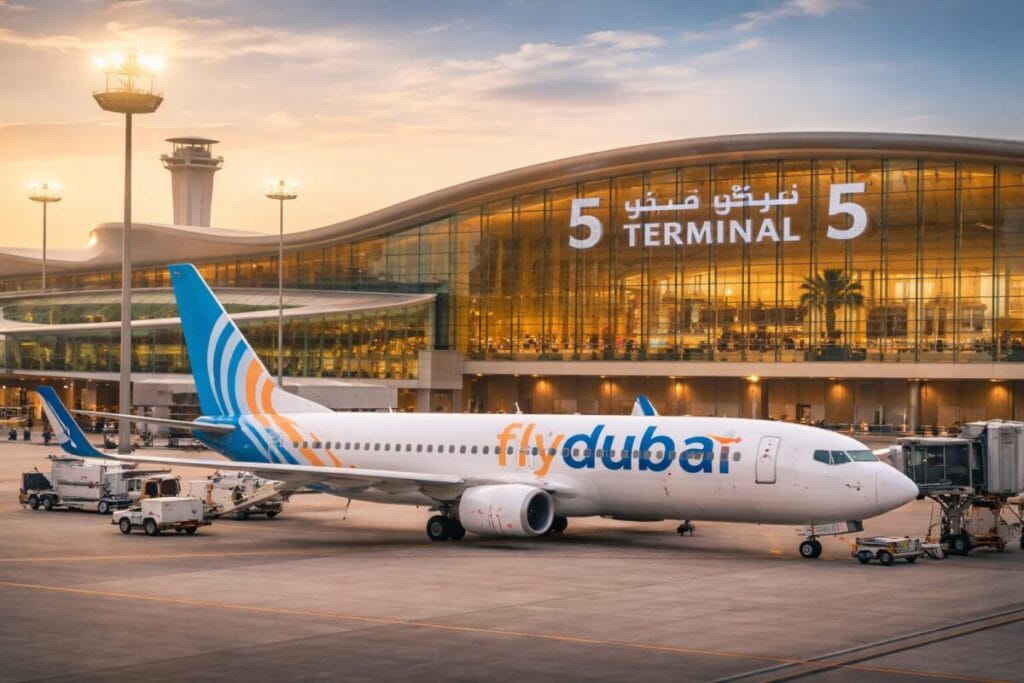
Flydubai is preparing for a major operational change as it moves all Dubai–Riyadh flights to Terminal 5 at King Khalid International Airport starting February 25, 2026. The relocation signals a strategic step to support rising passenger demand, improve efficiency, and strengthen connectivity between two key Middle Eastern aviation hubs.
The shift marks a significant milestone for the airline’s regional growth strategy. It reflects the increasing importance of the Dubai–Riyadh route, which continues to attract business and leisure travelers due to strong economic ties and tourism growth between the UAE and Saudi Arabia.
Terminal 5 Designed for High Capacity and Modern Travel Experience
Terminal 5 has been developed as a modern facility built to handle large passenger volumes. The terminal can manage around 12 million travelers annually. It features advanced infrastructure designed to streamline airport operations and reduce waiting times.
Passengers will benefit from biometric e-gates that speed up border processing. Self-service kiosks allow faster check-in and baggage procedures. A dedicated pier for low-cost carriers ensures smoother boarding and improved operational flow during peak travel periods.
The terminal aligns with Saudi Arabia’s broader plan to modernize aviation infrastructure. Authorities aim to increase airport capacity across the country to support tourism expansion and business travel growth. Improved facilities at Riyadh airport help meet these ambitious targets.
Operational Transition Timeline and Flight Changes
According to airline updates, flight FZ 849 and FZ 850 will be among the first to operate from Terminal 5. Earlier flights departing from Terminal 3 will complete their schedules before the transition becomes fully effective.
Passengers traveling during the transition period should verify terminal information carefully. Airport layouts and transportation routes may differ from previous travel routines. Travelers should allow extra time for arrival at the airport during the initial weeks after the move.
Improved Connectivity and Faster Transfers
One of the main advantages of Terminal 5 is enhanced connectivity. The new layout reduces transfer times, especially for passengers connecting between flydubai and partner airlines. Improved coordination between airlines will help reduce delays during connections.
Evening departure waves, which typically experience higher traffic volumes, will benefit from additional gate availability. This change helps airlines maintain punctual schedules and deliver smoother travel experiences during busy hours.
The improved infrastructure also supports Saudi Arabia’s long-term aviation strategy. The country aims to handle hundreds of millions of passengers annually by 2030, positioning itself as a leading global transit hub.
Guidance for Travelers Ahead of the Terminal Shift
Passengers should review visa requirements and travel documentation before departure. Ensuring compliance with entry regulations for both Saudi Arabia and the UAE will help avoid delays at immigration checkpoints.
Corporate travelers may need to adjust ground transportation plans due to the terminal change. New access routes and pick-up points may apply. Companies should update travel management systems and employee travel tracking tools to reflect the new terminal location.
Travelers are also encouraged to check airport signage carefully. Some older signs may still reference previous terminals during the transition period.
Accessibility Benefits and Passenger Experience Enhancements
Terminal 5 offers a compact design that improves accessibility. Shorter walking distances benefit passengers with reduced mobility and those traveling with families. Clear signage and modern facilities aim to create a smoother navigation experience inside the terminal.
However, premium-class passengers may face temporary limitations regarding lounge access. Dedicated partner lounges are expected to open later, which should enhance the premium travel experience once operational.
Cargo Operations and Logistics Adjustments
Cargo shippers using flydubai’s belly-hold capacity should take note of updated drop-off locations. Adjusting logistics procedures early will help prevent delays and ensure smooth cargo processing.
Freight operations remain an important part of regional aviation growth. The new terminal setup is expected to improve coordination between passenger and cargo handling services, which supports faster turnaround times.
Rising Competition on the Dubai–Riyadh Route
The Dubai–Riyadh corridor has become increasingly competitive. Growing demand has encouraged more carriers to expand services between the two cities. Flydubai’s relocation to a purpose-built terminal for low-cost operations strengthens its position in this evolving market.
The airline gains better infrastructure that supports operational flexibility and passenger growth. This advantage may help maintain market share as more airlines introduce new routes or increase frequencies.
Strategic Importance for Regional Aviation and Tourism
The relocation highlights broader changes taking place across Middle Eastern aviation. Saudi Arabia continues investing heavily in airport modernization to attract international tourists, business travelers, and transit passengers.
Improved airport infrastructure supports tourism development, a key priority for the country’s economic diversification plans. Enhanced connectivity between Dubai and Riyadh also strengthens regional cooperation and encourages multi-destination travel.
For passengers, the move promises faster processing, improved facilities, and more efficient travel experiences. For flydubai, it provides the infrastructure needed to support future growth while staying competitive in a rapidly expanding aviation market.
As travel demand rises across the region, strategic infrastructure changes like this one will play a major role in shaping the future of Middle Eastern air travel.
For more travel news like this, keep reading Global Travel Wire