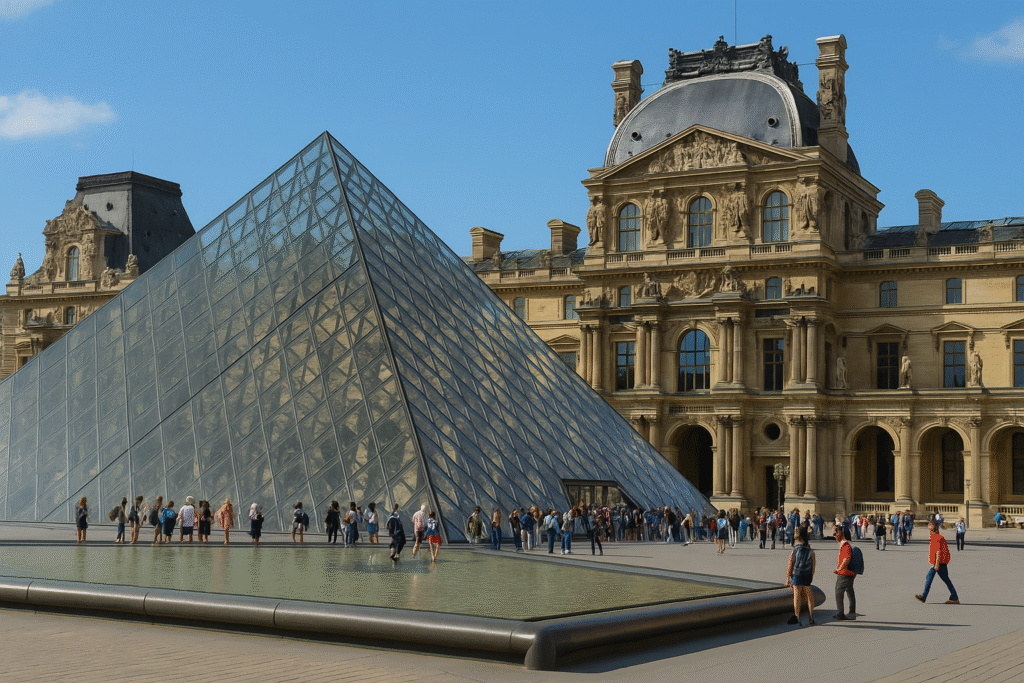
France will implement a steep ticket price increase at the Louvre Museum for visitors from the United States, Canada, and other non-EEA countries starting January 14, 2026. The new rule raises the standard ticket from €22 to €32 for these travelers. The decision supports a €1.1 billion overhaul that aims to modernize and safeguard the world-famous landmark.
This marks one of the most significant pricing policy shifts in recent years for France’s cultural sector. Tourism authorities emphasize that the higher fee will strengthen the museum’s ability to preserve its historic structure and improve the visitor journey.
A Major Renovation for a Global Icon
The Louvre’s upgrade plan, often described as a “New Renaissance,” focuses on restoring the museum’s aging infrastructure. Much of the Louvre’s architecture dates back centuries, demanding extensive repairs. French authorities aim to modernize heating and cooling systems, strengthen fire safety measures, and improve visitor flow through high-traffic galleries.
Security enhancements stand at the core of the plan. In recent years, rising global tourism numbers placed new pressure on museum protection systems. Modern surveillance, reinforced display casings, and updated screening measures are part of the upcoming upgrades. These improvements also respond to rising concerns after several high-profile theft attempts at cultural sites across Europe.
Why US and Canada Visitors Will Pay More
Visitors from the US and Canada make up one of the largest groups of non-European travelers in Paris. Tourism agencies note that Americans represent a strong share of the Louvre’s foreign admissions. This makes them central to the museum’s revenue model.
By introducing a differentiated price structure, France aims to generate an estimated €20 million in extra annual revenue. This sum will flow directly into restoration projects, staffing improvements, and operational costs. French cultural authorities say the pricing approach helps maintain reasonable entry fees for residents within the European Economic Area while ensuring financial sustainability.
Current and Future Ticket Prices
Before January 14, 2026
- US, Canada, and Non-EEA Visitors: €22
- EEA Residents: €22
After January 14, 2026
- US, Canada, and Non-EEA Visitors: €32
- EEA Residents: €22
This creates a clear two-tier system. European visitors will see no change, while tourists from outside the region face a significant adjustment.
Growing Trend of Tiered Pricing Across France
The Louvre is not alone in adopting price differentiation. Other major French cultural landmarks plan similar strategies in the coming years.
- Palace of Versailles will add a small surcharge for non-European travelers beginning in 2026.
- Palais Garnier and Château de Chambord are evaluating similar models to secure stable revenue for restoration projects.
French tourism experts say these changes reflect a global trend as institutions respond to rising maintenance costs and increased visitor numbers.
Visitor Attendance Continues to Climb
The Louvre remains the most visited museum on the planet. Its annual attendance figures show sustained demand:
- 2024: 8.7 million visitors (projected)
- 2023: 8.9 million
- 2022: 7.8 million
- 2019: 9.6 million (record peak)
While tourism bounced back strongly after the pandemic, the surge also highlights pressure on the museum’s facilities. Galleries often reach peak capacity, and aging systems strain under the volume of guests. This adds urgency to the renovation effort.
How the “New Renaissance” Will Transform the Museum
The renovation program targets several major areas:
Structural Repairs
Many wings require reinforcement, roof restoration, and updates to prevent water damage. This ensures the museum can conserve delicate artworks in a stable environment.
Security Modernization
Advanced digital monitoring systems, upgraded emergency response tools, and improved entry screening will be installed.
Visitor Experience Improvements
Plans include more accessible pathways, clearer signage, modern exhibit layouts, and enhanced digital guidance tools. This will help reduce congestion, especially in areas surrounding the Mona Lisa.
Environmental Upgrades
New eco-efficient installations will reduce energy consumption and support France’s nationwide environmental goals.
French officials state that the project will unfold over several years without closing the museum to the public.
How Tourists May React
Travel industry observers expect mixed reactions. Some American and Canadian tourists may view the increase as a natural consequence of global travel inflation. Others may reconsider how they allocate their budgets during European trips.
Despite the change, analysts believe demand will remain strong. The Louvre’s global status, combined with its iconic collection, continues to make it a must-see destination for millions of travelers.
The Broader Global Context
Museums worldwide are adjusting fees as part of long-term sustainability plans. National parks, cultural monuments, and historic sites across various countries increased prices in recent years to support preservation and modernization.
France’s move aligns with this global shift. The rising cost of security, climate control, and heritage restoration requires consistent and predictable funding.
Looking Ahead
The Louvre’s 2026 ticket restructuring marks a major moment for the future of French tourism. While the higher fees may surprise some travelers, the investment will help protect one of humanity’s most treasured cultural institutions. The long-term goal remains clear: preserve the Louvre’s legacy and ensure a richer, safer, and more immersive experience for generations to come.
For more travel news like this, keep reading Global Travel Wire