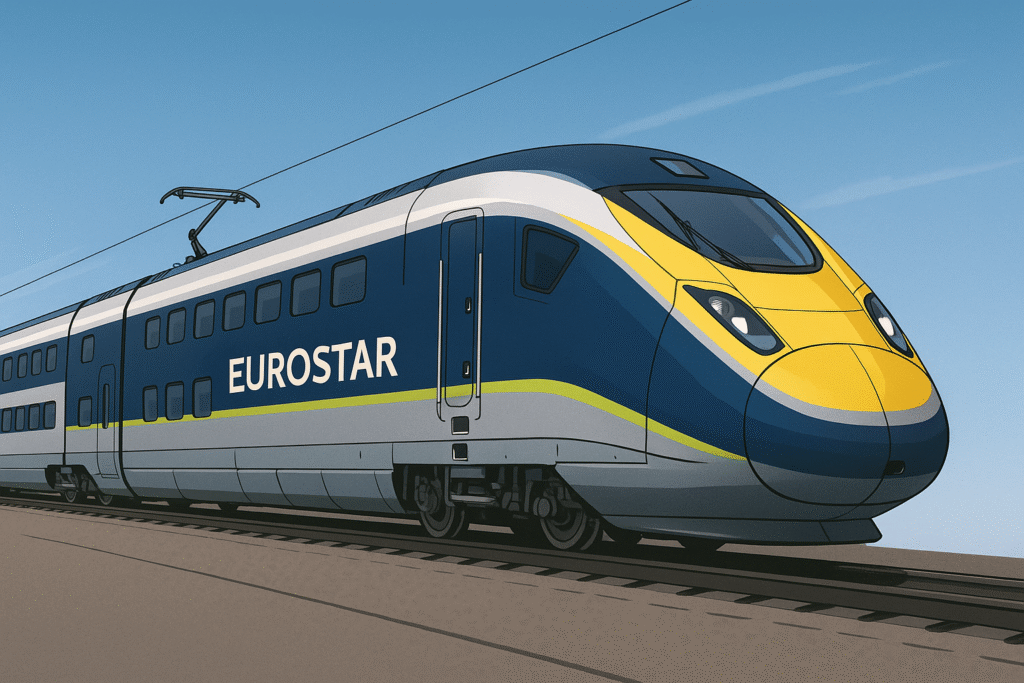
France’s commitment to transforming European rail travel has taken a major step forward—with a landmark investment that promises to reshape tourism across the region. The national rail market leader in France has backed a €2 billion deal for Eurostar to acquire a new fleet of double-decker high-speed trains, marking a fresh era for cross-channel tourism and sustainable travel.
The investment centres on 30 new trainsets, with an option to extend the deal up to 50 units. These next-generation trains, branded “Celestia”, will deliver approximately 20 % more seating than the current fleet, boosting capacity for travellers between the UK and Europe. Early commercial operations are expected around 2031, allowing tourists to benefit from both greater comfort and more frequent connections.
For the tourism sector, the implications are significant. These high-speed double-deck trains will open up more seats, more direct services and new destinations. Passengers seeking city-to-city rail travel between London, Paris, Brussels, Amsterdam, Frankfurt and Geneva will stand to gain, while holiday-makers will find rail a more convenient, environmentally conscious alternative to flying. For France, this investment underlines its role as a key enabler of a growing high-speed rail tourism network.
The new fleet is built around the manufacturer’s Avelia Horizon platform, tailored to international service across multiple countries with compatibility through the Channel Tunnel. The design features fully electric traction, high-speed capability (up to 320 km/h or more), and each train in a standard 200-metre length will accommodate around 540 passengers; when formed into 400-metre pairs, the capacity rises to approximately 1,080 seats. The trains will use modern materials, improved energy efficiency and will meet the multiple signalling and loading-gauge standards of France, the UK, Belgium, the Netherlands and Germany.
From a tourism viewpoint, this growth in capacity means rail becomes a more compelling choice for travellers. Routing through central city terminals rather than peripheral airports offers convenience and time-savings. With enhanced frequency and comfort, more travellers can choose high-speed rail for city breaks, weekend escapes and cross-border trips that connect history, culture and leisure. France’s investment signals that rail tourism is not a niche, but a growing mainstream option for European travellers.
France’s rail operator, majority-owned by the French state, views this move as both a growth and sustainability strategy. By supporting a modern fleet that produces lower emissions per passenger than short-haul flights, the country is positioning rail as an environmentally responsible alternative—and one increasingly aligned with travellers’ preferences for greener mobility. For tourism professionals, the message is clear: expect more rail-based itineraries, more seat availability and greater appeal for the serious traveller who values convenience and comfort.
What does this mean for the future of travel? Several key outcomes stand out:
- Expanded Destinations & Frequency: New trains mean more routes and more frequent departures, opening up markets beyond the traditional London-Paris-Brussels triangle. With the capacity increase, services to Geneva, Frankfurt and beyond become viable for leisure travellers.
- Enhanced Capacity & Comfort: With double-deck layout, travellers will enjoy larger seating capacity, better views, dedicated spaces for bicycles, wheelchair access and more leg-room—making rail attractive for both families and solo travellers.
- Sustainable Travel Appeal: Rail’s low-carbon credentials are strengthened by this investment. Holiday-makers increasingly prefer responsible travel options; this fleet amplifies rail’s role in that shift.
- City-Centre to City-Centre Access: For tourism, the ability to arrive in the heart of a destination rather than peripheral airport hubs enhances visitor experience. The new fleet reinforces this advantage.
- France’s Role as a Rail Hub: By investing in equipment that will run across multiple borders, France underscores its status as a European rail crossroads—an advantage for inbound tourism from the UK and beyond.
Tourism stakeholders in France, the UK and neighbouring countries should begin aligning with this trend. Travel agents, hospitality businesses and destinations can anticipate increased inbound rail-traveller numbers and craft marketing messages around seamless, comfortable rail travel. Visitors arriving by high-speed train stay longer, explore more widely and often spread their spending across the region. With improved capacity, operators can offer competitive fares, timed connections and destination-friendly schedules.
Of course, infrastructure must keep pace with rolling stock. Stations, terminals and border processes need to be rail-ready for higher passenger volumes. France’s investment signals confidence—but destinations must match that with welcoming services, efficient transfers and clear destination-marketing. For regions connected by rail, linking local attractions, city stays and onward excursions is key. The new fleet will underpin that by improving access from UK entry points through France into other European destinations.
In summary, this bold investment by France into Eurostar’s double-deck high-speed fleet represents far more than a rail-industry milestone: it is a tourism enabler. For holiday-makers, it means more choice, improved comfort and greener access to iconic European cities. For destinations and hospitality sectors, it means growth in accessible rail-connected travel and new marketing narratives around seamless international journeys.
As the new trains roll out from 2031, the European rail tourism landscape will shift—helping to make the rail route not just a means to travel, but a memorable part of the journey itself.
For more travel news like this, keep reading Global Travel Wire