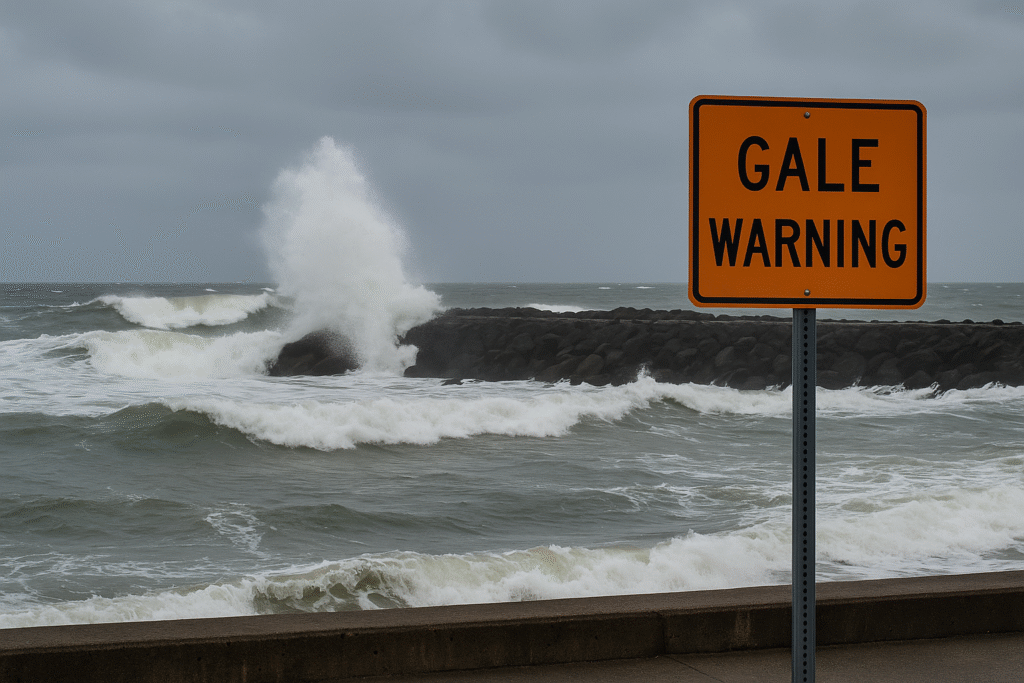
A strong low-pressure system is producing hazardous conditions along the northern Oregon coast. The National Weather Service (NWS) in Portland has issued a Gale Warning for the waters around the Columbia River Bar starting at 5 p.m. local time and lasting through Friday morning.
Seas are forecast to swell to 14–18 feet, and wind gusts may exceed 45 knots. These conditions pose serious risks to marine operations and coastal tourism.
What the Gale Warning Means for Mariners
According to NWS marine forecasts:
- Winds along the coast will increase to 25–35 knots, with gusts above 45 knots by Thursday night.
- Wave periods of around 16 seconds indicate powerful, long-period swells building offshore.
- In the Columbia River Bar’s main channel, ebb currents of up to 5.5 knots will add to the danger, increasing wave heights and making navigation extremely challenging.
Vessels without the proper experience or equipment are strongly advised to remain in harbour or avoid setting out.
Impacts on Coastal Tourism Zones
This weather threat extends beyond mariners. Popular tourist spots such as Astoria, Oregon, Cannon Beach, Ecola State Park and the surrounding coastline will likely be affected through Friday morning.
Tourism operators have begun suspending marine excursions, river cruises and beach-side activities. The swell and wind will reduce visibility, elevate debris risk and make pier or jetty visits unsafe. Visitors are being advised to pivot to inland venues or sheltered options until conditions ease.
Safety Guidelines for Visitors and Locals
For anyone travelling to the Oregon coast during this period:
- Avoid heading to sea or entering exposed coastal waters.
- Secure small craft moored in harbours; ensure gear is ready for strong gusts and heavy swell.
- Steer clear of beach edges, exposed cliffs, jetties and sea-walls—wave surges and flying debris can catch people off guard.
- Monitor the latest marine and weather forecasts and alerts.
- For essential travel on or near the water, ensure communications gear (such as VHF radio) and life jackets are operational and used.
- Reschedule fishing trips, scenic cruises or surf walks until the warning has lifted and conditions stabilize.
Local Response and Tourist Adjustments
Along the coast, local businesses are taking proactive steps: beachfront restaurants are cutting back outdoor seating, and tour operators are offering guests alternative inland activities or postponements. Emergency services and the United States Coast Guard are on heightened alert and coordinating for prompt response in case of maritime distress.
Residents report concerns about offshore winds spreading debris across beaches and disrupting autumn visitor traffic. Some clean-up activity may continue into the weekend even after wind speeds drop.
Why This Storm Is Especially Concerning
Gale-force winds and large ocean swells are not uncommon in this region at this time of year. However, this system stands out because of its intensity and the long-period swell. The combination of strong wind gusts, elevated seas and a fast-moving ebb current in the Columbia River Bar creates one of the most hazardous conditions in the Pacific Northwest for mariners and beach-goers alike.
Best Travel Moves Right Now
Tourists planning coastal activities should adapt:
- Opt for inland sightseeing — state parks, museums and riverfront strolls that aren’t exposed to high surf or wind.
- Delay marine-based experiences like whale-watching, jetty walks or boardwalk visits until after Friday afternoon.
- If you’re staying in coastal lodging, prepare for potential minor disruptions such as short-term power drops, debris on roads or restricted beach access.
- For travellers driving along the coast, keep in mind roads near cliffs or sea-walls may be affected by spray, sand build-up or wind-blown debris.
Bottom Line
The Oregon coast is entering a period of notably dangerous marine and coastal conditions. The Gale Warning issued by the NWS signals immediate risks for sea travel, beach access and waterfront tourism. While the scenery remains spectacular, safety comes first. Tourists and locals should pause marine excursions, choose safer inland options, and follow official advice until the warning clears.
By staying flexible and informed, visitors can still enjoy the region — just with a little adjustment in timing and activity choice.
For more travel news like this, keep reading Global Travel Wire