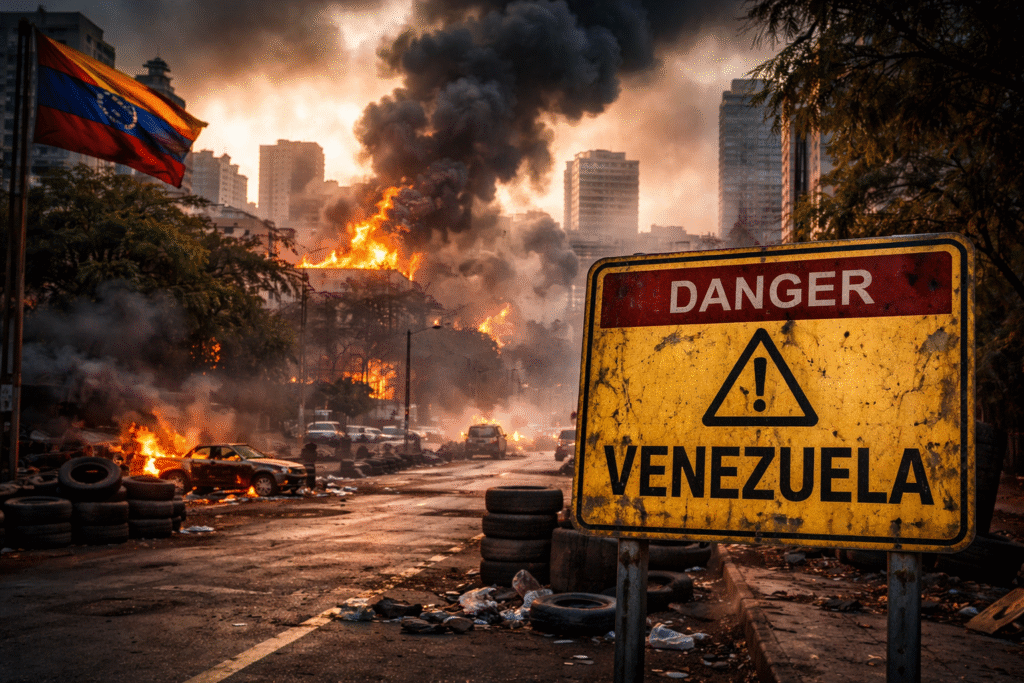
Venezuela has entered one of its most dangerous periods in recent history. As of January 7, 2026, multiple explosions, armed clashes, and military operations have pushed the country into deep instability. In response, Canada has joined the United States, United Kingdom, India, and Australia in issuing the strongest possible travel warnings.
All five governments now advise their citizens to avoid all travel to Venezuela. Authorities cite severe security risks, widespread unrest, infrastructure breakdowns, and limited consular support as key reasons for the decision.
This development has major implications for tourism, aviation, and foreign nationals still inside the country.
Why Governments Are Raising Travel Alerts
The security situation in Venezuela has worsened rapidly over the past week. Caracas has seen explosions, heavy military presence, and damage to critical infrastructure. Several regions surrounding the capital also report violent clashes.
Governments highlight multiple risks:
- Ongoing civil unrest and armed conflict
- Arbitrary detentions and kidnappings
- Disrupted power, water, and fuel supplies
- Unpredictable border and airspace closures
These conditions make normal travel and tourism operations impossible.
Countries Issuing “Do Not Travel” Advisories
India Tightens Safety Guidance
India has urged its citizens to avoid all non-essential travel to Venezuela. Indian nationals already in the country have been advised to remain indoors, reduce movement, and stay alert. Authorities continue to monitor the situation closely and provide emergency support where possible.
United States Maintains Level 4 Warning
The United States has reinforced its Level 4: Do Not Travel advisory. With no active diplomatic mission inside Venezuela, American citizens face limited assistance. Officials warn of high risks of detention, crime, and violence, urging citizens to shelter in place.
Canada Elevates Advisory to Highest Level
Canada has raised its travel warning to the most severe category. Officials warn of escalating violence, shortages of food and medicine, and fuel disruptions. Canadians are advised not to travel under any circumstances and to prepare for prolonged instability.
Australia Issues Emergency Travel Ban
Australia has issued a strict “Do Not Travel” warning after emergency measures expanded across central Venezuela. Australians in the region have been told to stay indoors and seek consular help if safe to do so.
United Kingdom Reinforces Existing Warning
The UK continues to advise against all travel to Venezuela, citing extreme security threats and unreliable local services. British authorities stress that evacuation options may not remain available.
What Is Happening on the Ground
Explosions and Military Operations
On January 3, 2026, multiple explosions struck Caracas, causing damage to buildings and public services. Military strikes followed, targeting key infrastructure. Security forces increased patrols across Caracas and nearby states, including Miranda, Aragua, and La Guaira.
Power, Water, and Fuel Shortages
Blackouts now affect large parts of the country. Water supplies remain unreliable, while fuel shortages disrupt transport and emergency services. Hospitals report strain due to limited medical supplies.
Airports, Airspace, and Borders
Venezuelan airspace faces intermittent closures. Several international airlines have rerouted or suspended flights. Maiquetía Simón Bolívar International Airport remains operational in parts but carries high security risks.
Land borders with Colombia and Brazil have become heavily militarized. Governments strongly advise against attempting border crossings due to armed checkpoints and unpredictable closures.
Impact on Tourism and Travel Industry
Tourism in Venezuela has effectively come to a halt. Tour operators have suspended packages, airlines face rerouting challenges, and insurance providers no longer cover travel to the country.
Hotels in major cities report cancellations, while cruise operators have removed Venezuelan ports from itineraries. The crisis highlights how political instability directly affects tourism confidence and regional connectivity.
Safety Advice for Foreign Nationals in Venezuela
Governments worldwide have issued consistent guidance for citizens still inside the country:
Stay Indoors and Limit Movement
Foreign nationals should shelter in place and avoid public gatherings, government buildings, and transport hubs.
Prepare Essential Supplies
If conditions allow, individuals should secure food, drinking water, medications, batteries, and fuel. Supply chains remain unreliable.
Maintain Communication
Regular contact with family and consular services is critical. Authorities recommend setting up emergency communication plans in case of detention or displacement.
Avoid Airports and Borders
Travel to airports and land borders carries significant risk. Sudden closures or violence could leave travelers stranded.
Long-Term Risks Remain High
The political and security outlook for Venezuela remains uncertain. Emergency powers allow authorities to close borders and airspace without notice. Humanitarian conditions may worsen if infrastructure damage continues.
Foreign governments warn that evacuation options could become impossible with little warning. Tourism recovery will likely take years, even after stability returns.
Conclusion: Extreme Caution Is Essential
Venezuela now sits under the highest level of global travel warnings. For tourists, business travelers, and expatriates, the message is clear: do not travel, and if already present, remain sheltered and vigilant.
As violence escalates and essential services fail, international authorities continue to prioritize citizen safety. Until conditions stabilize, Venezuela remains one of the world’s most dangerous destinations for travel.
For more travel news like this, keep reading Global Travel Wire