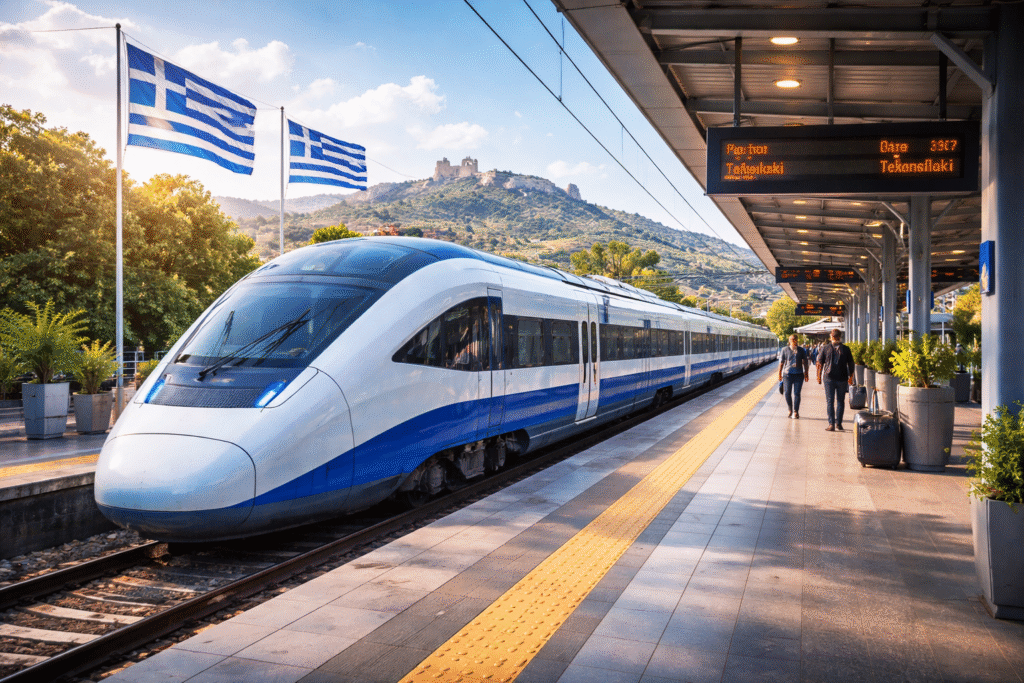
Greece has launched an ambitious railway modernization program. The country has approved a €420 million investment. The plan includes the purchase of 23 new electric trains and a revised agreement with Hellenic Train.
This project represents the largest private investment in Greek land transport. Authorities aim to complete all upgrades by the end of 2027. The initiative targets faster travel, cleaner transport, and stronger tourism connectivity.
New Electric Trains Transform Rail Travel
The modernization includes 23 Coradia Stream electric trains from Alstom. These trains introduce modern rail technology to Greece. They offer higher speed, greater comfort, and improved reliability.
Passengers will enjoy spacious interiors and higher seating capacity. Advanced safety systems improve operational control. These include the European Train Control System and real-time monitoring.
Electric traction replaces older diesel units. This shift cuts emissions and lowers fuel dependence. Rail travel becomes cleaner and more efficient across the network.
Supporting Greece’s Sustainability Goals
The new trains support Greece’s environmental strategy. Transport emissions remain a key challenge across Europe. Electric rail offers a clear solution.
Cleaner rail travel appeals to eco-conscious tourists. Visitors increasingly choose destinations with sustainable transport. Greece aligns its tourism offer with these global trends.
Lower emissions also improve urban air quality. Rail corridors passing through cities will benefit residents and travelers alike.
Faster Journeys Between Major Cities
Infrastructure upgrades will transform the main rail corridor. The route between Athens and Thessaloniki will see major improvements.
Authorities will install full signaling, remote control, and automatic braking. These systems improve safety and punctuality. They also allow higher operating speeds.
Travel time between the two cities will fall below three and a half hours. Rail becomes competitive with air and road travel. This shift encourages passengers to choose trains over flights.
Boosting Sustainable Tourism Flows
Shorter travel times benefit tourism directly. Visitors can move easily between major destinations. Rail travel becomes part of the holiday experience.
Tourists can plan multi-city trips without cars or flights. This flexibility supports slower and more immersive travel. It also reduces pressure on airports and highways.
Improved rail access encourages visitors to explore beyond major cities. Smaller towns and coastal regions gain new exposure. Tourism spreads more evenly across the country.
Reducing Overtourism Through Better Connectivity
Rail modernization supports balanced tourism growth. Greece has faced overtourism in popular hotspots. Better rail links help manage visitor distribution.
Travelers can reach less-visited regions with ease. Inland destinations and regional hubs become more attractive. Local economies benefit from increased visitor spending.
Rail-based tourism also supports seasonal travel. Visitors can explore regions year-round with reliable connections.
Supporting Business and MICE Tourism
The upgraded rail network will also benefit business travel. Faster and reliable connections improve access to conferences and events. Greece strengthens its appeal for meetings and exhibitions.
International delegates can travel efficiently between cities. Modern trains support productivity and comfort. This advantage helps Greece compete with other European destinations.
Improved rail access supports domestic business travel as well. Companies can operate more efficiently across regions.
Expanding Regional and Cross-Border Routes
The modernization plan extends beyond core routes. Authorities plan improvements toward Patras and the Peloponnese. These extensions open new tourism corridors.
Rail-based leisure travel becomes more practical. Visitors can explore historic and coastal areas without cars. This shift supports sustainable regional development.
Northern routes will also see upgrades. Improved cross-border links with Bulgaria and Romania will boost overland tourism. Greece strengthens its role as a regional rail gateway.
Modern Stations Enhance Visitor Experience
Station upgrades form another key part of the plan. Greece will modernize major railway stations nationwide. These stations will function as modern transport hubs.
Improved facilities create positive first impressions. Clear signage and better accessibility support international visitors. Stations connect more effectively with local transport and attractions.
Modern stations encourage city breaks and rail-based itineraries. Travelers can plan seamless journeys with multiple stops.
Economic Benefits Beyond Transport
The railway investment will generate long-term economic benefits. Construction and maintenance create skilled jobs. Local suppliers and service providers gain new opportunities.
Tourism growth supports hospitality and retail sectors. Regions connected by rail will attract investment. The rail network becomes a driver of inclusive growth.
A Long-Term Vision for Greek Tourism
Greece has linked rail modernization with tourism strategy. Sustainable transport supports long-term destination competitiveness. Visitors increasingly value responsible travel choices.
The new rail system supports nature-based and cultural tourism. Travelers can reach national parks, heritage sites, and rural areas with ease.
Rail tourism strengthens Greece’s image as a modern and sustainable destination.
Greece Positions Itself as a Green Travel Leader
This railway modernization marks a turning point. Greece invests in clean transport and smart infrastructure. The project aligns with European climate and mobility goals.
Electric trains, faster journeys, and improved connectivity define the future. Rail travel becomes central to Greece’s tourism and transport ecosystem.
Looking Ahead to 2027 and Beyond
All upgrades must finish by 2027. Authorities continue work on delivery and coordination. Each phase brings visible improvements for travelers.
Greece is building a rail network fit for the future. The investment supports sustainability, tourism growth, and national connectivity.
The modernization places Greece on track to lead in sustainable rail tourism across southern Europe.
For more travel news like this, keep reading Global Travel Wire