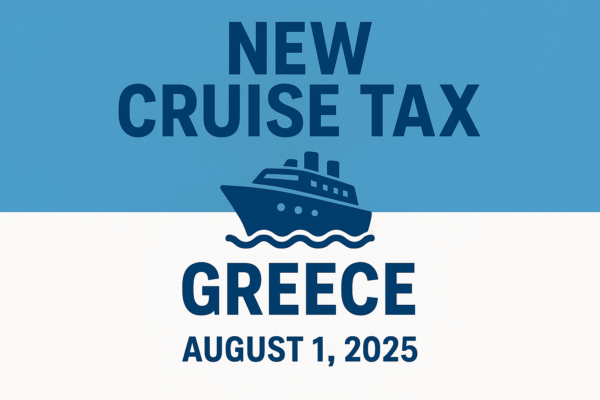
From August 1, 2025, cruise travelers—particularly those from the U.S., Italy, and Spain—visiting popular Greek destinations such as Santorini and Mykonos will face a new seasonal “sustainable tourism fee” per disembarkation. Royal Caribbean has already started applying the charge to itineraries including Greek ports, while automatically refunding passengers who choose to remain onboard.
What the Cruise Tax Looks Like
Greece’s tiered fee system varies by island and season, designed to curb overtourism while channeling funds into local infrastructure:
- Peak Season (June 1 – Sept 30): €20 per passenger at Santorini/Mykonos; €5 at other ports
- Shoulder Season (Apr 1–May 31 & Oct 1–31): €12 for Santorini/Mykonos; €3 elsewhere
- Off-Season (Nov 1 – Mar 31): €4 at Santorini/Mykonos; €1 at other destinations
Each port call triggers a separate fee. Collection is handled digitally by cruise operators and remitted to the Greek government via a centralized system managed by the Ministry of Shipping.
Focus on Santorini & Mykonos
Santorini and Mykonos attracted over 1.3 million cruise passengers each in 2023, with crowds regularly topping 17,000 per day—far exceeding local infrastructure capacities. As a result, Santorini capped daily cruise arrivals at 8,000 in 2025. These islands were specifically targeted by the new policy due to recurring overcrowding risks.
Less-visited destinations such as Crete, Rhodes, and Athens are charged lower rates, aligning with national goals to promote tourism sustainability across the region.
Cruise Industry Response and Refund Options
Royal Caribbean passengers were notified in July that starting August 1 the cruise tax would appear in onboard fees. Crucially, those who do not go ashore in Greek ports receive automatic refunds to their SeaPass accounts at voyage end.
The Cruise Lines International Association (CLIA) has engaged in a working group with Greek authorities to ensure the fee is implemented fairly and that proceeds benefit local communities and port facilities.
Broader Tourism and Tax Policies
This cruise levy is part of a broader tax and regulatory overhaul across Greek tourism. Hotels and short-term rental properties also saw increased per-night climate resilience charges from April through October, replacing prior lodging taxes.
Why Greece Took Action on Overtourism
Greek Prime Minister Kyriakos Mitsotakis has emphasized that preserving the islands’ environmental integrity and livability is as important as promoting tourism. “We cannot afford to destroy what we are trying to promote,” he has said, underscoring a shift toward more sustainable visitor management.
Similar measures have sprung up in destinations worldwide facing overtourism, including Venice, Barcelona, and Lisbon.
What Travelers Should Know
- Fees are per disembarkation port visit.
- Refunds are available if passengers remain onboard.
- Fees are automatically added by cruise lines—not optional gratuities.
- Rates vary by season and island.
- Lower-fee alternatives like Zakynthos, Milos, Naxos, and Sifnos offer quieter experiences.
Potential Impact on Tourism Patterns
While the fees are small relative to overall cruise fares, they signal a broader push: encouraging longer stays, reducing same-day mass debarkations, and promoting more sustainable cruise itineraries. The digital port scheduling system aims to distribute arrivals more evenly and spread visitor volume across the region.
Greek authorities project nearly €50 million per year in revenue from this cruise tax, to be reinvested in upgrading ports, improving water infrastructure, and preserving cultural sites.
A Global Movement
Greece joins a growing group of destinations imposing cruise-specific visitor fees: Mexico, Hawaii, and European cities like Barcelona and Amsterdam have enacted similar measures to address overtourism and fund infrastructure improvements.
Conclusion: Navigating Tourism and Sustainability
Greece’s new cruise tax and digital berth allocation system mark a turning point in how major destinations manage visitor flows and protect fragile environments. Though small, the fees help fund local improvements and discourage excessive crowding at iconic locations.
For travelers from the U.S., Italy, Spain—and beyond—this means slower-paced visits and slightly altered cruise costs. Yet Greek authorities and industry experts alike hope these policies help ensure that Santorini, Mykonos, and other beloved destinations remain vibrant and sustainable for travelers and locals alike.
For more travel news like this, keep reading Global Travel Wire