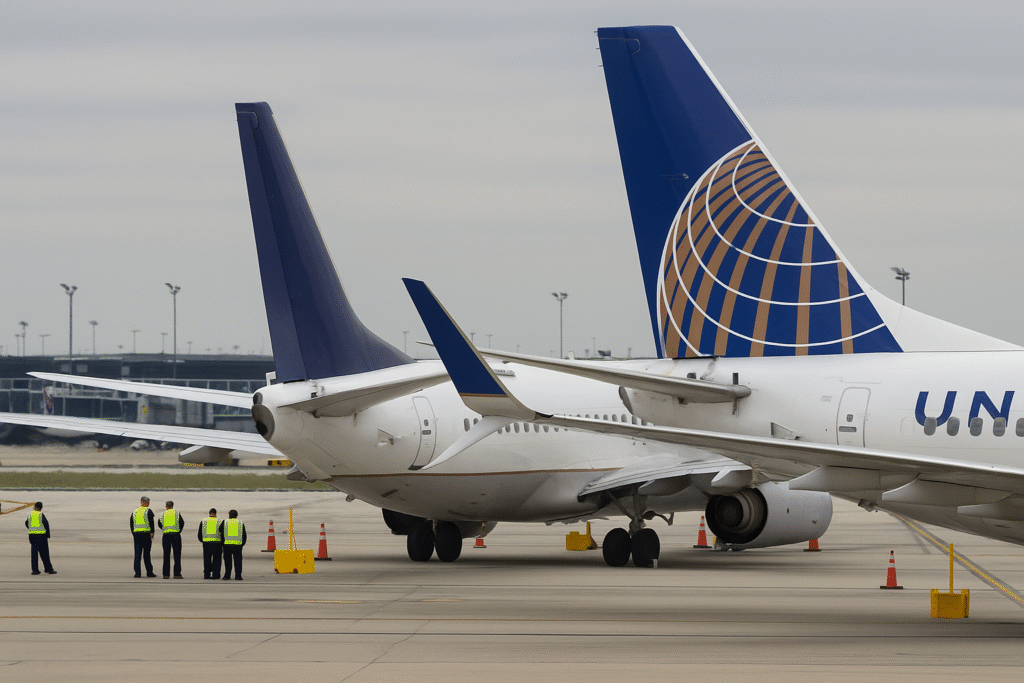
On October 17, 2025, a ground collision between two planes operated by United Airlines at O’Hare International Airport in Chicago sparked travel disruptions that are now drawing attention from the city’s hospitality and tourism industries. The incident, although minor in terms of damage and thankfully resulting in no injuries, underscores how even brief disturbances at a major air-hub can send ripples through hotel bookings, transit schedules and visitor confidence.
The collision occurred as one of the United flights was taxiing toward its gate and clipped the tail-section of another United aircraft that was parked on the tarmac. Passengers on the moving aircraft, Flight 2652 arriving from Jackson Hole, noted a slight shudder, but no one was harmed. The event nevertheless resulted in an extended taxi-time, delayed gate arrival, and a subsequent knock-on effect through the airport’s operations.
Impact on Travel Flow and Hospitality
Chicago’s tourism infrastructure is closely intertwined with O’Hare. The airport functions as a primary international gateway for visitors arriving into the U.S. Midwest, and delays or disruptions there can quickly cascade into hotel check-in schedules, shuttle services, luggage transfers and onward travel. When an arriving flight is delayed and passengers are held longer on the ground, their arrival at downtown or airport-adjacent hotels is pushed back. In turn, hotels may see later check-ins, unexpected guest arrivals, or idle rooms and resources.
For example, hotels near O’Hare that rely on incoming flights for same-day arrivals may face sudden surges of exhausted travellers or unexpected overshooting of capacity. Conversely, cancellations or significant delays can result in guests opting to move to other accommodations or skipping overnight stays altogether, thereby disrupting occupancy forecasts. As Chicago pursues its strategy of high-visitor volume and value-added tourism, such disruptions highlight the fragility of the travel-ecosystem and the dependency of hotels on smooth flight operations.
A Closer Look at the Chain Reaction
Even though no longer-term damage has been reported from the collision, the immediate effects were notable. When a plane is delayed at a busy hub, ground-handlers may be diverted, gate assignments shift and luggage delivery can be slower. These factors combine to pressure airport lounges, taxis, hotel shuttles and the hotel front-desk. Downstream, this can reduce a hotel’s ability to turn over rooms quickly or account for late arrivals. For planners, that means extra risk: a mid-town hotel may have to manage late check-in logistics, while an airport-hotel may face an unexpected late wave of guests and must adjust staffing accordingly.
In a travel day where multiple connections or same-day hotel bookings are involved, even a 30- or 40-minute delay can upset the entire chain. From the airport’s perspective, a taxi-collision such as this raises questions around ramp-scheduling, taxi-path design and ground-safety procedures. From the hospitality side, it emphasises the need for flexibility in bookings, guest communication and contingency planning for high-traffic days.
What Hotels in Chicago Are Doing
Major hotel brands in Chicago, especially those near O’Hare (like the airport-adjacent ones) and downtown just a short train or shuttle ride away, are increasingly building buffer strategies. These include offering flexible check-in options for guests whose flights are delayed, coordinating with airport transfer services for lagged arrivals, and maintaining standby arrangements for unexpected arrivals. They may also revise forecasts for travel-peak windows to account for variability in flight arrival times and factor in possible delays.
Hotel revenue managers are now paying closer attention not only to occupancy and local events but to airport performance metrics—gate availability, taxi-time averages, delay frequencies—and their potential downstream effects on guest arrival flow. This heightened awareness is particularly relevant in Chicago, a major city that competes for international meetings, conventions and leisure visitors. A disruption at the airport can ripple through the lodging sector, impacting everything from shuttle timetables and concierge rotas to dining reservations and guest satisfaction.
What Travellers Should Know
For visitors planning a trip to Chicago via O’Hare, this incident is a reminder to build in flexibility:
- Allow extra time for connections and ground transfers. The large layout and traffic volume at O’Hare mean even taxiway slowdowns can affect next-stage travel.
- Confirm transportation and hotel picks if arriving later than scheduled. Informing your hotel of delays helps avoid check-in complications.
- Consider hotel location strategically. If your arrival is uncertain, a hotel near the airport may offer value and convenience; if downtown is essential, allow for transit time and delays.
- Monitor your flight status closely. Use airline apps and airport alerts to keep abreast of arrivals, gate changes and ground operations updates.
- Travel insurance or flexible booking terms may mitigate dissatisfaction if delays cascade into missed events or onward travel.
Bigger Picture for Chicago Tourism
While the incident at O’Hare is isolated, it highlights a challenge faced by any city heavily reliant on a single major airport: the “single-point” risk. Chicago’s status as a major hub for domestic and international traffic means that operational disruption can have an outsized effect compared to smaller airports. But it also means the city’s tourism and hospitality sectors are highly sensitive to changes in flight flow and scheduling.
From the perspective of the city’s wider tourism goals, the incident doesn’t dent Chicago’s appeal as a destination. The city continues to offer world-class museums, lakefront access, cultural districts and events. What it does signal is the need for coordination between aviation authorities, airport operators and hospitality providers to maintain resilience, guest experience and operational reliability. Hotels, in particular, may revisit pre-arrival communications, late-check-in policies and guest-flow contingencies in response to these aviation vulnerabilities.
Looking Ahead
In the weeks ahead, airlines and airport authorities will investigate the root-cause of the taxi-collision at O’Hare—from ground-controller workflow to ramp-layout constraints and taxi path signage. For hospitality stakeholders in Chicago, outcomes from the incident will likely feed into risk-mitigation planning and guest-services design. With Chicago welcoming millions of visitors each year, and with the hotel sector aiming to capture premium travellers and conference business, safeguarding the guest-arrival chain has never been more critical.
Ultimately, the incident is a timely reminder for airlines, airports, hotels and travellers alike: in the interconnected ecosystem of modern travel, even a ground contact between aircraft can cascade into broader travel-chain disruption. For Chicago hotels and the wider tourism industry, awareness, flexibility and effective guest-communication remain key to turning potential disruption into smooth stay-experience.
For more travel news like this, keep reading Global Travel Wire