As global travelers search for alternatives to saturated tourist hotspots, a new coastal corridor is quietly emerging along the world’s largest inland body of water. The Caspian Sea, bordered by five culturally rich nations—Azerbaijan, Iran, Russia, Kazakhstan, and Turkmenistan—offers an immersive blend of nature, history, and cross-border discovery. Each country brings its own flavor of the Caspian to life, from ancient trade routes to futuristic resorts and dramatic natural wonders.
Azerbaijan: A Fusion of Antiquity and Urban Energy
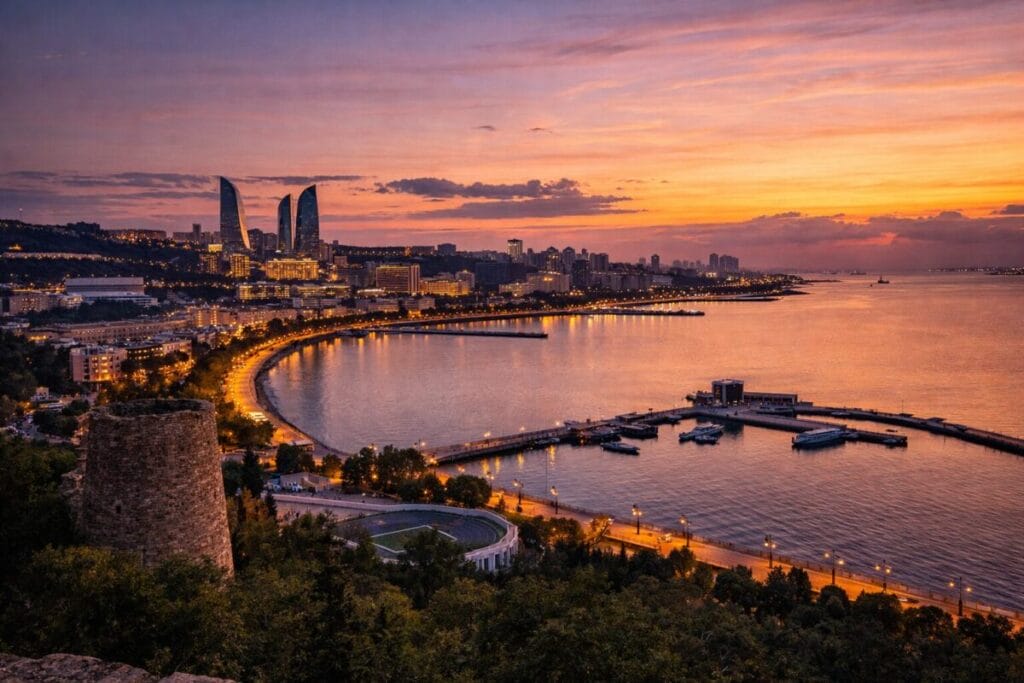
Baku, Azerbaijan’s capital, serves as the beating heart of Caspian leisure. The Old City (Icherisheher) is a UNESCO-listed maze of stone alleys, minarets, and caravanserais, nestled beside modern architectural marvels like the Flame Towers and the curving lines of the Baku Boulevard.
Seasonal beaches such as Bilgah, Shikhov, and Novkhani offer sun and sea just minutes from the capital, while Gobustan National Park—with its ancient petroglyphs and mud volcanoes—presents a geological counterpoint to the urban coastline. Azerbaijan’s stretch of the Caspian merges heritage, leisure, and geology in a compact and traveler-friendly format.
Iran: Green Shores, Forested Mountains, and Village Culture
In northern Iran, the Caspian Sea reveals a completely different face—lush, forested, and mist-covered. Cities like Bandar-e Anzali, with its famed lagoon, and beach towns like Nowshahr and Ramsar, serve as gateways to a coast known for its hospitality and natural beauty.
What makes Iran’s Caspian shore unique is the swift rise of the Alborz Mountains from the water’s edge. This creates unforgettable drives along the Chalus Road, connecting coastal culture with highland villages like Javaherdeh and Masuleh. Nature enthusiasts can trek through the Hyrcanian Forests—a UNESCO World Heritage site that dates back millions of years—and observe wildlife in Golestan National Park and Miankaleh Wildlife Refuge.
Russia: Delta Wonders and Ancient Heritage in the South
Russia’s Caspian gateway begins in Astrakhan, where the mighty Volga River forms one of the world’s largest inland deltas. Here, travelers encounter an ecosystem of wetlands, lotus fields, and fishing villages—a perfect setting for eco-tourism and slow travel.
In Dagestan, south of Astrakhan, Russia reveals another layer of Caspian identity. The city of Derbent, one of the oldest cities in Eurasia, is a living museum of Persian and Arab influences. Outdoor adventurers will marvel at Sulak Canyon, Sarykum Sand Dune, and Samur Forest, a blend of terrain that defies expectation from a coastal destination.
Kazakhstan: Where Deserts Meet the Inland Sea
Kazakhstan’s Mangystau region offers one of the most surreal and untouched Caspian experiences. Starting in the port city of Aktau, the journey moves inland to reveal towering chalk cliffs, dry canyons, and ancient rock formations in places like Boszhira Valley and the Ustyurt Plateau.
This stark desert-meets-coast environment caters to photographers, geology lovers, and spiritual travelers. Underground mosques such as Beket-Ata and Shakpak-Ata offer spiritual solace and architectural wonder, while wildlife reserves and flamingo migration zones add unexpected bursts of color and biodiversity.
Turkmenistan: Luxury Resorts and Remote Extremes
Turkmenistan’s Caspian tourism has taken a modern turn with the Avaza Tourist Zone, a government-planned coastal resort district near Türkmenbaşy. Gleaming hotels, manicured promenades, and family-friendly beaches offer a sharply contrasting experience from the nation’s arid interior.
For those craving isolation and awe, destinations like Garabogazköl Lagoon, Yangykala Canyon, and Ogurja Ada Island provide dramatic desert scenery and minimal human presence. Historical ruins like Dehistan and coastal fishing hamlets deepen the narrative of a coastline shaped by centuries of trade and solitude.
Why Caspian Sea Tourism Is Poised for Global Attention
This cross-border coastal corridor is unique in its diversity—no two countries share the same landscape or cultural expression. Yet together, they offer:
- Ecological Variety: From Iran’s rain-fed forests to Kazakhstan’s desert cliffs.
- Historic Depth: From Derbent’s ancient citadel to Azerbaijan’s fire temples.
- Coastal Range: From recreational beaches to sacred wetlands and deltas.
- Sustainable Potential: Opportunities for eco-tourism, heritage conservation, and cross-cultural exchange.
The Caspian Sea acts as a living museum of geology, civilization, and natural systems—one that is still relatively unexplored by mass tourism.
Toward a Sustainable, Multi-Country Travel Experience
Governments across the region have begun recognizing the Caspian’s tourism potential. Investments in infrastructure, connectivity, and cultural preservation are paving the way for broader international interest. Efforts include:
- Eco-tourism development in protected areas
- Transnational travel routes and highway corridors
- Joint cultural events and festivals
- Maritime cooperation on port access and ferry services
With the rise in interest for sustainable, authentic travel, the Caspian region stands ready to become a premier multi-country destination for those seeking nature, culture, and a slower, more meaningful journey.
Conclusion: One Sea, Many Worlds
The Caspian Sea is more than just a geographic marvel—it is a shared heritage zone that invites exploration across five nations and countless landscapes. Whether you seek the vibrancy of Baku, the forests of Iran, the deltas of Russia, the plateaus of Kazakhstan, or the modern resorts of Turkmenistan, Caspian Sea tourism offers a refreshing alternative to conventional coastal travel. As the region opens up, travelers will find a dynamic blend of stories, settings, and serenity—waiting quietly along the shores of a timeless inland sea.
For more travel news like this, keep reading Global Travel Wire