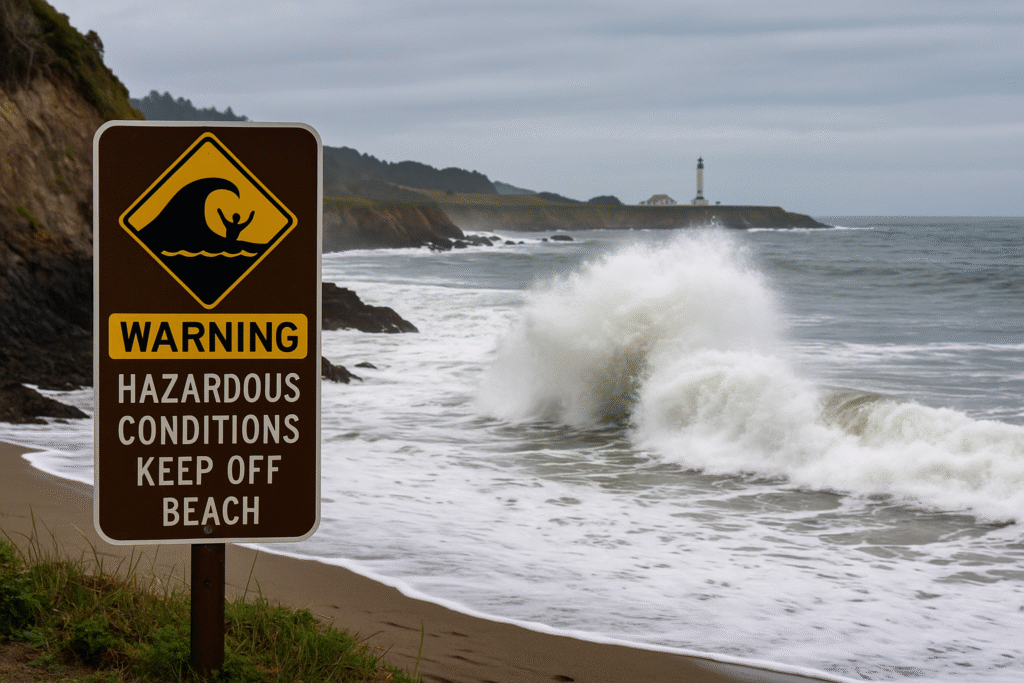
A high-surf advisory is now active along the northern California shoreline, specifically the rugged Mendocino Coast. The National Weather Service (NWS) office in Eureka has called for heightened caution as breaking waves reach heights of 19-22 feet.
The official alert runs from 5 PM (PDT) on Saturday through 5 AM Sunday. This comes after a “Beach Hazards Statement” which was enforced until 8 PM on the preceding day.
What These Conditions Mean for Visitors
Large-scale surf like this produces strong run-up as waves crash over rocks, jetties and beach areas. These conditions are unstable and erratic—waves may appear far inland or almost without warning.
“Sneaker waves” are an added danger: large swells that surge unexpectedly, pulling visitors off their feet and into frigid water—sometimes carrying heavy debris such as driftwood.
In addition to the risk of being swept away, beaches in the zone may experience rapid erosion or flooding of low-lying areas.
Affected Tourist Hotspots
Visitors heading to the Mendocino coast should be aware that the following popular stops are within the advisory zone and thus carry elevated risk:
- Point Arena Lighthouse — perched on a bluff, offers dramatic ocean views but vulnerable to extreme surf.
- Glass Beach (near Fort Bragg) — known for sea-glass strewn sands, though slippery edges and unpredictable waves make it dangerous now.
- Mendocino Headlands State Park — cliff-side trails and viewpoints provide photo ops, but should be avoided during high surf.
- Russian Gulch State Park — features rocky beaches and tide pools; wave surge could reach far inland.
- Van Damme State Park — a lush coastal forest that leads to tide pools and ocean access; current surf conditions warrant skipping the shoreline.
Local Economy & Community Impact
The surf warning isn’t just a visitor caution—it carries local implications too. Coastal businesses that depend on beachgoers, sightseeing or outdoor recreation may see fewer guests.
Emergency services and rescue teams also face greater strains during such events, as rough seas demand swift response to potential accidents. Infrastructure near the ocean—boardwalks, jetties, low-lying roads—may suffer damage or require closure.
Tourists who plan beachcombing, coastal hiking near the waterline, or casual shoreline strolls should reconsider. The experience now is best enjoyed from safe viewpoints inland.
Safety Tips for Travelers
To stay safe along the coast during high surf, follow these guidelines:
- Keep your distance from the water’s edge. Surges can travel up rocks and jetties without warning.
- Avoid climbing on rocks or jetties. These are wet, slick and exposed to wave sweep.
- Say no to steep or narrow beaches. If a wave hits, escape routes are limited.
- Always face the ocean. Never turn your back—one glance away could cost you your footing.
- Stay updated. Check for fresh alerts from the NWS office in Eureka until conditions improve.
Advice for Boaters & Mariners
Marine conditions are hazardous too. The NWS has issued a Small Craft Advisory for waters from Cape Mendocino to Point Arena until early Sunday morning.
Seas are forecasted to climb to 16-20 feet with wave periods of 14-15 seconds—dangerous for all but the most prepared vessels. Staying in port is the best advice unless experienced crews are fully ready.
Mariners should contact the local U.S. Coast Guard or harbor authorities before attempting any movement.
Final Word for Tourists
If you’re headed to the Mendocino coast this weekend, plan accordingly. The surf won’t wait for you—it will crash in full force. While the scenery remains stunning, the risk is real.
Avoid venturing near the surf zone. Opt for high-ground overlooks, drive the scenic coastal roads and take in views safely. Follow official guidance, respect the power of the sea and delay risking time on the shoreline until conditions calm.
By staying alert and cautious, your visit can remain memorable for the right reasons—not unintended drama.
For more travel news like this, keep reading Global Travel Wire