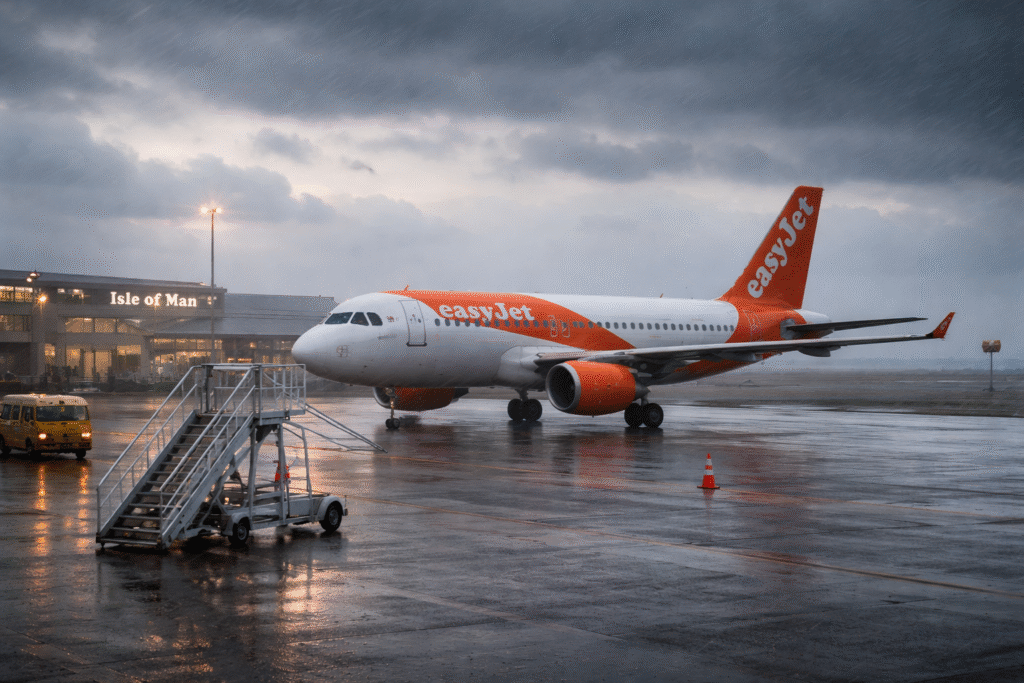
A rare situation unfolded in the UK aviation network when an easyJet service between Liverpool John Lennon Airport and the Isle of Man landed safely but could not let passengers disembark. Strong winds made ground operations unsafe and forced the aircraft to fly back to Liverpool with all passengers still onboard. The incident became a notable example of how winter weather can disrupt regional travel across the Irish Sea.
Safe Landing but No Disembarkation
The flight landed at Isle of Man Ronaldsway Airport on 15 December 2025 as planned. Yet, soon after touchdown, the crew received word that wind gusts exceeded safety limits for ground equipment. Passengers waited onboard while the airline and ground teams monitored conditions. As the wind intensified, it became clear that safe disembarkation would not be possible.
This situation was highly unusual. Diversions typically occur before landing, not after an aircraft has already reached its destination. The safe touchdown showed no aircraft or runway issues; the challenge lay entirely with weather and safety rules for ground operations.
Weather Conditions Across the Irish Sea
Strong winds dominated the Irish Sea region throughout the afternoon. Gusts surpassed the limits set for ground handling teams responsible for positioning mobile stairs. Winter storms often hit island airports hardest due to their exposed locations, and this event underscored the vulnerability of operations during seasonal weather peaks.
Airport safety rules require the suspension of ground handling when equipment becomes unstable. High winds can shift or tip mobile stairs, creating risks for both staff and passengers. With no sign of improvement in the forecast, the operational team had few choices available.
Mobile Stairs Limit Operations at Regional Airports
Ronaldsway Airport, like many regional airports in the UK and island territories, relies on mobile stairs rather than fixed jet bridges. This allows flexibility and reduced infrastructure costs but increases exposure to weather disruption.
Mobile stairs cannot be used safely once winds approach around 35 to 40 knots, depending on direction. On the afternoon of the easyJet arrival, gusts were well above tolerance levels. Ground teams could not secure the equipment to the aircraft, eliminating any possibility of disembarking passengers.
Passenger Experience During the Delay
Passengers remained onboard for more than an hour while updates were shared. Crew members offered water and kept communication open. Children were even invited to the cockpit to help ease anxiety and pass the time. Despite these efforts, uncertainty grew as it became evident that conditions would not improve before nightfall.
Decision to Return to Liverpool
By around 5:00 PM, the captain and operations control agreed that waiting longer would not create a safe outcome. The only viable option was to return the aircraft to Liverpool. Passengers were informed, and the aircraft departed the Isle of Man without incident.
On arrival, the flight was officially marked cancelled. Even though the aircraft had technically landed at its scheduled destination earlier, passengers were still considered not to have completed the journey. This triggered standard customer care procedures, including rebooking and support arrangements.
Airline and Airport Reactions
easyJet apologised to affected customers and emphasised that safety outweighed all other considerations. The airline provided support options such as overnight accommodation, meal vouchers, and alternative travel arrangements.
Isle of Man Airport explained that wind speeds surpassed the thresholds used to protect staff and passengers during boarding and disembarking. Ground handling teams echoed this, noting that operations were suspended strictly for safety reasons.
Impact on Isle of Man Travel and Tourism
The Isle of Man relies heavily on air links, especially during winter when ferry services can face delays or cancellations due to rough seas. Disruptions like this can affect holiday plans, hotel bookings, and onward connections. For the tourism sector, consistent communication and strong customer care remain essential to maintaining visitor confidence during unpredictable weather periods.
Lessons for Regional UK Aviation
This incident shows that aviation challenges extend beyond aircraft performance. Ground infrastructure, weather resilience, and operational planning are equally important. As storms become more frequent in the UK and surrounding regions, airports may need to invest in more weather-resistant systems, contingency tools, and improved passenger communication.
A Reminder of Safety’s Priority
The return of easyJet flight EZY517 after a safe landing was an unusual moment in UK aviation. Though frustrating for travellers, the decision highlighted a core aviation principle: safety must come before convenience. The coordinated response from the airline, airport, and ground teams prevented potential harm and demonstrated the complexities of regional air travel in severe weather.
For more travel news like this, keep reading Global Travel Wire