
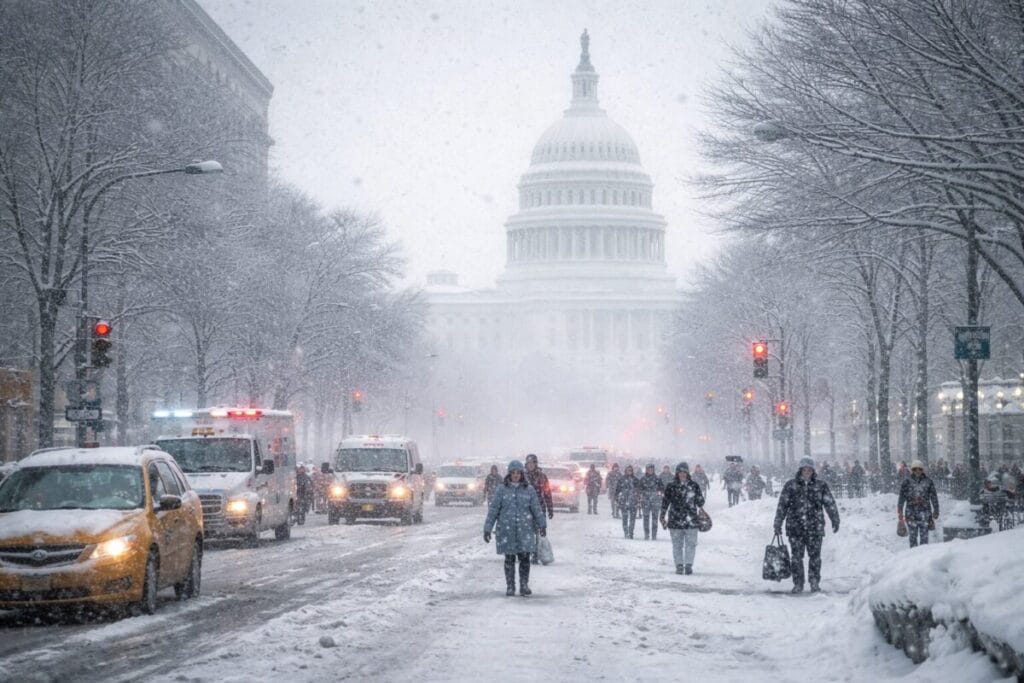
The United States is facing one of the most damaging tourism crises in recent history. A brutal winter storm has paralyzed major cities and key travel hubs, striking just as the sector was trying to recover from a turbulent economic period. The tourism industry now confronts a new reality as 2026 begins with severe weather, financial strain, and overwhelming logistical challenges.
Historic Winter Weather Brings Travel to a Halt
More than 200 million Americans are experiencing extreme winter conditions. Heavy snow, freezing rain, and dangerous wind chills are disrupting daily life and throwing the travel system into chaos. Aviation, road transport, rail services, and port logistics are widely affected. Delays, cancellations, and closures have become the norm as airports struggle to keep up with mounting challenges.
The storm is projected to generate more than $100 billion in economic damages. Emergency officials warn that power outages could last for days in some areas, pushing recovery costs even higher.
Tourism Faces Devastating Financial Losses
Tourism and hospitality are taking the hardest hit. Hotels are reporting mass cancellations. Restaurants are closing during peak hours. Entertainment venues are shut down as snow and ice force visitors to stay home. Tourism-dependent cities are now counting losses in the billions as visitor spending evaporates.
Even before the storm, the industry was on shaky ground. Visa fee hikes, competitive international travel markets, and currency pressures discouraged global visitors. Now, the storm has created a new barrier, cutting off both domestic and international travelers from key tourism destinations.
Major U.S. Cities Are Hardest Hit
Several major cities are facing staggering losses as the storm disrupts business operations and travel demand.
Washington D.C.
The nation’s capital is blanketed in heavy snow and ice. City offices closed. Museums suspended operations. Government buildings shut down. Travel restrictions sapped foot traffic from an area that depends heavily on convention travel, political tourism, and school trips. The retail and hospitality sectors expect long recovery timelines.
Boston
Boston is buried under deep snow, with forecasts showing accumulations that could reach two feet. Power outages are widespread. The city’s tourism economy, which depends on international visitors, university travel, and sports events, is struggling. Analysts warn that the storm’s financial cost may extend through peak spring travel season.
Seattle
Seattle faces heavy snow and freezing temperatures. Road closures and airport challenges have reduced tourism revenues. Hotels and small businesses report severe slowdowns. Although snowfall is lighter than in the Northeast, infrastructure limitations are amplifying the economic damage.
Kansas City and Chicago
Both cities are facing brutal winter conditions, stalled supply chains, and lost commerce. Chicago’s airport delays alone represent millions in losses for airlines, hotels, and local businesses. Kansas City is experiencing widespread outages that are halting commercial activity and travel bookings.
New Mexico and Dallas
Freezing rain and snow have disrupted regional travel across the Southwest and Texas. Schools and workplaces are closed. Tourism agencies warn of steep spending declines during what should be a high-travel period for winter getaways.
Miami
Even Miami is feeling indirect effects. Cold fronts have triggered event cancellations and reduced hotel occupancy. Tourism officials are monitoring how long disruptions will continue and how deeply booking trends will be affected.
A Tourism Industry Already Battling Decline
The winter storm is only the most recent blow to a tourism sector that entered 2026 weakened. In 2025, international travel to the U.S. fell sharply. Industry groups reported a decline in visitor arrivals of nearly 6% to 9%. Visitor spending dropped by over $12 billion.
Several factors contributed to this downturn:
- Higher Travel Fees: Visa integrity fees, visa bond requirements, and price hikes for travel authorizations added financial burdens for foreign visitors.
- Diplomatic Strains: Tariffs and strong rhetoric triggered protests and boycotts in key markets, especially Canada.
- Stronger Dollar: A powerful U.S. dollar made tourism costs more expensive for Europeans, Asians, and Latin Americans.
- Domestic Confusion: Real ID travel requirements created friction for domestic passengers at airports, cooling demand in the U.S. leisure market.
These trends pushed many travelers to select cheaper destinations in Europe, Asia, and Latin America, where hotel and food prices remained more competitive.
Storm Damage Will Shape Future Travel Planning
Economists and tourism analysts warn that the impact of the 2026 storm will be long-lasting. Travel insurers, airlines, and tour operators will likely revise risk calculations. Cities may need new emergency protocols for weather resilience. Tourism boards will push new campaigns to rebuild traveler confidence.
For now, however, the shock is immediate and severe. The tourism sector expects sustained downturns as businesses recover from power failures, infrastructure repairs, and major logistical challenges.
Recovery Will Take Months
The storm may last only a short time, but the financial effects will stretch across all of 2026. Airlines face mounting claims. Hotels expect prolonged low occupancy in affected regions. Restaurants and entertainment venues are preparing for slower foot traffic until repairs and reopenings are complete.
Industry leaders are urging federal and state support to stabilize the sector. Without intervention, the tourism economy may experience its slowest multi-year period since the pandemic era.
For more travel news like this, keep reading Global Travel Wire