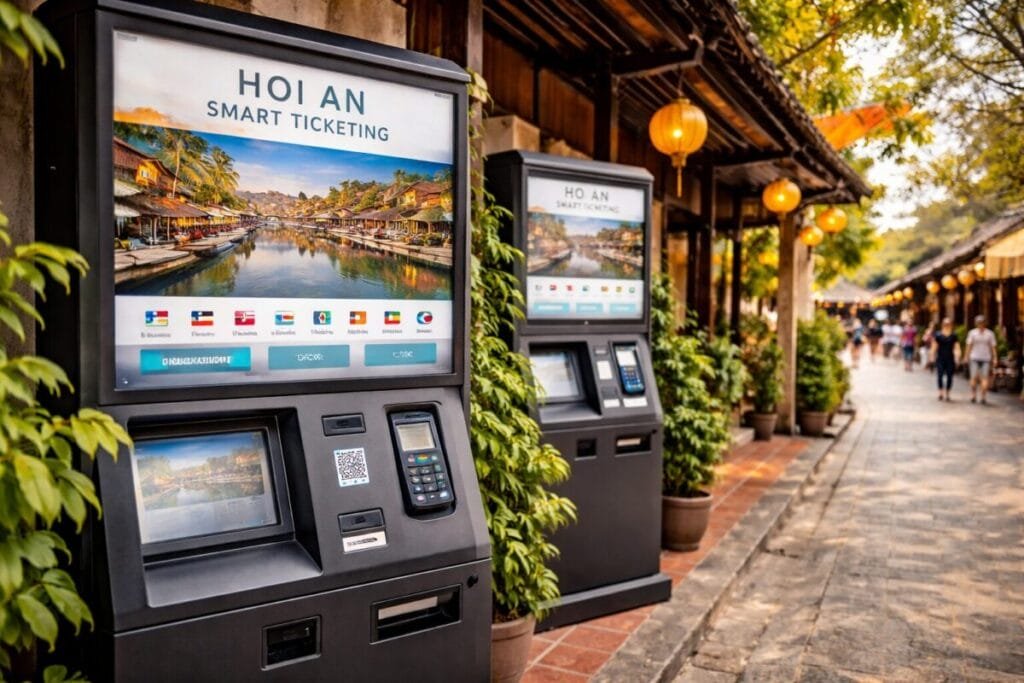
Hoi An has introduced a new smart ticketing system that aims to transform tourism at its UNESCO World Heritage site. The initiative includes automated kiosks with multilingual features placed throughout the historic town. The system launched in February 2026 and reflects Vietnam’s growing focus on digital tourism innovation.
Hoi An attracts millions of visitors each year due to its preserved architecture and cultural heritage. However, increasing visitor numbers have created challenges for local authorities. The new digital system addresses these challenges by improving efficiency and enhancing visitor convenience.
Smart Tourism Drives Innovation in Vietnam
Vietnam continues to invest in smart tourism solutions to improve traveler experiences while protecting cultural assets. Hoi An now serves as a leading example of how historic destinations can adopt modern technology without losing authenticity.
Local tourism authorities developed the system to streamline ticket purchases and reduce waiting times. Visitors can now buy entry tickets quickly without standing in long queues. This approach supports smoother visitor flow across busy heritage areas.
Digital transformation also helps tourism managers monitor demand patterns and improve crowd management. Authorities aim to preserve the town’s charm while ensuring sustainable tourism growth.
How the Multilingual Ticketing System Works
The smart ticketing system includes twelve automated kiosks placed near popular attractions and main entry points. These kiosks allow travelers to purchase tickets using various payment methods, including international cards and local digital wallets.
Multilingual support forms a key feature of the technology. Visitors can interact with the system in more than twenty languages, which removes communication barriers. Languages include English, Chinese, Korean, Japanese, French, and several others widely used by international travelers.
User-friendly interfaces guide visitors through each step. Clear instructions help first-time users complete transactions quickly and confidently. As a result, visitors can begin exploring the heritage site without unnecessary delays.
Enhancing Visitor Experience Beyond Ticket Sales
The digital kiosks offer more than simple ticket purchasing. They provide information about cultural sites, local attractions, and recommended experiences. Travelers can explore suggested routes, find dining options, and learn about events happening during their stay.
The system integrates guided tours and audio experiences through QR codes. Visitors can scan codes to access digital guides that explain historical landmarks and cultural traditions. This feature enhances engagement and encourages deeper understanding of the destination.
Tourists can also purchase combined tickets for multiple attractions. This flexibility allows travelers to plan their visit efficiently while maximizing their experience in Hoi An.
Supporting Sustainable Tourism Practices
Smart ticketing aligns with Vietnam’s broader strategy to promote sustainable tourism. Digital transactions reduce reliance on printed tickets, which lowers paper waste and environmental impact. Authorities aim to create eco-friendly solutions that support long-term preservation.
Government tourism plans emphasize technology as a tool for managing visitor numbers responsibly. Real-time data collected through digital systems helps planners understand travel patterns. This information allows better resource allocation and improved infrastructure planning.
Hoi An’s initiative demonstrates how heritage sites can use innovation to balance growth with conservation. Technology supports both environmental goals and visitor satisfaction.
Collaboration Between Tourism Authorities and Technology Companies
Local authorities worked with Vietnamese technology firms to develop the smart system. AI-driven software supports multilingual translation and user interaction. These tools ensure accurate communication and smooth system performance.
Partnerships between tourism agencies and technology providers play a crucial role in advancing digital tourism across Vietnam. By combining cultural expertise with technological innovation, destinations can create modern solutions that respect local identity.
The collaboration also reflects Vietnam’s ambition to position itself as a competitive digital tourism destination in Southeast Asia.
Benefits for Local Businesses and Communities
Smart tourism initiatives often produce economic benefits for local communities. Easier access to attractions encourages visitors to spend more time exploring the town. Increased visitor flow can lead to higher spending in local restaurants, shops, and accommodations.
Digital tools also help promote lesser-known attractions, which distributes tourism more evenly across the area. This approach reduces overcrowding in popular zones while supporting smaller businesses.
Local entrepreneurs may adopt similar technologies to enhance customer engagement. Online booking, digital menus, and multilingual communication tools can help businesses attract international visitors more effectively.
Preparing for the Future of Connected Travel
Hoi An plans to expand its digital tourism ecosystem in the coming years. Authorities have expressed interest in integrating augmented reality experiences and virtual tours. These innovations could allow visitors to explore historical stories through immersive digital layers.
Real-time monitoring systems may also improve safety and crowd management during peak seasons. Data-driven decision-making will help maintain balance between tourism growth and cultural preservation.
As more destinations adopt smart tourism strategies, Hoi An’s initiative provides a model for combining heritage conservation with modern technology.
A New Era for UNESCO Heritage Tourism
The introduction of smart ticketing represents a significant step toward modernizing visitor experiences at UNESCO heritage sites. Hoi An demonstrates that technology can enhance accessibility without compromising historical authenticity.
Travelers now enjoy faster entry, personalized guidance, and multilingual support. Meanwhile, tourism managers gain valuable tools for planning and sustainability. This balance ensures that both visitors and local communities benefit from innovation.
Hoi An’s forward-thinking approach highlights the future of tourism, where digital solutions create seamless, engaging, and responsible travel experiences.
For more travel news like this, keep reading Global Travel Wire