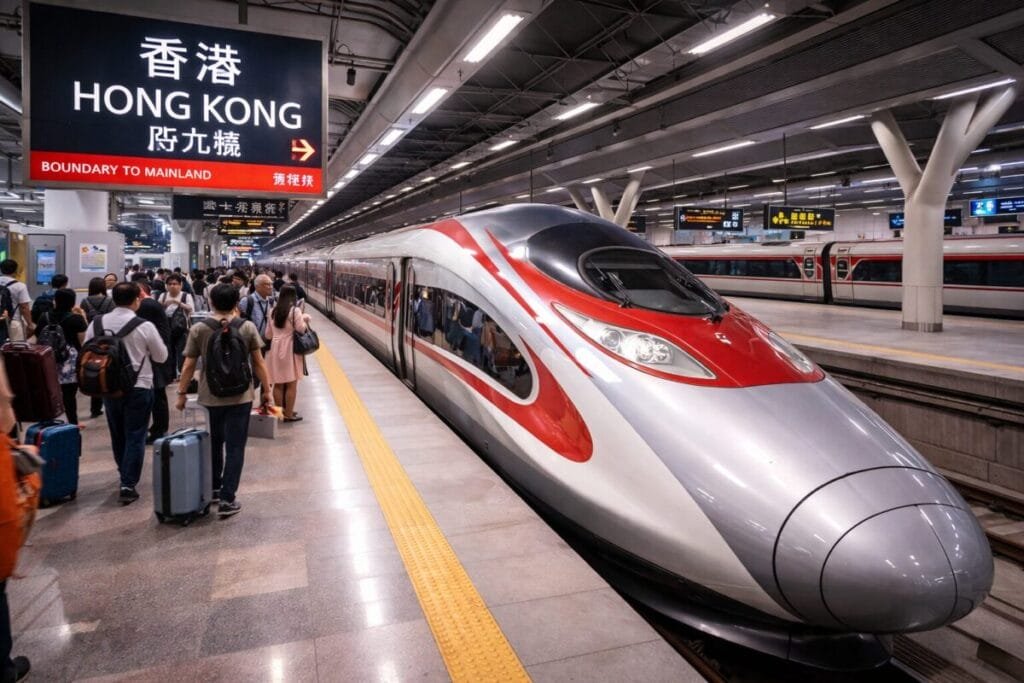
Hong Kong’s high-speed rail system will reach a new milestone with the launch of sixteen new direct routes on January 26. This expansion strengthens the city’s role as a major gateway between mainland China and global markets. Travelers will gain improved access to economic centers and tourism cities across several provinces. The development supports both leisure and business travel while reinforcing regional transportation networks.
New Destinations Strengthen Tourism and Business Links
The new routes expand direct rail access from West Kowloon Station to a total of 110 destinations. Cities such as Nanjing, Wuxi, and Hefei join the network for the first time. These additions enhance travel convenience by reducing transfers and saving time for both tourists and business travelers. The expansion positions high-speed rail as a strategic connector for regional mobility.
Nanjing stands as a major tourism and cultural city with historical attractions and strong academic institutions. Wuxi appeals to visitors with scenic lakeside landscapes and cultural gardens. Hefei continues to experience rapid economic development and rising tourism arrivals. The new rail links allow travelers from Hong Kong to access these destinations with greater ease and reliability.
Improved Rail Services Beyond New Routes
Alongside the expansion of direct access, MTR Corporation introduces upgrades to existing services. The Shanghai Hongqiao sleeper service will now run daily instead of four days a week. This change increases flexibility for travelers heading to one of China’s largest financial and commercial centers. The daily schedule benefits business travelers with variable itineraries and supports tourism demand from both sides.
MTR also plans to increase train frequency on routes such as Hong Kong to Guangzhounan. Higher frequencies reduce wait times and allow passengers to select departure slots that fit their schedules. Demand for high-speed rail continues to grow across the Guangdong-Hong Kong-Macau Greater Bay Area as travelers seek reliable and efficient cross-border mobility.
High-Speed Rail Boosts Regional Economic Activity
The expansion supports regional economic growth by facilitating efficient travel between important commercial hubs. Businesses benefit from shorter travel times and better access to inland markets. The network enhances Hong Kong’s ability to attract meetings, conferences, and cross-border business events. Improved rail travel also helps companies expand cooperation with mainland partners.
China’s high-speed rail system stands among the world’s most advanced, carrying millions of passengers weekly. The network connects dense clusters of economic activity in coastal and inland provinces. Hong Kong’s improved access reinforces its role as a global finance center and a gateway for multinational investment.
Tourism Benefits from Faster and Diverse Itineraries
Tourism operators expect the new routes to expand itineraries and allow international visitors to explore deeper into mainland China. Multicity itineraries gain popularity as rail makes travel easier than domestic flights for short-to-medium distances. High-speed trains reduce time spent in transit and streamline the journey for travelers who value comfort and convenience.
Cities such as Nanjing and Wuxi provide rich cultural experiences and scenic attractions that appeal to overseas tourists. Hefei and neighboring cities in Anhui Province offer growing cultural tourism circuits featuring parks, museums, and historical landmarks. These itineraries add variety to traditional travel patterns dominated by Beijing, Shanghai, and Guangzhou.
Improved Integration Supports National Development Goals
The expansion of the high-speed rail network aligns with national infrastructure goals aimed at strengthening connectivity and regional integration. Cross-border rail links support closer cooperation between Hong Kong and mainland cities in technology, finance, logistics, and culture. Enhanced transportation infrastructure also elevates Hong Kong’s strategic importance within the Greater Bay Area.
Government planning documents emphasize the role of transportation corridors in supporting tourism flows, talent mobility, and commercial logistics. High-speed rail provides a clean and efficient option for long-distance travel. The system also reduces pressure on air travel during peak periods and offers more predictable journey times.
Collaboration Ensures Smooth Implementation
MTR Corporation worked closely with government departments and national railway authorities to prepare the expansion. The cooperation includes scheduling coordination, ticketing compatibility, and service logistics. Cross-border rail operations require careful planning due to customs requirements and passenger management protocols. The successful introduction of new routes reflects coordinated efforts to streamline cross-border travel for the public.
Growing Importance of Rail in Modern Mobility
High-speed rail continues to reshape travel behavior across mainland China. Travelers increasingly choose rail over air for journeys that take less than five hours by train. High-speed rail also offers smoother boarding processes and minimal weather disruptions. These advantages appeal to business travelers who value punctuality and consistent travel conditions.
The network’s comfort features, such as spacious seating and quiet cabins, contribute to its growing popularity. Tourists appreciate the ability to watch natural landscapes and urbanscapes throughout the journey. Rail travel also supports sustainable tourism goals due to lower emissions per passenger compared to air travel.
A New Chapter for Regional Travel Connectivity
The launch of sixteen new direct routes marks a major development for Hong Kong’s high-speed rail network. Travelers gain more destinations, flexible schedules, and improved access across mainland China. Tourism will benefit from diversified itineraries, while the business community gains easier access to expanding commercial hubs.
As connectivity strengthens, the high-speed rail network will continue to shape the movement of people and ideas throughout the region. These developments reinforce Hong Kong’s enduring role as a gateway linking global markets with mainland China’s evolving economic landscape.
For more travel news like this, keep reading Global Travel Wire