
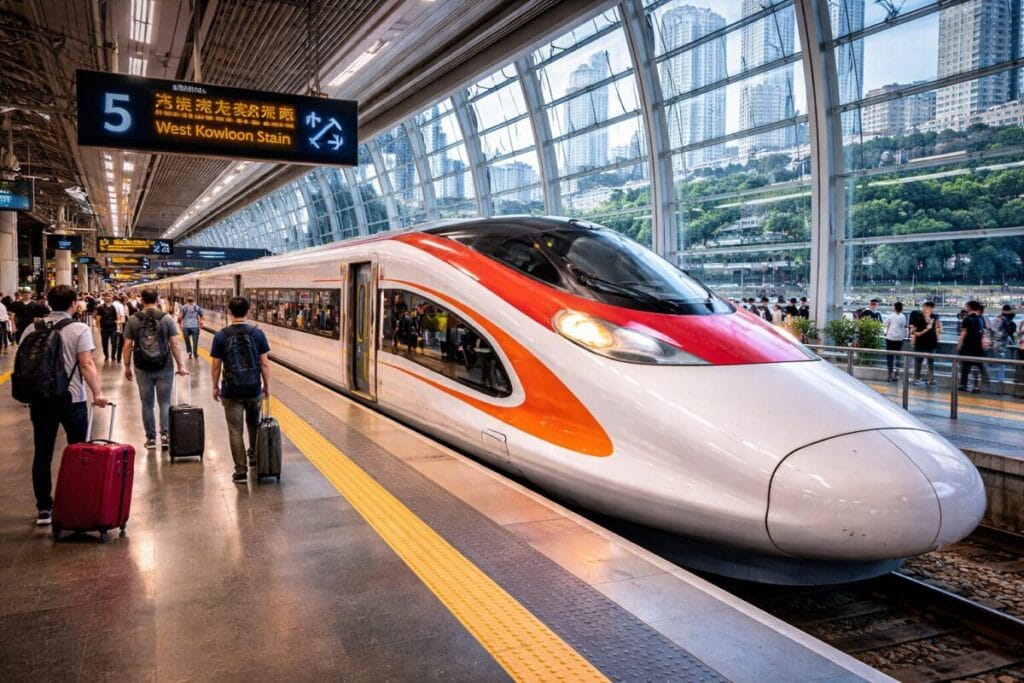
Hong Kong prepares for a major leap in regional mobility with the expansion of its high-speed rail network to 16 new mainland Chinese destinations. The new services launch on January 26, 2026 and strengthen Hong Kong’s role as a core travel hub within Greater China. The expansion enhances convenience for tourists, business travelers, and residents who rely on fast transportation across provincial borders.
The new routes originate at West Kowloon Station, which functions as Hong Kong’s international high-speed rail terminal. With the addition of these 16 cities, direct rail connections increase to a total of 110 destinations across mainland China. Passengers gain access to major economic centers such as Nanjing, Hefei, and Wuxi. The new links improve access to provinces including Guangdong, Jiangsu, Anhui, and Fujian.
Convenience Boost for Tourism and Business Travelers
The expansion transforms travel efficiency for Chinese tourists heading to Hong Kong. Direct trains reduce the need for multi-step transfers and bus connections. Tourism operators expect strong demand due to faster travel times and simplified logistics. Chinese travelers visiting Hong Kong often seek shopping, dining, cultural attractions, and theme parks. Easier rail access strengthens those tourism flows and increases spending in retail, hospitality, and entertainment sectors.
Outbound tourism also benefits. Hong Kong residents gain access to a broader mainland tourism network without relying on domestic flights. Popular cultural cities, mountain regions, and culinary hotspots become reachable through a single ticket. International tourists visiting Hong Kong will gain the same rail mobility when transiting through West Kowloon Station.
A Game-Changer for Cross-Border Mobility
High-speed rail has already reshaped regional travel patterns. Trains traveling at 300 kilometers per hour cut travel times and increase comfort. Travel between Hong Kong and Guangzhou now takes less than 50 minutes. This compares to more than two hours on classic services. The sleeper service to Shanghai also increases frequency from four weekly trips to daily service. Overnight high-speed sleepers reduce travel stress and widen travel choices for long-distance trips.
Rail travel offers advantages over air travel for medium-distance trips. Passengers avoid airport security bottlenecks and arrive closer to city centers. High-speed trains also reduce emissions and support national sustainability goals. These benefits align with Hong Kong’s broader shift toward green mobility solutions.
Business Travel and Economic Impact Increase
Business travel stands to benefit significantly. Fast travel between Hong Kong and mainland cities strengthens trade, finance, and industrial collaboration. Hong Kong sits at the center of the Greater Bay Area, an integrated economic cluster linking Guangdong, Macau, and Hong Kong. Improved rail networks accelerate that development and support cross-border cooperation.
Companies gain streamlined access to mainland supply chains, manufacturing zones, and tech hubs. Investors gain faster access to Hong Kong’s financial markets. Travel time reductions also encourage more same-day business trips and eliminate the need for overnight stays on many routes.
Ticketing and Accessibility for Global Travelers
Ticketing systems integrate with both Hong Kong and mainland platforms. Travelers can book seats through unified rail booking channels. Travel agencies also sell package itineraries that combine hotel stays and rail tickets for tourists visiting multiple Chinese cities.
International passengers will find the system friendly due to multilingual signage at West Kowloon Station and efficient customs procedures. The terminal offers direct immigration processing for both sides of the border, allowing passengers to travel under a single clearance point before boarding.
Tourism Benefits Reach Beyond Major Cities
The rail expansion also helps destinations beyond the headline cities. Smaller urban centers along the network gain more tourism exposure. Domestic travel patterns in China increasingly include cultural tourism, hot-spring resorts, national parks, and historic old towns. Rail access boosts weekend tourism and supports local economies.
For Hong Kong, new tourist arrivals support a broad network of tourism businesses. Hotels, restaurants, museums, and tour operators gain new opportunities to serve mainland visitors. Many travelers include shopping activities as part of their itineraries, which supports Hong Kong’s strong retail market.
Sustainability Becomes a Core Travel Advantage
High-speed rail plays a central role in reducing carbon emissions across the region. Trains produce fewer emissions per passenger-kilometer than planes and private vehicles. Hong Kong encourages green tourism initiatives and sustainable transport adoption. Travelers who choose rail support those goals while gaining convenience and affordability.
Reduced reliance on buses and private cars also eases congestion at border crossing points. This contributes to smoother logistics for both tourism and commercial transport.
A Long-Term Vision for Integrated Regional Travel
The expansion marks a major milestone in China’s broader high-speed rail vision. Mainland China continues to expand its national rail grid and connects farther inland every year. Greater China’s rail development strategy supports cultural exchange, business integration, and tourism flows. Hong Kong sits at the gateway of this vast network and benefits from access to China’s growing domestic travel market.
As additional cities gain high-speed rail service, Hong Kong’s regional influence grows. Travelers will find multi-city itineraries more practical, and businesses will find cross-border partnerships more accessible.
A Future of Seamless Mobility
Hong Kong’s high-speed rail expansion represents a transformative development for both tourism and business travel. The new routes strengthen Hong Kong’s role within the Greater Bay Area and reinforce its status as a major transport hub. Faster journeys, broader connections, and sustainable travel choices will shape a future where regional mobility becomes seamless and efficient for millions of travelers.
For more travel news like this, keep reading Global Travel Wire