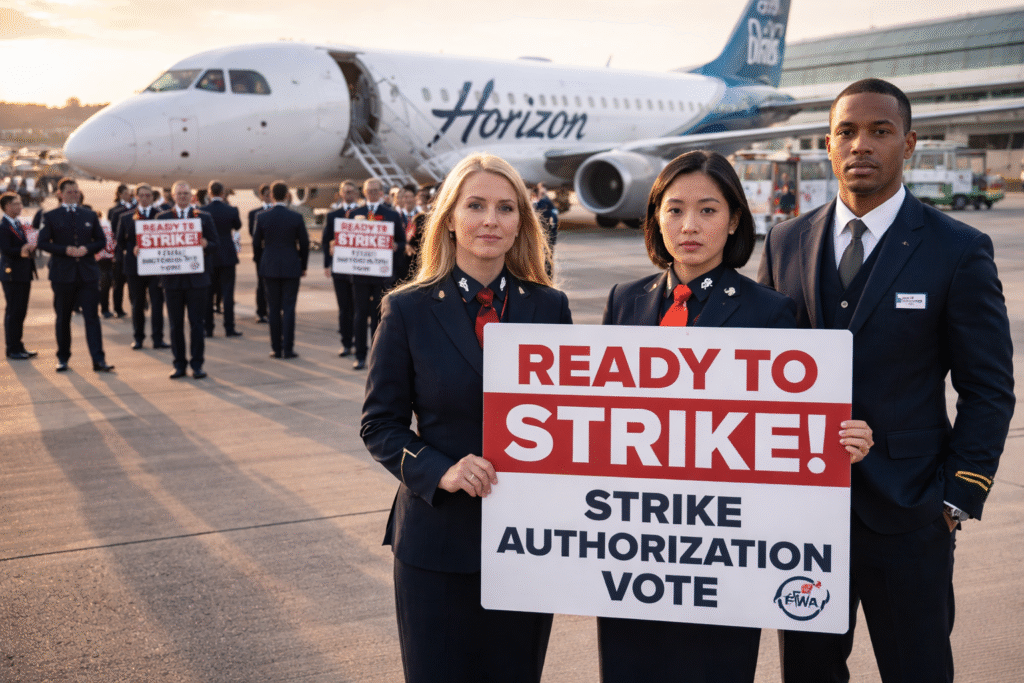
The United States aviation sector is entering a fresh period of labor uncertainty. Horizon Air, the regional carrier under Alaska Airlines Group, now faces mounting pressure as its flight attendants prepare for a potential strike authorization vote. The move follows more than 18 months of negotiations without an economic proposal, even after the labor contract became amendable in April 2024.
While a strike is not expected in the immediate future, the development has drawn attention from travelers, tourism planners, and regional economies. Horizon Air plays a critical role in domestic connectivity, especially across the Pacific Northwest. Any disruption could ripple through tourism and business travel networks that depend on reliable regional flights.
Why Horizon Air Matters to Tourism
Regional airlines form the backbone of domestic travel in the United States. They connect smaller cities and rural destinations to major hubs, allowing tourism to reach beyond large metropolitan areas. Horizon Air supports this system by operating Embraer 175 aircraft on short- and medium-haul routes.
Most of its operations feed into Seattle–Tacoma International Airport, a major gateway for domestic and international travelers. From coastal towns to mountain communities, many destinations rely on Horizon Air flights to sustain visitor numbers. These routes support leisure travel, outdoor tourism, and essential business movement.
Because of this role, labor instability at Horizon Air carries broader implications than a single airline dispute.
Contract Talks Reach a Breaking Point
Negotiations between Horizon Air management and the Association of Flight Attendants have dragged on for over a year and a half. Despite the long timeline, management has not yet presented an economic proposal. Issues like wages, scheduling value, and long-term cost structures remain unaddressed.
Instead, talks have focused on non-economic sections of the contract. These include work rules, scheduling language, and operational policies. While not directly tied to pay, such provisions strongly influence quality of life and earning potential.
Union leaders have pointed out that only a small number of sections remain unresolved. This has signaled that talks are entering a decisive phase. The proposed strike authorization vote is meant to apply pressure, not to trigger immediate action.
Union Strategy Emphasizes Process and Unity
The Association of Flight Attendants has urged members to remain unified and patient. Messaging to cabin crew stresses that a strike vote is a strategic tool. It signals frustration with slow progress rather than a call for instant work stoppage.
Airline labor relations in the United States follow strict federal rules. Under the Railway Labor Act, strikes can only occur after lengthy mediation and formal release from talks. Cooling-off periods further delay any job action.
Because of these safeguards, airline strikes remain rare. In many past cases, strike votes have led to last-minute agreements rather than shutdowns.
The union has also warned members against unapproved actions. Refusing assignments or slowing operations could carry legal and disciplinary consequences. Coordinated and lawful action remains the union’s stated approach.
Broader Alaska Airlines Group Labor Pressures
The Horizon Air dispute does not exist in isolation. Alaska Airlines Group is also managing labor integration following its acquisition of Hawaiian Airlines. That process involves aligning contracts, seniority systems, and work rules across different employee groups.
Alaska Airlines flight attendants recently approved a new contract. Attention has now shifted to joint negotiations that will include Hawaiian Airlines cabin crew. Union representatives have indicated that the Alaska agreement will act as a foundation for a combined contract.
Progress has been steady but complex. Agreement has been reached on only a portion of proposed sections so far. This slow pace highlights the challenges of merging airlines with different operating cultures and expectations.
Against this backdrop, unresolved talks at Horizon Air add to the overall labor pressure facing the group.
Impact on Travel Confidence and Tourism Planning
Even without a strike, labor uncertainty can affect traveler behavior. Leisure travelers often book months in advance. News of possible strike votes can introduce hesitation, especially for trips involving smaller destinations with limited flight options.
Tourism boards, hotels, and tour operators rely on predictable air service when marketing destinations. Regional flight disruptions can quickly impact visitor numbers, seasonal employment, and local revenue.
Horizon Air serves many tourism-dependent communities. These include outdoor recreation areas, regional business centers, and cities that depend on steady airline access to remain competitive.
For these regions, workforce stability is closely tied to tourism resilience.
Legal Framework Limits Sudden Disruption
The Railway Labor Act was designed to protect essential transportation services. It requires negotiation, mediation, and formal cooling-off periods before any strike can occur. These steps often take months to complete.
Historically, many airline labor disputes have ended with tentative agreements before reaching final strike stages. Strike authorization votes often function as leverage rather than an endpoint.
This legal structure shapes expectations around the Horizon Air situation. While the vote would mark a serious escalation, it would still leave room for negotiated resolution.
What Comes Next for Regional Aviation
As Horizon Air flight attendants move closer to a strike vote, attention remains fixed on the bargaining table. The airline industry continues to recover from pandemic disruptions while managing rising costs and staffing expectations.
For Alaska Airlines Group, resolving regional labor issues is key to maintaining network stability. For the wider travel and tourism sector, the dispute highlights how deeply airline labor relations affect passenger experience and destination access.
Bottom Line
Horizon Air flight attendants are nearing a strike authorization vote after prolonged negotiations without an economic proposal. Although federal law makes an immediate strike unlikely, the situation has heightened concern across US regional travel and tourism networks. A timely resolution will be critical to protecting traveler confidence, regional connectivity, and the economic health of tourism-dependent communities.
For more travel news like this, keep reading Global Travel Wire