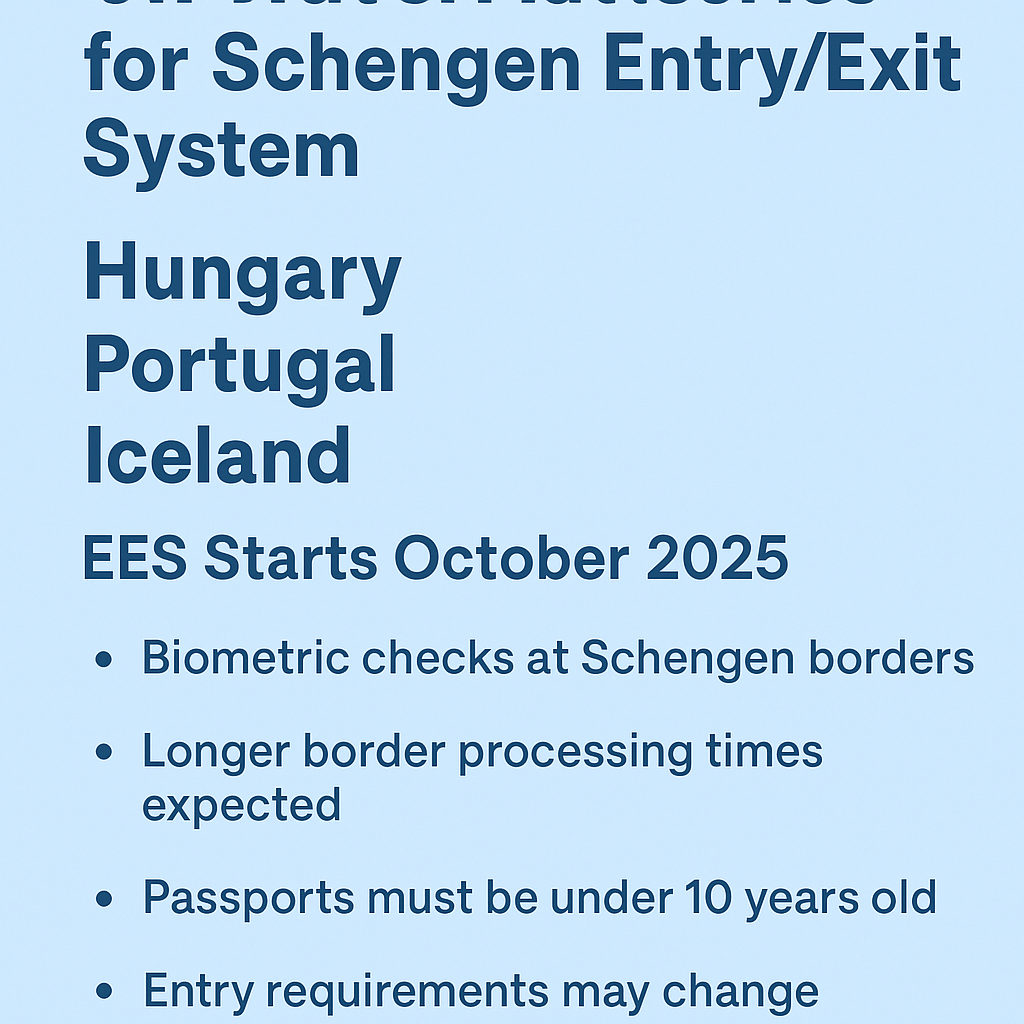
Hungary has joined Portugal and Iceland as key destinations highlighted in the UK government’s latest travel advisory, ahead of the rollout of the European Union’s new Entry/Exit System (EES). Scheduled to begin on October 12, 2025, this system will fundamentally change how travelers are processed at Schengen borders.
The initiative introduces biometric data collection, requiring fingerprints and photographs at entry and exit points. For British citizens traveling visa-free to the Schengen Area, this marks a significant change from the current system of passport stamping. While aimed at improving security and streamlining border procedures, the new process could lead to longer wait times and additional requirements at busy entry points.
Understanding the Entry/Exit System (EES)
The EU’s Entry/Exit System is a border management upgrade designed to replace manual passport stamping with automated checks. By collecting biometric data from non-EU travelers, the EES strengthens security while ensuring better tracking of entries and exits across all Schengen member states.
Key Features of EES:
- Launch Date: October 12, 2025, with phased implementation across borders.
- Biometric Data: First-time travelers will be required to provide fingerprints and a photo, stored for future entries.
- No Pre-Registration: Data will be collected at border control booths; travelers do not need to register before arrival.
- Children’s Exemption: Children aged 11 and under will only have their photograph taken, with no fingerprint requirement.
- Impact on Processing Times: Initial delays are expected as the system is introduced, particularly at busy airports and land crossings.
Impact on Travelers to Hungary
Hungary, a popular destination for British tourists drawn to its capital Budapest, thermal baths, and historic sites, will be fully applying EES rules.
- Passport Validity: Passports must be issued within the last 10 years and valid for at least 3 months beyond departure from the Schengen Area.
- Visa-Free Travel: UK citizens may stay in Hungary for up to 90 days in any 180-day period without a visa. Longer stays require appropriate permits.
- Border Requirements: Until the EES is fully functional, passport stamping will continue. Proof of accommodation, return tickets, and sufficient funds may be requested at entry points.
These changes mean travelers should prepare for stricter checks and allow additional time at border controls.
Impact on Travelers to Iceland
Iceland’s natural wonders, from volcanoes to the Northern Lights, make it a top European travel destination. However, with the new EES, UK visitors should expect additional procedures at entry points in Reykjavik and other ports.
- Passport Rules: Must be less than 10 years old and valid for 3 months after departure.
- Visa-Free Entry: Stays of up to 90 days remain visa-free for British citizens.
- Biometric Registration: First-time visitors will provide fingerprints and photos, with children exempt from fingerprinting.
Given Iceland’s smaller border facilities, travelers may encounter delays during the rollout of the system.
Impact on Travelers to Portugal
Portugal remains one of the UK’s favorite holiday destinations, with Lisbon, Porto, and the Algarve attracting millions of tourists annually. The EES will affect all British travelers entering the country.
- Passport Requirements: Valid within the past 10 years and extending 3 months beyond departure.
- Visa-Free Stay: Up to 90 days permitted without a visa.
- EES Border Checks: Biometric registration will be introduced, potentially lengthening waiting times at airports and land borders.
For those planning trips during peak summer months, preparing for additional processing is recommended.
Travel Safety and Security Considerations
Alongside the technical changes, the UK government continues to advise travelers on general safety when visiting Hungary, Portugal, and Iceland.
- Terrorism Risk: While considered low in these countries, the global threat of terrorism means vigilance is advised, particularly in crowded areas like airports, tourist sites, and public transport.
- Political Demonstrations:
- Hungary: Demonstrations are common in Budapest during national holidays.
- Portugal: Protests and strikes may occur in Lisbon, occasionally disrupting travel.
- Iceland: Rare but possible in urban areas like Reykjavik.
Travelers are urged to avoid large gatherings and follow local authority advice.
General Travel Tips for Navigating the EES
As the Entry/Exit System comes into effect, travelers can minimize disruptions by preparing in advance:
- Check Passport Validity: Ensure issue and expiry dates meet Schengen requirements.
- Allow Extra Time: Expect delays as biometric systems are introduced.
- Carry Supporting Documents: Proof of return travel, accommodation, and sufficient funds may be requested.
- Stay Informed: Monitor the UK’s updated travel advisories for the latest requirements.
Looking Ahead: Travel in the Schengen Area Post-2025
The introduction of the EES marks a major shift in how border management is handled across Europe. By requiring biometric data, the EU aims to improve security, reduce overstays, and modernize entry systems. For UK travelers heading to Hungary, Portugal, and Iceland, this change represents both an adjustment in travel habits and a glimpse into the future of international border control.
Although initial challenges such as longer wait times are anticipated, the system is ultimately designed to create a more secure and efficient travel experience. With careful planning, British tourists can continue to enjoy their favorite European destinations without major disruptions.
Conclusion: A New Travel Era for British Visitors
The UK government’s updated travel advisories underline the importance of preparation as the EU prepares for the EES rollout. Travelers to Hungary, Portugal, and Iceland will need to adapt to biometric registration and stricter passport requirements beginning in October 2025.
While the changes may bring short-term delays, they represent a long-term move toward safer, smarter, and more reliable travel within the Schengen Area. For British citizens, staying informed and planning ahead will ensure a smooth journey as Europe enters a new era of border management.
For more travel news like this, keep reading Global Travel Wire