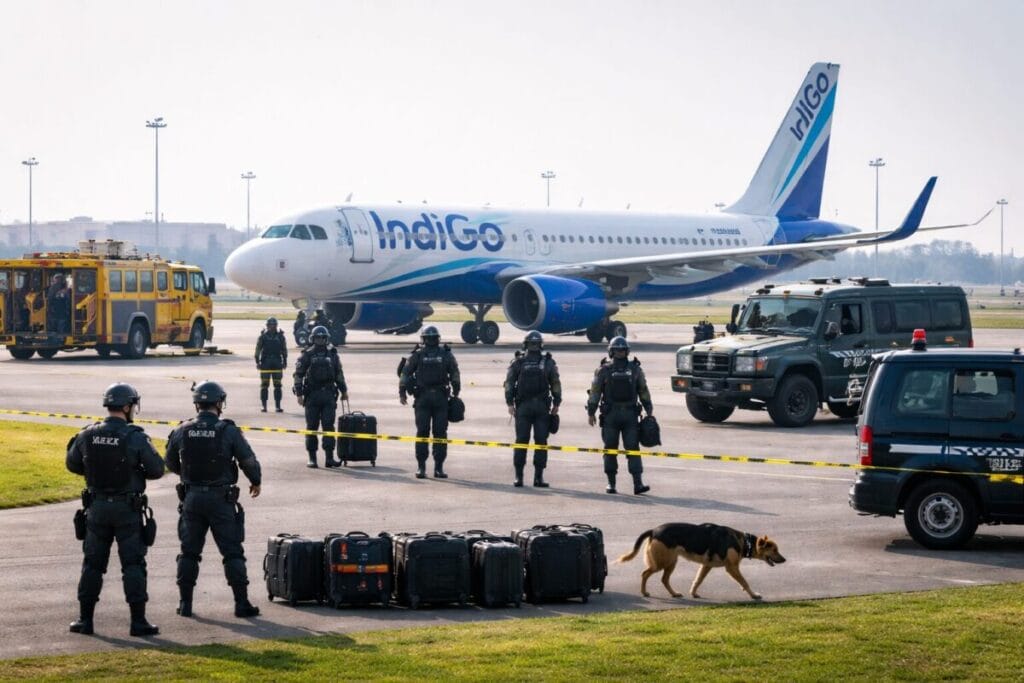
A security scare on an IndiGo domestic flight brought aviation safety into sharp focus across India and South Asia. The incident occurred when a handwritten threat note was discovered onboard flight 6E 7304, scheduled to travel from Kolkata to Shillong. The discovery triggered emergency procedures and temporarily halted operations at the airport.
Airport authorities reacted quickly after the message suggested a possible explosive threat. The aircraft did not depart as planned. Instead, officials initiated precautionary measures to ensure passenger safety and prevent any potential risk.
Though later confirmed as a hoax, the incident highlighted growing concerns about aviation security as regional travel demand continues to rise.
Immediate Response and Discovery of the Note
The disruption began during pre-departure checks on the morning of 14 February 2026. A crew member found the handwritten message inside the cabin. Aviation safety protocols required immediate escalation once the threat became known.
The aircraft was moved to a designated isolation area away from terminal infrastructure. Isolation bays allow security teams to assess risks without affecting nearby aircraft or passengers.
Security agencies, airline staff, and airport authorities coordinated rapidly. The goal was clear: protect passengers, maintain calm, and investigate the threat thoroughly.
Calm Evacuation and Passenger Protection
Passengers and crew exited the aircraft in an orderly manner. Cabin crew guided travelers calmly to secure holding areas inside the airport.
Authorities prioritized safety and communication. Airport staff provided assistance while security teams initiated multiple inspection layers.
Key procedures included:
- Detailed cabin inspections
- Screening of baggage compartments
- Examination of overhead storage areas
- External scanning of the aircraft
- Surveillance monitoring around the aircraft zone
No injuries or medical issues occurred during the evacuation. Passengers remained informed throughout the process, which helped avoid panic.
Comprehensive Security Checks and Clearance
Specialized security teams conducted a thorough investigation after evacuation. Every section of the aircraft underwent inspection. Authorities followed established aviation threat management standards used across major Indian airports.
After several rounds of checks, officials confirmed that no explosive device or hazardous material was present. Investigators treated the message as a hoax threat but continued efforts to identify its source.
Once clearance was granted, the aircraft resumed operations. The flight departed later after security verification.
Airline Response and Protocol Compliance
The airline confirmed that staff followed established aviation security procedures immediately after discovering the note. Coordination with airport security and investigative agencies ensured a structured response.
India’s civil aviation sector has strengthened safety frameworks in recent years. Rising passenger numbers and expanded regional connectivity have driven investment in surveillance systems, emergency preparedness, and response training.
The quick return to normal operations reflected procedural efficiency and coordinated crisis management.
Growing Aviation Security Concerns Across South Asia
The incident drew attention beyond India’s domestic aviation network. Airports across eastern India serve as gateways connecting to Bangladesh, Nepal, Bhutan, and other neighboring regions. Tourism and business travel have increased significantly, especially on short-haul routes.
As passenger mobility expands, authorities emphasize intelligence sharing and consistent safety standards across borders. Even minor threats receive serious attention to maintain confidence in regional air travel.
Tourism growth in Northeast India has accelerated in recent years. Improved connectivity between hill destinations and metropolitan hubs attracts both domestic and international travelers. This increased traffic makes strong aviation security even more essential.
Importance of Isolation Bays and Emergency Preparedness
Isolation bays played a key role during the incident. These designated zones allow suspected aircraft to move away from crowded terminals. Such positioning minimizes risk while security teams conduct inspections.
Benefits include:
- Protection of airport infrastructure
- Reduced risk to travelers and staff
- Faster access for emergency teams
- Controlled inspection environments
Major airports worldwide rely on similar safety measures. South Asian aviation hubs have increasingly adopted global best practices to handle potential threats efficiently.
Passenger Experience and Operational Recovery
While the incident caused temporary delays, airport operations resumed after clearance. Passengers were allowed to reboard once authorities verified safety.
Travel disruptions remained limited to precautionary delays. Airlines often prioritize safety over schedules when dealing with security alerts. Even hoax threats require full investigations due to potential risks.
For travelers, the situation demonstrated how quickly aviation teams can respond to unexpected challenges while maintaining safety standards.
Ongoing Investigation Into Hoax Threat
Authorities continued investigating the origin of the handwritten message. Typical investigative steps include reviewing passenger manifests, analyzing CCTV footage, examining handwriting evidence, and interviewing staff.
Hoax threats carry legal consequences because they disrupt operations and strain emergency resources. Aviation agencies aim to deter such incidents through strict enforcement and awareness campaigns.
Tourism Industry Impact and Safety Outlook
The Kolkata–Shillong incident reinforces the importance of vigilance in a rapidly growing aviation market. India’s domestic network continues to expand, supported by government initiatives promoting regional connectivity and tourism development.
Despite the scare, the successful handling of the situation reassured travelers and industry stakeholders. Strong emergency response systems help maintain confidence in air travel across South Asia.
As tourism rebounds and regional routes increase, aviation authorities remain focused on preparedness, rapid response, and continuous safety improvement.
For more travel news like this, keep reading Global Travel Wire