India witnessed widespread disruption on February 12, 2026, as a nationwide Bharat Bandh called by multiple trade unions affected transport networks, businesses, and daily routines across several states. The large-scale strike triggered traffic slowdowns, service interruptions, and changes to travel plans for millions of commuters and travelers.
Authorities deployed traffic advisories, police monitoring, and emergency arrangements to manage the situation. While the impact varied across regions, major cities and transport corridors experienced delays and operational challenges throughout the day.
Nationwide Strike: Scale and Objectives
The Bharat Bandh involved participation from central trade unions, farmer groups, and labor organizations. Protest leaders described the action as one of the largest coordinated strikes in recent decades.
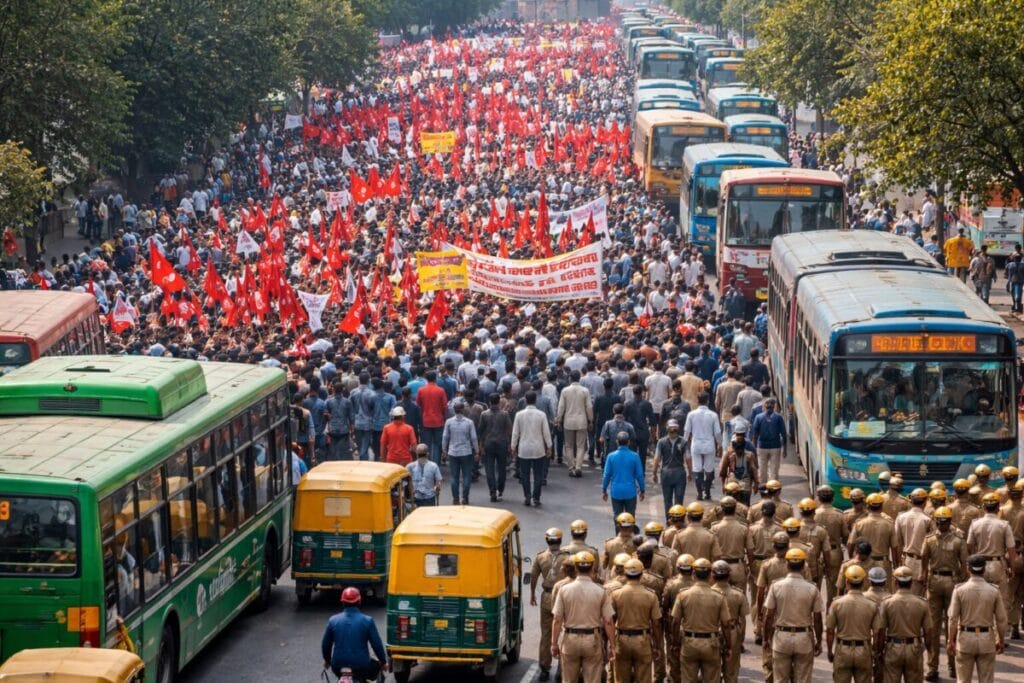
The bandh lasted roughly 12 hours and focused on opposition to several government policies linked to labor reforms, rural economy issues, and regulatory changes. Demonstrations included marches, road blockades, and organized slowdowns designed to bring attention to union demands.
Large gatherings took place in more than 600 districts, leading to significant traffic congestion and temporary disruptions to transport services.
Transport and Traffic Disruptions Across India
Public transport networks faced the biggest impact during the bandh. Protest actions slowed traffic on highways and urban roads, while some bus routes were cancelled or rerouted.
Police and local authorities introduced diversions in major cities to maintain vehicle flow. Increased law enforcement presence helped manage crowds and prevent complete shutdowns in several areas.
Travelers reported:
- Longer commute times due to road blockades and demonstrations
- Reduced availability of taxis, buses, and auto-rickshaws
- Delays in intercity travel because of congestion near protest sites
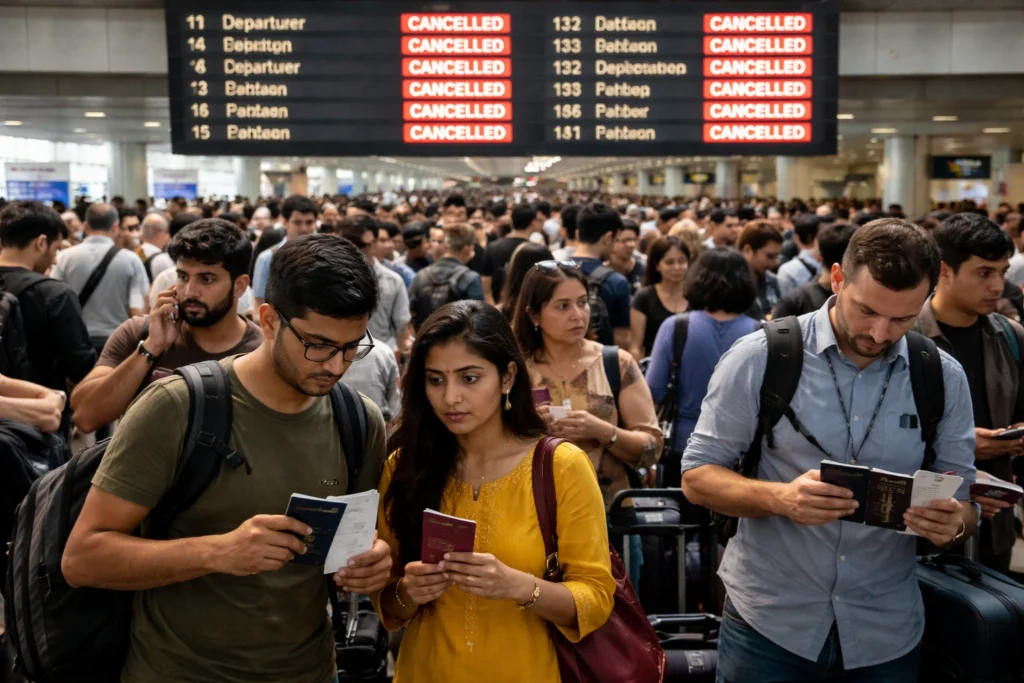
Airports and long-distance railway operations continued, though passengers experienced delays reaching terminals due to road traffic conditions.
State-Wise Impact: Where Disruptions Were Highest
Odisha
Several districts in Odisha reported heavy participation in the bandh. Public transport operations slowed significantly, and some areas experienced temporary road closures. Economic activity dropped sharply in protest-heavy zones.
Assam
Cities and peripheral areas saw widespread participation. Local markets shut down in parts of the state, and traffic movement slowed due to demonstrations. Authorities issued travel advisories urging commuters to avoid non-essential travel.
Kerala
Movement restrictions and organized protests affected both state-run and private buses. Certain routes experienced cancellations or reduced frequency. Travelers received advice to allow extra travel time and explore alternative routes.
West Bengal and Karnataka
Disruptions remained moderate compared to other regions but still affected surface transport and local services. Kolkata witnessed traffic delays and localized protests in union-strong areas, although the city avoided a complete shutdown.
States with Limited Impact
Regions such as Madhya Pradesh and Gujarat reported relatively normal operations. Businesses and transport services continued largely without interruption in many districts.
Impact on Services, Markets, and Institutions
Beyond transportation, the Bharat Bandh influenced several sectors.
Public Transport
Participation by transport unions led to partial suspension of buses and reduced taxi availability in some states. Ride-sharing services faced demand surges and longer waiting times.
Markets and Businesses
Many local markets closed or operated for limited hours in protest zones. Small businesses and retail establishments adjusted operating schedules depending on regional participation.
Banks and Offices
Banks and government offices remained open in most places, but staffing levels fell in certain cities. No nationwide bank holiday occurred, though customers faced slower service in affected regions.
Educational Institutions
Schools and colleges followed state-specific guidelines. Some institutions declared precautionary closures to avoid student travel during protests.
Essential Services
Hospitals, emergency response teams, airports, and railway networks continued operating. Authorities prioritized maintaining healthcare, safety, and public utilities despite disruptions.
Travel Advisory: Key Tips for Commuters and Tourists
Officials encouraged travelers to stay informed and plan carefully during the bandh period. Key recommendations included:
- Check live traffic updates before leaving home.
- Allow additional travel time for road journeys.
- Avoid protest locations and crowded routes where possible.
- Use official transport updates for accurate information.
- Consider remote work or travel postponement if not urgent.
Tourists visiting India during this period were advised to coordinate with hotels and local tour operators for schedule adjustments.
Safety Measures and Police Coordination
Police forces increased patrols and monitoring across major cities to maintain order and ensure public safety. Traffic management teams created temporary diversions and issued real-time alerts to minimize congestion.
Authorities emphasized peaceful protest rights while ensuring essential services continued without major interruption.
Outlook: Travel Normalization After the Bandh
As the bandh progressed toward its conclusion, many regions began restoring transport services gradually. Experts expect normal operations to resume fully once demonstrations end and traffic clears.
For travelers, the key takeaway remains preparation and flexibility. Large-scale strikes in India can create localized challenges, but with updated planning and awareness, disruptions can be managed effectively.
The Bharat Bandh of February 12, 2026 highlights how nationwide labor actions continue to influence travel, commerce, and daily life across the country, making real-time updates essential for both residents and visitors.
For more travel news like this, keep reading Global Travel Wire