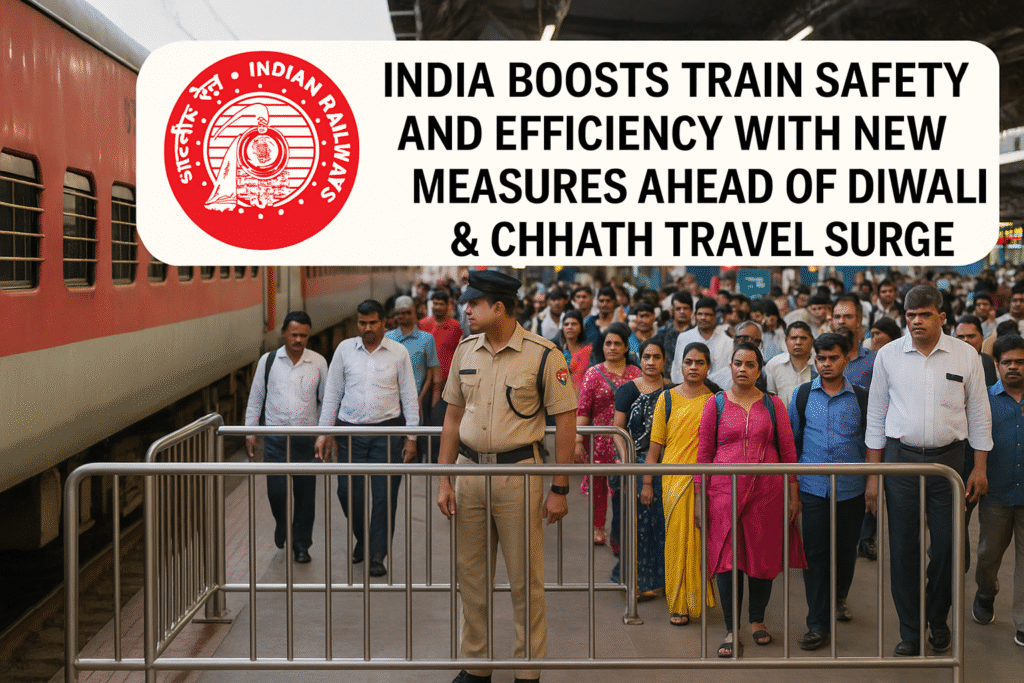
As the Diwali and Chhath festivals approach, Indian Railways moves swiftly to protect millions of holiday travelers. Railway officials unveil a sweeping plan to ensure journeys remain safe, smooth, and stress-free during one of India’s busiest travel periods.
New Holding Areas to Tame Crowd Pressure
Railways now features permanent “Yatri Suvidha Kendras” (holding zones) at key hubs such as New Delhi, Bandra Terminus, Surat, and Udhna. The center at New Delhi alone spans over 5,000 sqm and can host up to 7,000 passengers at once.
Officials divided it into three zones — pre-ticketing, ticketing, and post-ticketing — to regulate passenger movement efficiently. The approach aims to reduce platform overcrowding and maintain order.
Railway authorities plan to extend these holding zones to additional high-traffic stations before the festival rush.
Banned Items to Prevent Onboard Hazards
To curb fire risks and accidents, the Ministry of Railways strictly bans six dangerous items on all trains:
- Firecrackers
- Kerosene oil
- Gas cylinders
- Stoves
- Matchboxes
- Cigarettes
The ministry reminds travelers that these items pose serious threats in crowded railway settings. Strict checks before boarding will enforce the bans.
RPF Ramps Up Vigilance and Passenger Guidance
The Railway Protection Force (RPF) intensifies its presence during peak hours. Personnel will monitor stations, perform random inspections, and guide crowd flow.
Passengers receive clear safety tips:
- Keep all valuables within sight
- Use digital payments instead of carrying large cash
- Ensure children travel with adults
- Stay alert to announcements and obey staff instructions
These measures aim to prevent theft, disorder, and mishaps. Authorities ask travelers to promptly report any suspicious behavior or items.
Awareness Through Digital and On-Ground Outreach
Railways will deploy a mix of social media alerts, mobile app messages, station broadcasts, and signage to ensure each traveler knows the rules.
Frequent updates will inform users about delays, cancellations, allowed luggage types, and prohibited items.
Many stations already display digital signboards and public address reminders about banned articles and security protocols.
Advanced Safety Technologies Join the Effort
Railways continues to roll out “Kavach,” an indigenous automatic train protection system that prevents collisions. This technology runs many key routes already and expands across the network.
New pilot trials for an advanced signalling system called Direct Drive Electronic Interlocking (DDEI) also show promise in reducing errors linked to human signalling mistakes.
These technological upgrades reinforce on-ground safety during high–volume festive travel.
Why These Measures Matter
Just months ago, a tragic crowd crush injured several at New Delhi station during heavy travel pressure. That incident triggered a complete review of crowd control protocols.
Similarly, a 2024 crush at Bandra Terminus in Mumbai spurred infrastructure upgrades and stricter crowd safety mechanisms in city terminals.
Facing such past warnings, Railways now acts proactively to prevent similar disasters.
Aiming Beyond This Festive Season
Though these safety steps target Diwali and Chhath travelers, Railways sees them as long-term improvements.
Permanent holding zones, digital alert systems, and modern signalling form parts of a broader vision to modernize India’s rail network.
Railway authorities vow to keep passenger welfare central, especially during peak travel periods.
Traveler Tips for Festive Journey
- Book tickets well in advance
- Arrive at stations early
- Travel light and avoid banned items
- Note station helpline numbers
- Stay calm, follow signage, and heed staff advice
With diligent planning and public cooperation, India’s railways expect a safer, more efficient festive travel experience.
These changes mark a milestone. Indian Railways embraces crowd science, bans hazards, deploys tech, and leverages its security force. All these aim to turn the chaotic festival rush into a safe, orderly journey for millions.
For more travel news like this, keep reading Global Travel Wire