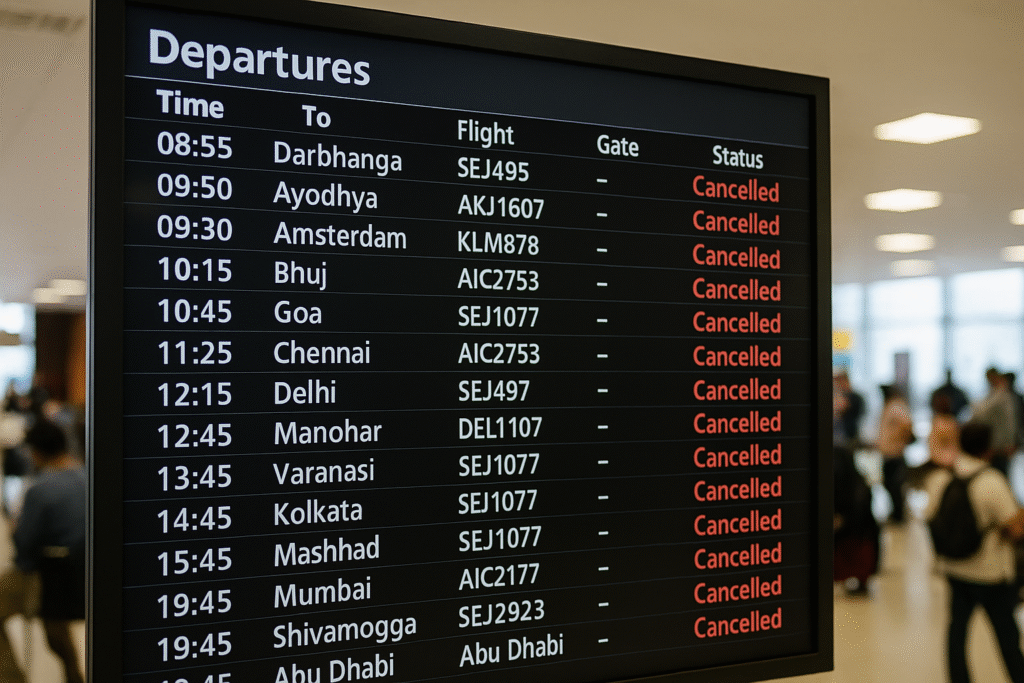
India is witnessing widespread travel disruptions as airlines cancel more than 26 key flights across major airports. The cancellations stretch across major metro cities and regional hubs, affecting domestic and international travelers. Routes to Mumbai, Delhi, London, Amsterdam, Abu Dhabi, Pune, Kolkata, Varanasi, Bhuj, Guwahati, Ayodhya, and more are impacted. The situation has created uncertainty for passengers ahead of peak travel days, raising concerns over operational stability and weather-related challenges.
Nationwide Impact on Air Travel
The flight cancellations affect a wide network of airports in western, southern, northern, and eastern India. Many travelers preparing for business trips, holidays, or international connections now face last-minute changes. With India’s aviation sector already under pressure during busy seasons, the disruption highlights how sensitive airline operations are to crew shortages, technical issues, weather fluctuations, and airspace congestion.
Most affected airports include Mumbai, Delhi, Bengaluru, Chennai, Ahmedabad, Kolkata, and Cochin. These hubs connect millions of travelers each week, making the ripple effect significant. Passengers with onward connections to Europe and the Middle East have been hardest hit due to limited alternative routes and tight schedules.
Cancellations at Major Airports
Ahmedabad: Four Key Flights Disrupted
Ahmedabad’s Sardar Vallabhbhai Patel International Airport cancelled four flights. These include departures to Mumbai, Mashhad, Varanasi, and Kolkata. The cancellations affect both domestic passengers and those headed for international religious travel. Western India now sees growing pressure on alternate flights as airlines readjust networks.
Cochin: One Major International Flight Cancelled
Cochin International Airport cancelled a crucial Abu Dhabi-bound flight. The route is popular among expatriate workers and tourists departing for the Middle East. The single cancellation created a heavy backlog at the terminal as travelers sought rebooking options.
Chennai: Regional Connectivity Affected
Two flights were cancelled from Chennai International Airport. These include a morning flight to Mumbai and an afternoon service to Shivamogga. These cancellations have slowed down regional connectivity across southern India, impacting business travelers and local tourism.
Kolkata: Disruption in East-West Travel
Kolkata’s airport cancelled a key Pune service. This popular east-west connection often caters to corporate travelers and students. The cancellation forced many passengers to reroute through Mumbai or Bengaluru, adding travel hours to their journey.
Bengaluru: Heavy Delays on Domestic and International Routes
Kempegowda International Airport saw multiple cancellations. Flights to Guwahati, Delhi, and London were cancelled. The London cancellation is especially significant, as Bengaluru remains a major hub for travelers heading to Europe and connecting onward to North America. Many passengers now face long waits for the next available long-haul service.
Mumbai: Major Hub Faces the Highest Disruptions
Mumbai’s Chhatrapati Shivaji Maharaj International Airport recorded five cancellations. These include services to Delhi, Chennai, Goa’s Manohar Airport, Bhuj, and Amsterdam. The Amsterdam cancellation has caused difficulties for Europe-bound travelers, with many flights already running at full capacity. As one of India’s busiest hubs, any disruption in Mumbai impacts schedules nationwide.
Delhi: Northern Routes Heavily Impacted
Delhi International Airport cancelled three flights to Ayodhya and Darbhanga. These routes have seen increased demand due to recent tourism growth and regional travel. The cancellations now create pressure on already busy northern corridors.
Why These Cancellations Occurred
While airlines have not provided detailed explanations for each cancellation, several common factors influence such disruptions:
- Staff shortage or crew duty-time limitations
- Weather-related restrictions, especially during seasonal fog or storms
- Technical inspections or aircraft maintenance delays
- Airspace congestion during peak periods
- Operational load balancing by airlines to manage efficiency
Airport authorities in major cities have also been working on runway maintenance and expansion projects, which occasionally require temporary schedule adjustments.
How Passengers Are Affected
The sudden cancellations have forced travelers to revise schedules, rebook connecting flights, and manage extended airport waiting times. Long-haul passengers heading to Europe and the Middle East face the most disruption, as seat availability is low during peak periods. Domestic travelers commuting for work between Mumbai, Bengaluru, Delhi, and Chennai are also left with fewer flight options.
Families and tourists traveling to Ayodhya, Varanasi, Mashhad, Bhuj, and Goa are experiencing holiday planning challenges as alternative flights fill quickly.
Tips for Travelers During Disruptions
Check Flight Status Frequently
Airlines update schedules throughout the day. Passengers should verify flight status before leaving home.
Arrive Early
Rebooking counters often become crowded during cancellations. Early arrival helps secure better options.
Stay in Contact With Airlines
Airlines may offer rescheduling, vouchers, or alternate routes. Keep mobile notifications enabled.
Have Backup Travel Plans
Travelers on busy routes should consider flexible dates or alternate airports if possible.
Plan for Longer Travel Time
Delays can affect connecting flights, so allow extra buffer time for multi-leg journeys.
Outlook for Travelers in the Coming Days
With cancellations distributed across India’s busiest airports, travelers may see further schedule adjustments in the short term. Authorities and airlines continue to coordinate to stabilize operations. Passengers are encouraged to maintain flexible plans and stay alert to real-time updates.
India’s aviation sector remains resilient, and airports are working to minimize disruptions. However, travelers should prepare for possible delays as airlines adjust their networks for operational efficiency and safety.
For more travel news like this, keep reading Global Travel Wire