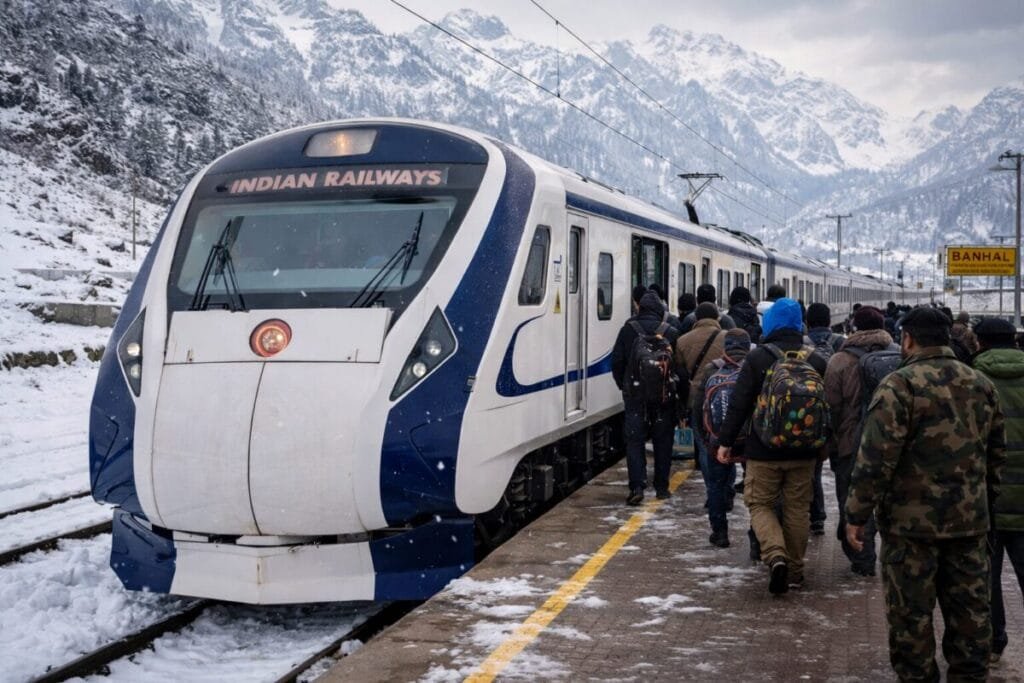
Winter storms disrupted transport across Jammu and Kashmir in late January 2026. Heavy snowfall shut down mountain roads and grounded flights across the region. Thousands of tourists, pilgrims, and residents struggled to reach Srinagar or return from the Shri Mata Vaishno Devi Katra base. Indian Railways responded to this challenge by launching a special reserved train service between Katra and Srinagar.
Rail officials recognized a surge in stranded passengers after several days of restricted movement. The Katra-Srinagar corridor sees high seasonal demand due to pilgrimage tourism and winter travel. The special train creates a stable and reliable option during a period of major disruption.
Special Service Scheduled for January 27 and 28
The special reserved train will operate on January 27 and 28. These dates align with peak congestion caused by the weather event. The train will run in both directions and will adopt the alignment of the Vande Bharat Express route. The Vande Bharat regularly serves the Katra-Srinagar line but remains non-operational during weather disruptions. Indian Railways chose to use the same corridor to ensure familiarity and maximize accessibility.
The special train will make strategic halts at key stations. Banihal serves as an important interchange. The Banihal stop helps passengers connect with local transport or reach snow-bound towns in the Kashmir Valley. This connectivity improves travel flexibility and relieves pressure on road transport.
Heavy Tourism and Pilgrimage Demand Shape the Decision
Katra attracts millions of pilgrims each year due to the Vaishno Devi shrine. Winter tourism in Kashmir also draws large numbers of visitors seeking snow, skiing, and cultural experiences. These tourism flows require secure and reliable transport links. During winter, the Jammu-Srinagar highway often closes due to landslides and heavy snowfall. These closures force tourists to seek rail travel or wait until crews clear the roads.
Air traffic also struggles during winter storms. Srinagar Airport frequently suspends flights due to low visibility and runway icing. These suspensions leave few available transport options. Indian Railways monitored these conditions and acted quickly to protect travel continuity.
Railways Focus on Passenger Relief and Mobility
The special train offers relief for both outbound and inbound travelers. Residents gain access to Srinagar’s urban services and administrative hubs. Tourists continue their itineraries without extended delays. Pilgrims returning from Vaishno Devi avoid long waits or forced overnight stays.
Railways also reduces congestion on emergency support services. Local authorities often allocate vehicles for medical evacuations and essential travel during severe weather. The special train reduces unnecessary demand on that system.
Indian Railways constructed this solution with speed and coordination. Officials gathered security inputs, operational requirements, staffing details, and maintenance schedules in tight timeframes. The process highlights the adaptability of the national rail network.
Security Measures Strengthen the Special Operation
Rail travel through Jammu and Kashmir requires strong security planning. Railways requested clearance and support from the Railway Protection Force to handle increased passenger volume. The RPF ensures screening, crowd management, and safety during boarding and travel. Coordination also extends to station staff, locomotive teams, and local authorities.
The presence of security personnel increases confidence among passengers. Travelers benefit from an organized boarding experience and clear movement within stations.
Tourism Stakeholders Welcome the Initiative
Tourism operators in Jammu and Kashmir praised the decision. They noted that thousands of winter travelers visit Gulmarg, Pahalgam, Sonmarg, and Srinagar each year. When weather disrupts flights and highways, hotels struggle with guest turnovers. The special train helps clear backlogs and stabilize itineraries.
Pilgrimage operators also benefit. Many pilgrims extend trips to include sightseeing in Kashmir. The special train ensures continuity for those itineraries. It also supports the tourism economy at a time when reliable transport fuels visitor spending.
Railways Demonstrate Flexibility in Crisis Response
Indian Railways has a history of deploying special trains during emergencies, mass events, and seasonal peaks. This includes festival seasons, Kumbh Mela traffic, and natural disaster recovery. The Katra-Srinagar operation adds another example of how the network adapts to unpredictable situations.
Officials also acknowledge the need for long-term improvements. Winter traffic continues to grow as tourism expands in Jammu and Kashmir. Infrastructure investment in tunnels, bridges, electrification, and high-speed stock will shape the future of regional mobility.
Future Outlook for the Katra-Srinagar Corridor
The success of the special train could influence future operational decisions. Authorities may evaluate demand for seasonal trains during winter months. They may also explore permanent integration of fast services between pilgrimage hubs and winter tourism destinations.
The initiative also encourages discussion on multimodal connectivity. Rail, air, and road networks must cooperate more effectively during weather disruptions. Integrated ticketing and passenger information systems could support smoother recoveries when severe storms strike.
Conclusion: Railways Support Tourism and Mobility During Winter
Indian Railways strengthened travel reliability between Katra and Srinagar during a difficult weather period. The special train eased congestion, supported stranded travelers, and protected the tourism economy from further disruption. The initiative demonstrates the importance of rail infrastructure in fragile mountain environments and highlights the vital role the rail network plays in both tourism and local mobility.
For more travel news like this, keep reading Global Travel Wire